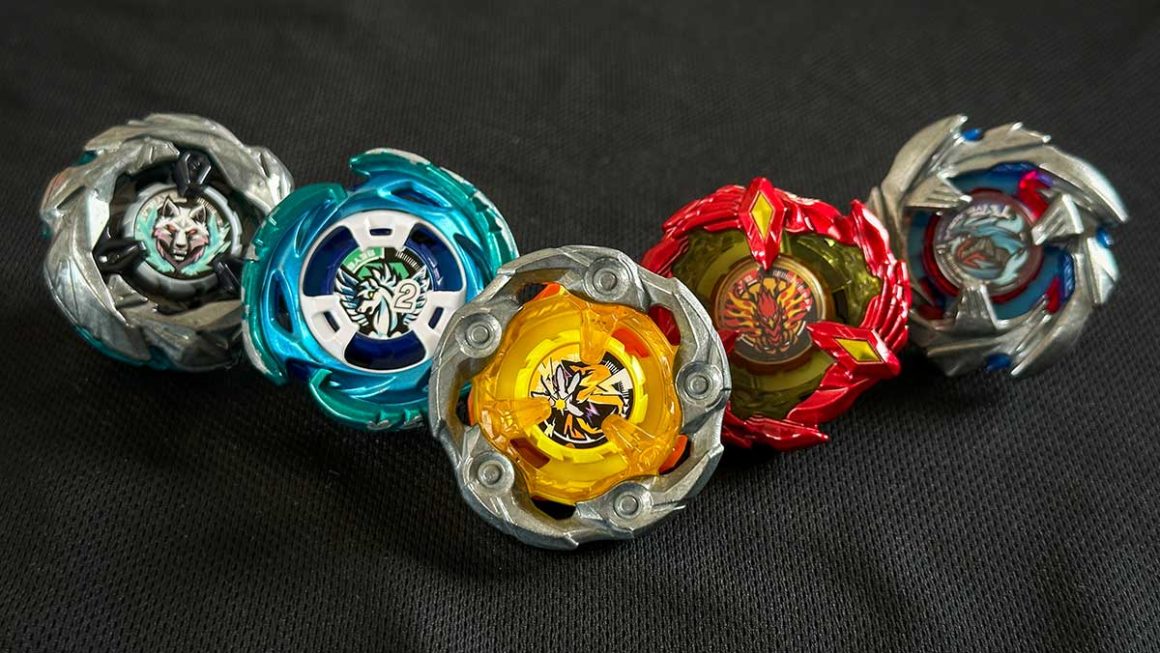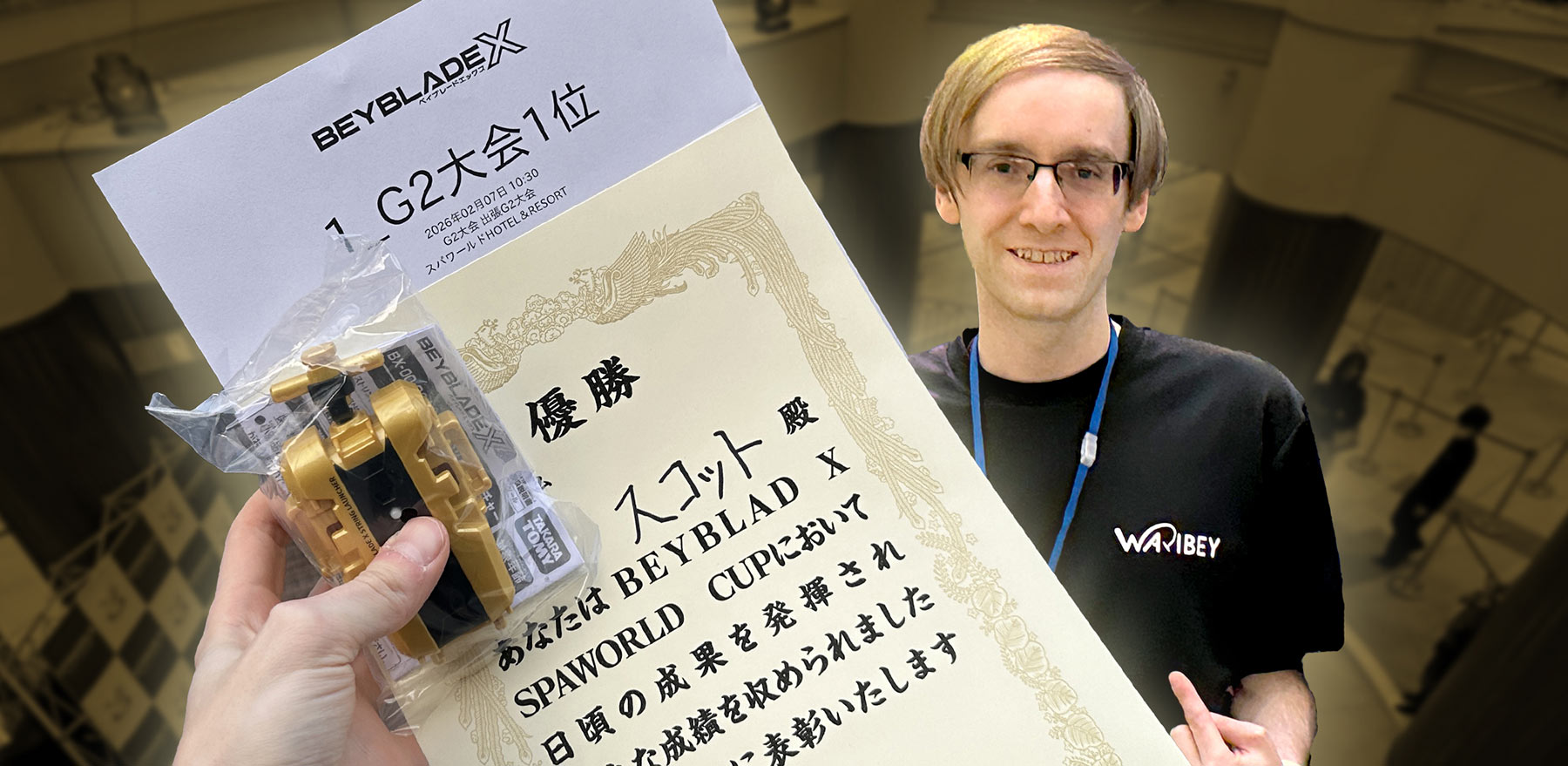
“I am a Beyblade X G2 champion.”
I’ve dreamt for almost three years to be able to say this.
But what does it actually take to win a large Beyblade X tournament?
A tournament with hundreds of players. One loss away from elimination at every stage.
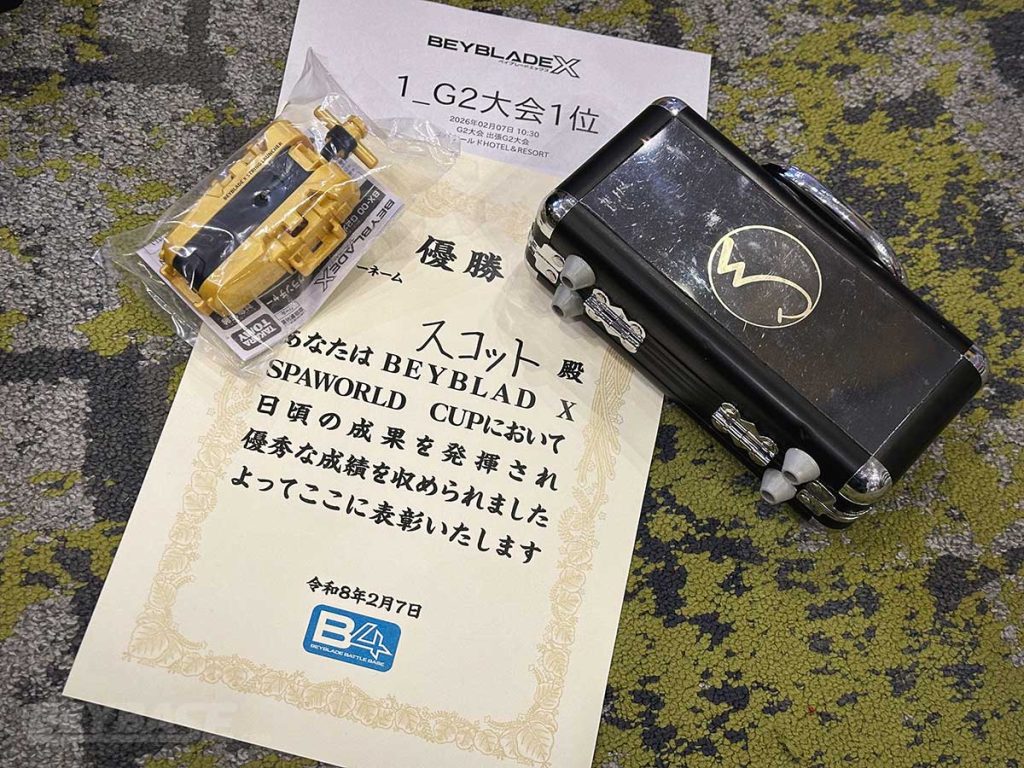
On February 7, 2026, I won the SpaWorld Cup Dispatch G2, a 256-player official Beyblade X tournament held in Japan. While the result itself was meaningful, the experience revealed something even more valuable: the systems and mindset required to succeed in high-level competitive play.
This article explores the journey that led to that moment. From competing in over 100 Beyblade X tournaments to developing the framework that ultimately allowed me to perform consistently under pressure. Along the way, I’ll share the key principles that shaped my approach to competition: knowledge, adaptability, reproducibility, and intuition.
If you’re interested in improving as a competitive player or understanding what high-level Beyblade X tournaments are really like in Japan, this is my attempt to explain what it takes to succeed.
Affiliate Disclosure: If you buy something through some of the links on this post, you won’t pay any extra, but we’ll get a small commission. This helps us keep things running. Thanks for your support!
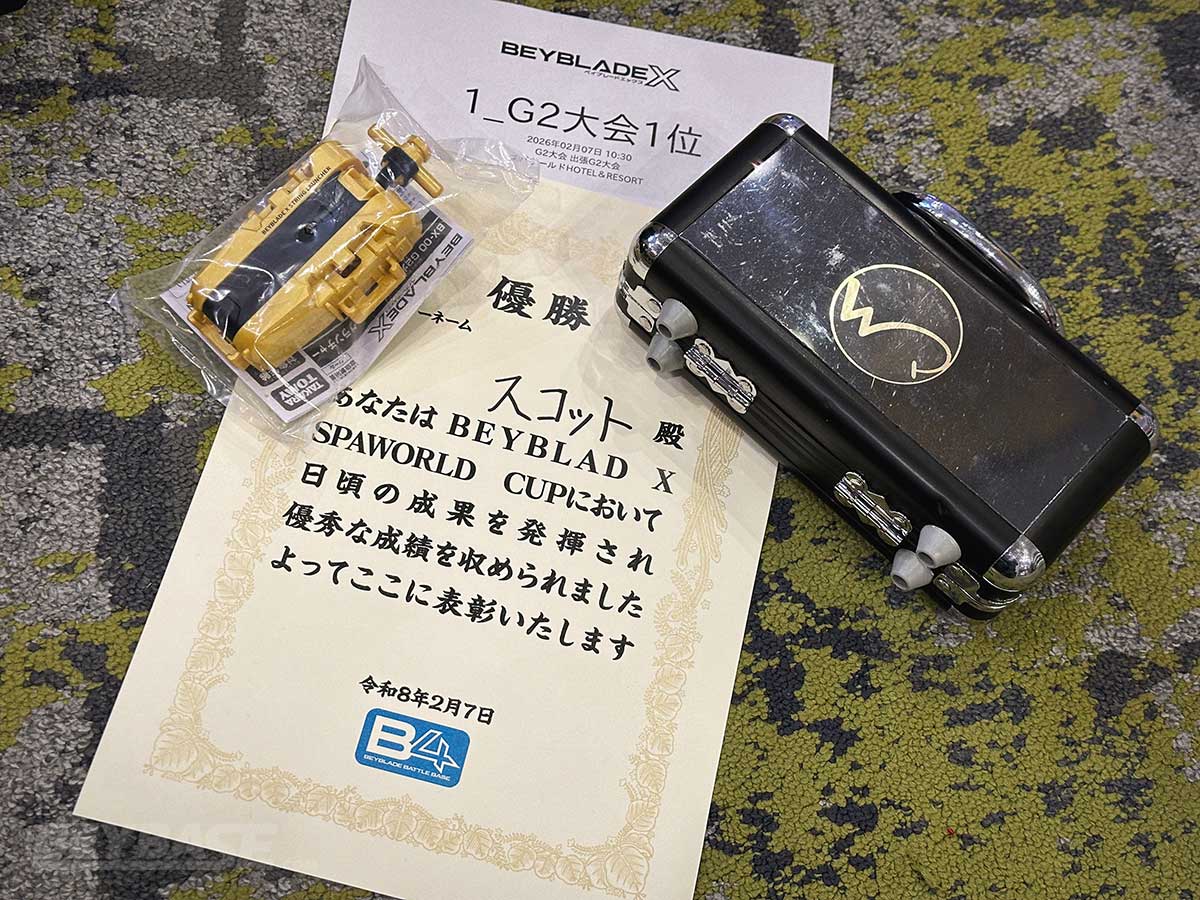
Summary: How I Became a Beyblade X G2 Tournament Champion
Winning the Beyblade X SpaWorld Cup Dispatch G2 tournament did not begin on the day of the tournament.
It began years earlier. In conversations with friends, opponents, and teammates. In quiet observation of players I respect. In training sessions. In wins and losses across over 100 Beyblade X tournaments that forced reflection. And in the decision to treat improvement as something that compounds over time.
The 4 Principles That Made My G2 Victory Possible
After competing in over 100 Beyblade X tournaments, my victory ultimately came down to four compounding principles:
- Knowledge: Understanding parts, matchups, stadium behavior, shooting strategies, and tournament structure through repeated experience and intentional investigation.
- Adaptability: Responding effectively when facing unfamiliar opponents, unexpected combinations, or shifting tournament conditions.
- Reproducibility: Building launch techniques, preparation routines, and mental frameworks that can be recreated reliably under pressure.
- Intuition: The natural decision-making ability that emerges when knowledge and repetition run deep enough that adjustments can be made instinctively.
With these four principles, the path towards my victory can be expressed simply as:
- Learn the game (knowledge)
- Handle the unknown (adaptability)
- Become reliable under pressure (reproducibility + intuition)
Key Lessons from Winning a 256-Player Beyblade X G2 Tournament
If I had to summarize the most important lessons from my journey, they would be these:
- Improvement compounds. Breakthroughs are rarely sudden. They are usually the visible result of years of repetition.
- Large tournaments reward self-understanding more than opponent knowledge.
- Preparation reduces stress. The more reproducible your systems are, the less you need to think under pressure.
- Confidence comes from experience, not belief alone.
- Aim for battles you won’t regret. Winning matters, but integrity of performance matters more.

Sponsored: Order the newest Beyblades at malloftoys.com!
Heads up: If you buy something through Mall of Toys, you won’t pay any extra, but I’ll get a small commission. This helps me keep things running. Thanks for your support!
Crafting the mental foundation and environment that enabled me to become a G2 champion
My journey towards this achievement began at the launch of Beyblade X, and continued through 2023, 2024, and 2025. Throughout the past three years I have worked to develop my mental foundation as a Beyblade player and improve the environment in which I engage with the game.
Blader Kei’s G2 Tournament Winning Foundation
Below are the building blocks that have helped me to become a player capable of winning a G2 tournament. Click each one to learn more:
- The importance of creating opportunities to build experience, connections, and consistency
- The impact of your environment
- Learning from others and being influenced without imitating
- The influence of event organization and ambition on player development
- Building confidence through the pursuit of reproducibility
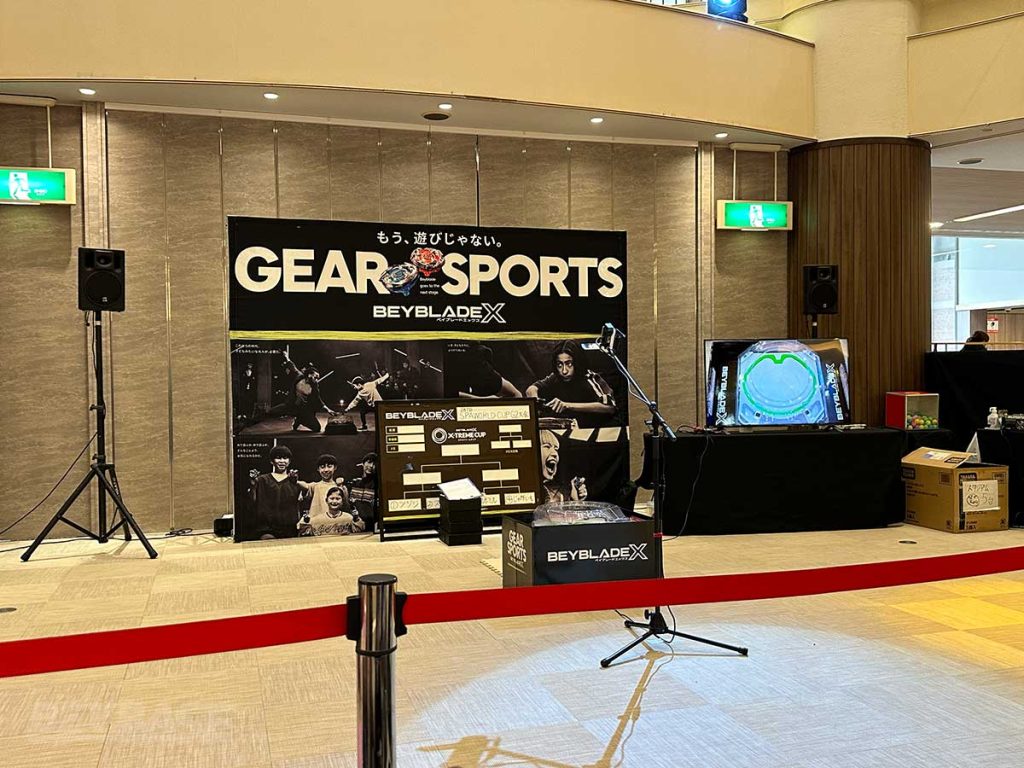
The importance of creating opportunities to build experience, connections, and consistency
My history with Beyblade has been well documented over the years. I’ve published various interviews and articles covering it. But I’ll give a brief overview to contextualize my journey towards becoming a Beyblade X G2 tournament champion.
I am from Canada, one of many places in the world which lacks any meaningful official tournament support from the rights holders to Beyblade. I came in third place in an official tournament in 2003, and from that point I was hooked. I wanted to experience it again.
Prior to Beyblade X, I was able to participate in a few more official tournaments, mostly in Japan. This confirmed my desire and kept me motivated to continue pursuing these opportunities.
But for a very long time all my effort could only be focused on unofficial tournaments. These were events hosted by fans (like myself) across Canada and the United States. Most were through the fan-run World Beyblade Organization.
There was always a part of me that believed there would one day be an opportunity for me to participate in official tournaments again. So I did the only thing I could do.
To make a long story short, I accumulated first-place finishes at over 70 tournaments between 2010 and 2024. Highlights included ten tournament wins across many editions of BEYBLADE NORTH at Anime North in Toronto. I also won BEYBLADE SHOGATSU 2019. It was one of the biggest Beyblade tournaments in Canadian history (to my knowledge) at the time with over 160 participants.
But such results weren’t handed to me. I participated in hundreds of Beyblade tournaments during this time. And I accumulated more losses than probably any other player in the WBO community over that span of time. I learned a great deal about not only the game, but myself through this experience.
In retrospect, it is clear to me that growth and consistency is built through repetition and reflection, not through prestige. Striving to win or being happy to receive recognition for an achievement is important and natural. But standing where I am now, I know that despite any positive results I was able to accumulate, what was most important was my dedication.
Through my dedication I was able to grab hold of and create opportunities to play and to grow. But most important of all was meeting other people who loved the game like I do.
No matter where you live, and no matter what tournament support exists or doesn’t exist; it all starts with dedication, determination, and a dream.
The impact of your environment
In 2015, I visited Japan for the first time. And continued to visit on a nearly yearly basis until I started living there. I have written extensively about my experience with the Beyblade community in Japan before:
Blader Kei’s Beyblade in Japan Reports
For me, Japan has given me access to experiences that were impossible for me to attain in North America. It has allowed me to connect with players who have grown in a completely different competitive environment than my own.
It is difficult to talk in absolutes. But in a very general sense my impression is as follows.
There is a higher concentration of highly skilled, knowledgeable, disciplined players here than there are in other places around the world. These players have cultivated strong mental frameworks. This helps them succeed in high pressure situations. And their deep knowledge of and intuition towards the game is at an elite level. Even those who haven’t yet reached this level are on the path to reach it one day because of the environment they are growing in.
To describe it in detail could be an article of its own, but I’ll distill it down to a few key factors:
- The historical impact of existing competitive hobbies and attitudes towards them in Japan.
- Official tournament support for Beyblade has existed since the beginning.
- The fact that the basis for Beyblade–Beigoma–is historically rooted in Japan.
- Many other aspects of Japanese culture itself (such as kyudo and karate).
These have all combined to create this reality.
I’m certain there are other people around the world like the people I have described here. Especially in other Asian countries. Or any places which have also historically had good official tournament support. But my personal experience with this type of player has been in Japan. So, to say my respect for Japanese players is high would be an understatement.
Everyone is shaped by their environment. So it is only natural that players in places like Japan would evolve to reach this level. For me, as someone who had played in such a vastly different context, I felt almost like a beginner again after coming to Japan. This is despite having played and put in serious effort to succeed for well over ten years and competed with so many strong players on the other side of the world. At times, I still feel the same way even now. I’m still trying to close the gap.
My experience over the past decade plus in Japan has helped to accelerate my growth as a player. It has helped me to uncover the things I didn’t know that I didn’t know about the game and myself as a player.
All of this is to say that your environment matters just as much as your effort. Finding–or creating–the right community that will help to support not only your enjoyment of Beyblade, but challenge you to grow is paramount.
The environment that best supports the growth of Beyblade players is different for everyone and so are the methods to cultivate it. But if you think about your own dreams and circumstances, and face them with strong resolve, the right path forward will surely appear.
Learning from others and being influenced without imitating
There are a lot of things about Beyblade which you can’t learn unless you make connections with other people. This has been true for me from the very beginning.
Discovering the online community and meeting players for the first time
I first joined the Beyblade community online in 2005 through the fan-run community Off the Chain. From that moment on, I learned so much about what a “good Beyblade” and effective shooting actually was. I went from using a stock Draciel Fortress in my first tournament in 2003 to understanding what a “Zombie” is and what “Sliding Shoot” is.
But there was something even more important than all of that. It was my awe-inspired feeling meeting stronger, more experienced players for the first time. I finally met some of them in person at the “BEYBLADE’S NOT DEAD!” Event at Anime North in Toronto in 2008. Players like Bey Brad, Blue, and Cye Kinomiya. From that point onwards, there were many, many more.
Meeting Japanese players and understanding the value of teams
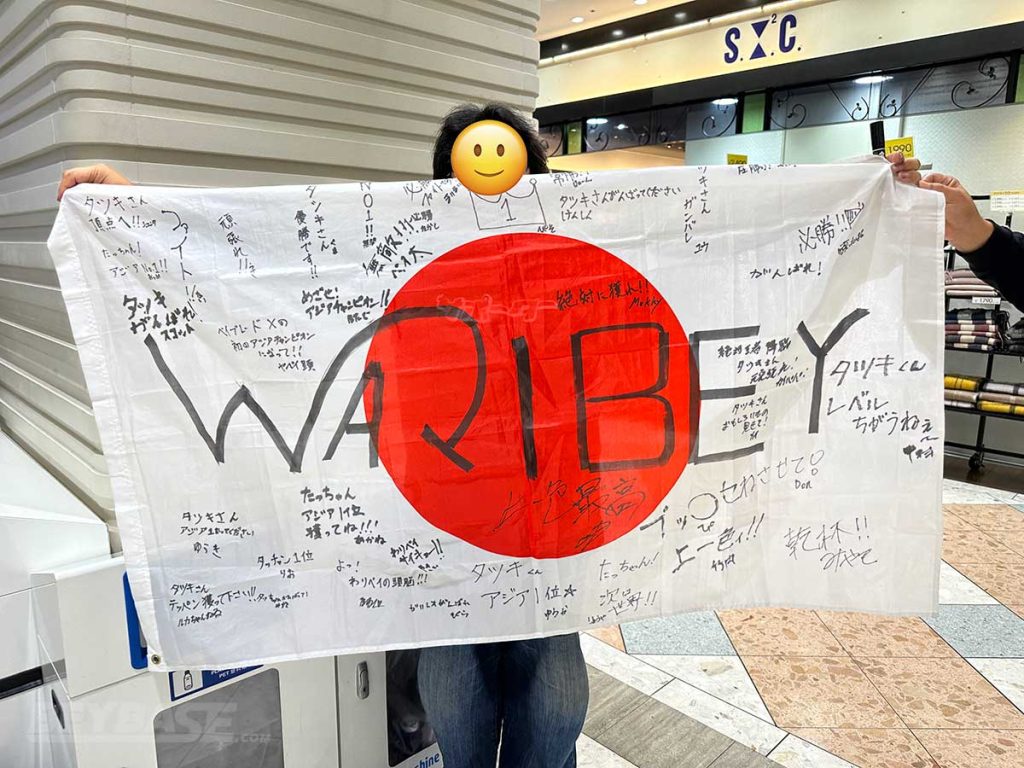
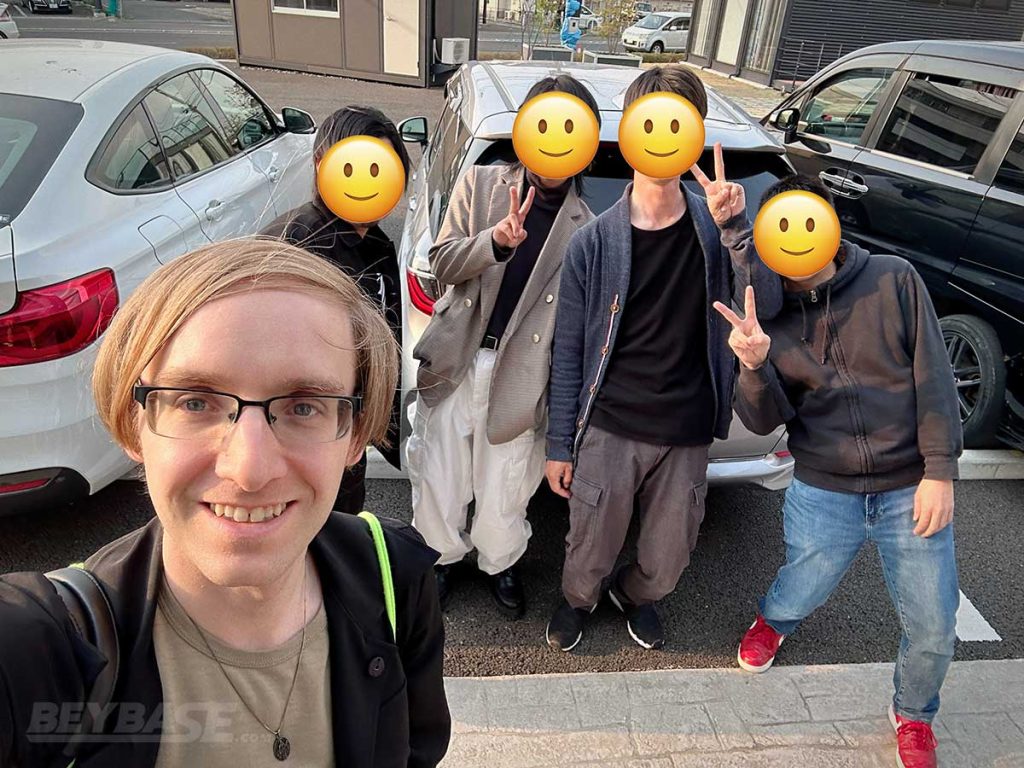
This group expanded even further when I started visiting Japan. Most notably, the members of my team WARI-BEY and other high level official tournament champions. This includes players like Tatsuki and Master, who I have previously interviewed here on BeyBase.
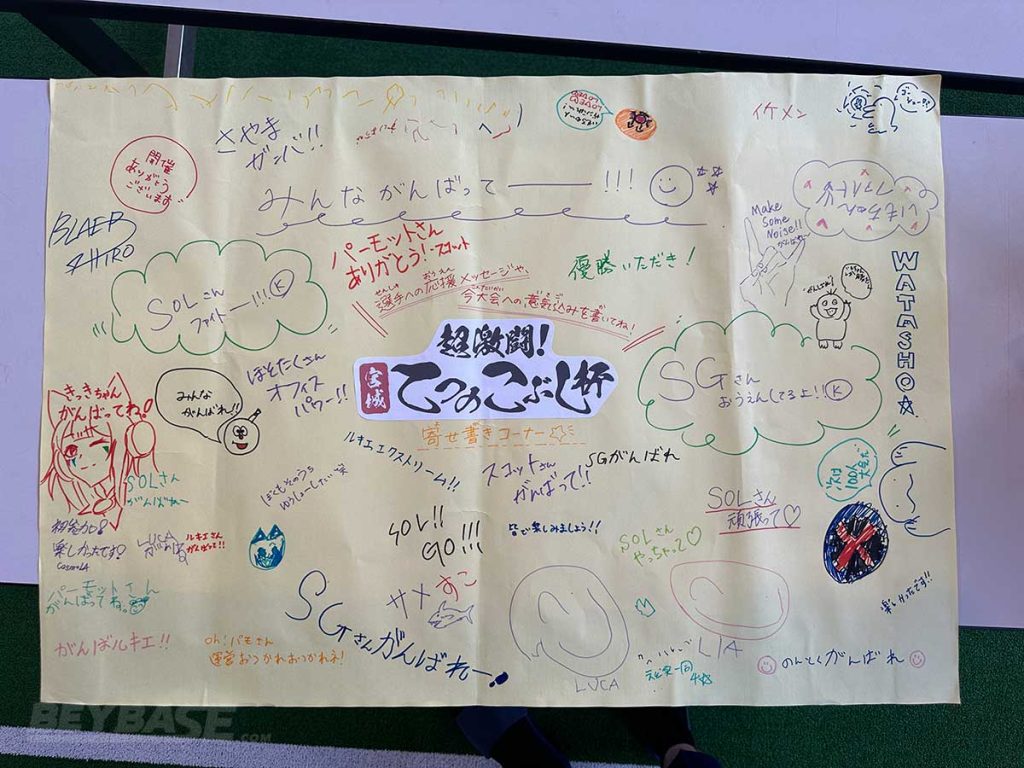
It wasn’t until I visited Japan that I started to truly understand the value of teams in Beyblade. The best teams are those who have a shared vision or philosophy and pursue a goal together. In doing so, you can practice together, learn from each other, support each other when you fail, and celebrate together when you win.
Imitation is the starting point, not the end point
Even if you don’t have a team or many friends yet, the key is to make an effort to put yourself in positions where you can meet the types of people you want to meet. Then, if you have someone you look up to, sometimes it is as easy as asking them for advice. And that’s how a relationship can be born. If you don’t ask, you don’t get, as they say.
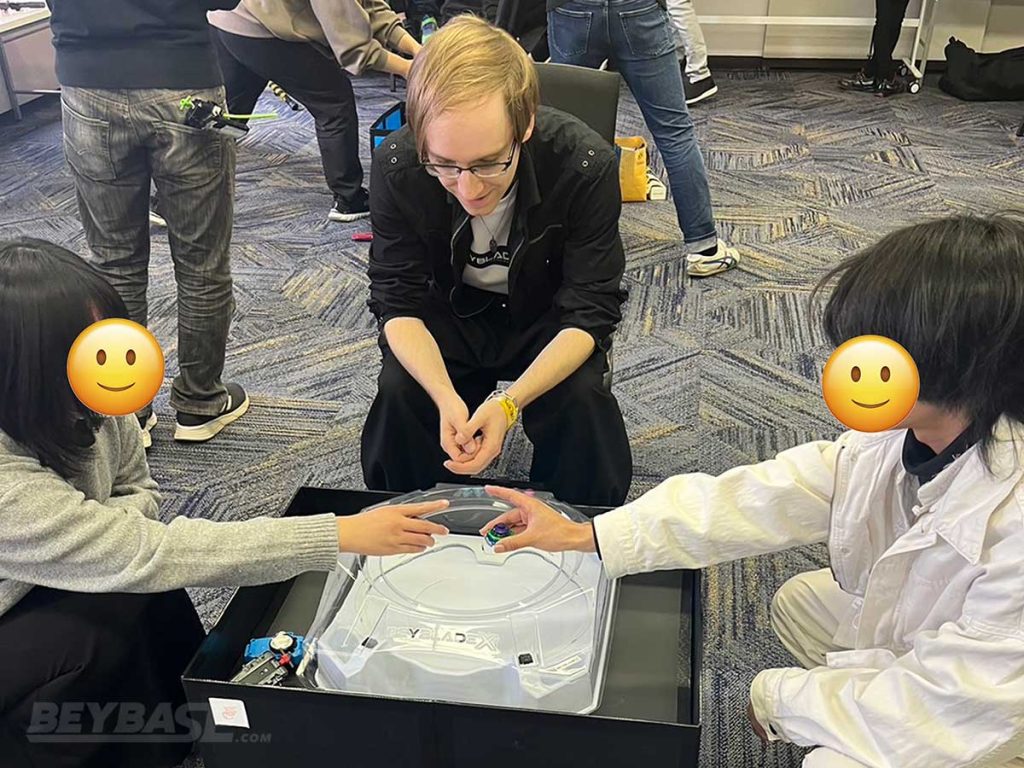
It doesn’t matter whether it is team members, friends, or fellow competitors. What I’ve learned is that the important thing is to learn through observation and adaptation rather than trying to copy someone. Imitation is a great starting point. But to truly improve what you choose to adapt needs to synthesize with the wider breadth of your experiences and preferences. If you don’t internalize your influences and let them mix with everything else that makes you, you, it’s difficult to build your own unique identity. If you do something just because someone else said so, you will not be able to build the deep confidence and belief required to succeed at higher levels.
Focusing on principles
Generally speaking, rather than focusing on a particular playstyle, I first zero in on the principles of the players I admire.
I ask myself questions like “What are the underlying factors which lead them to success? How do they make decisions? How do they prepare? How do they react and conduct themselves under pressure?”.
Sometimes I am influenced by specific Beyblade combinations or the shooting form of someone I admire. But rather than assuming that if I do the same thing I will be successful, I first try to identify objectively why it is successful for them. Then, most importantly, I think about whether it fits my own playstyle.
Comparison is a trap
The only danger in this is reaching a point where you start to compare yourself to others. If you are someone who is highly motivated to improve, it can be easy to fall into this trap. The important thing to remember is this: everybody you see and everybody you meet is participating with a different background and set of circumstances.
The influence of event organization and ambition player development
Organizing out of necessity
I’ve been hosting my own Beyblade tournaments since 2009.
At first, I simply did so because there were effectively no other options available if I wanted to play Beyblade with other people. The community in Canada back then was close to being non-existent when compared to how strong it has become especially during Beyblade X.
Organizing tournaments allowed me to fulfill my own desire and at the same time give opportunities to other people who felt the same way.
Although I did have a desire to compete back then, I gave very little thought to larger goals like winning an official high level tournament. It was a completely different world that I had no access to.
The gift of ambition
But the gift of ambition was bestowed upon myself as well as other members of the community in a different way. It was through the introduction of the fan-run WBO worldwide ranking system.
Over time, we reached a point where it became possible for the WBO to host a North American Championship. They included with qualifying tournaments across Canada and the United States. We did so first in 2013, then 2014, and finally a Team Format-based championship in 2015.
I was lucky enough to be a member of the championship winning team in 2015 at Team BeyBattle Revolution.
After that, the stakes continued to rise as many organizers–myself included–aimed to, for better or worse, host larger and larger scale events. This culminated in 2018 with the Beytuber Brawl. And 2019 with BEYBLADE SHOGATSU 2019.
All of this was the result of not only Beyblade’s continued development, but of the development of the community worldwide. It’s a snowball that has continued to grow over the past 25 years. From online communities like the WBO to the countless local communities worldwide. Many places around the world have grown because of the effort fans have made to grow the game.
Reaching the people you identify with
Having lived in Japan throughout 2023, my ambition had now evolved and crystallized into a dream of becoming the champion of an official G3 tournament. This eventually came true for me in early 2025 and I shifted my sights to G2 and G1 tournaments.
When I returned to Canada from Japan at the start of 2024, I quickly began work on creating the Ontario Beyblade Battle Community.
My vision for the OBBC was simple. I wanted it to, in some capacity, act as an unofficial subsidiary of the WBO. But at the same time offer some flexibility that only a local community could offer.
To this point, I had participated in many events under the official governance of Beyblade Battle Base (B4). I recognized that I brought a unique perspective to the table that few other people could. For the events that I hosted, almost all of them utilized B4 regulations to the best of my ability.
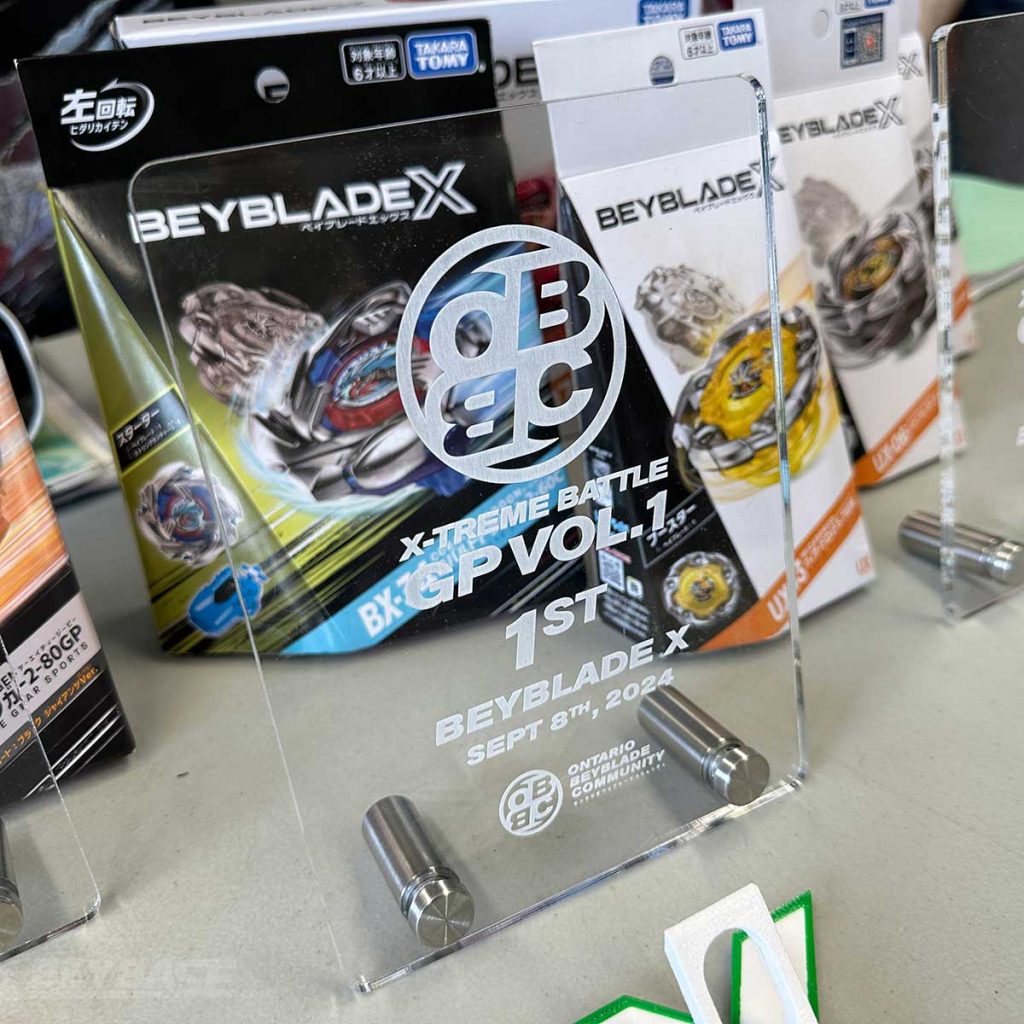
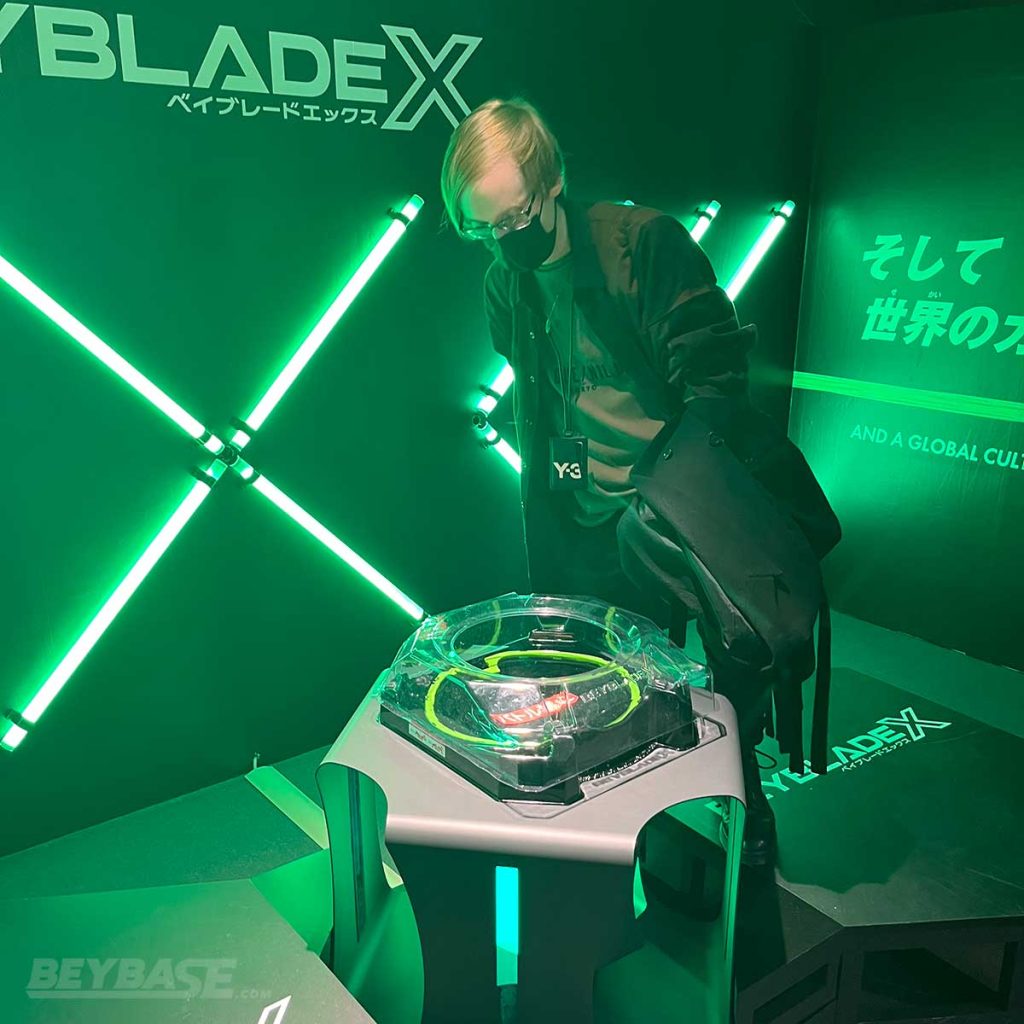
At the time, I knew my time back in Canada would be limited. From the beginning, my goal was to create a series of events which could culminate in a “Grand Prix” style event. Similar to the prestigious X-TREME CUP GP events hosted by B4 in Japan.
In total, we were able to organize nine qualifying tournaments and ultimately hosted OBBC X-TREME BATTLE GP Vol. 1 in September 2024. The winning players from the qualifiers and top players in our local rankings were eligible to participate.
There were a few reasons I did this. At the time, some players in Ontario questioned the enjoyability of official B4 tournament rules. There are many ways to enjoy Beyblade, and everyone has their own preferences, so I totally understood the sentiment.
However, I felt there was value in giving players access to an experience similar to something they do not have access to: official B4 tournaments. I went so far as to even create my own stadium stands that mimicked the dimensions of the ones used in official tournaments.
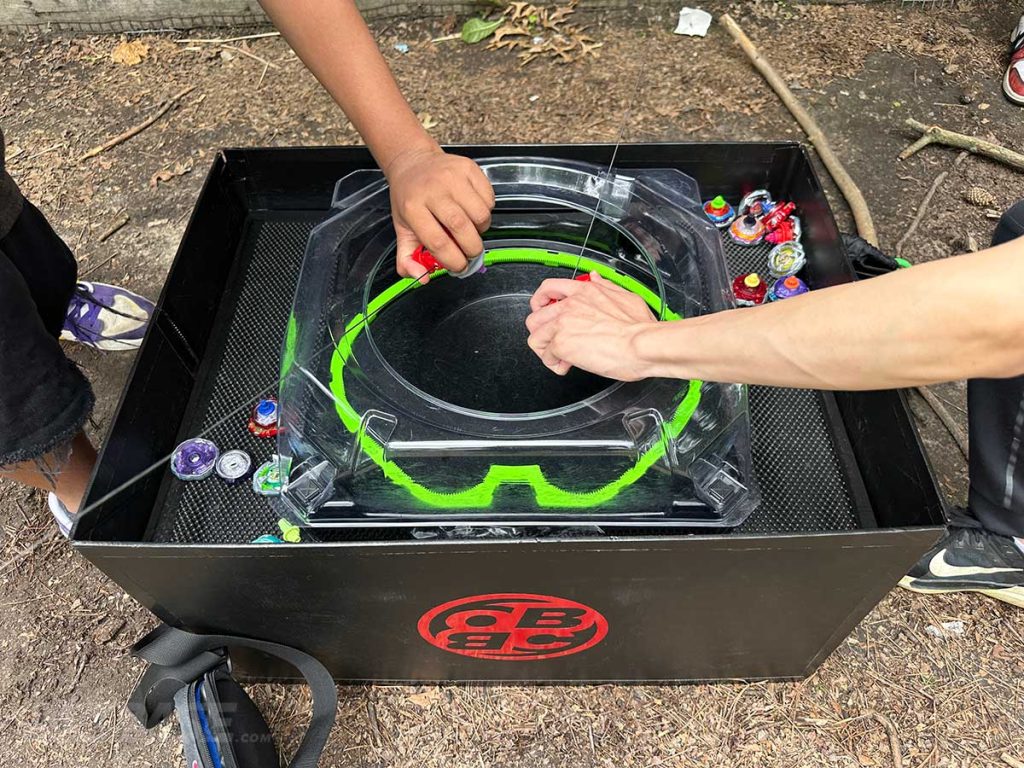
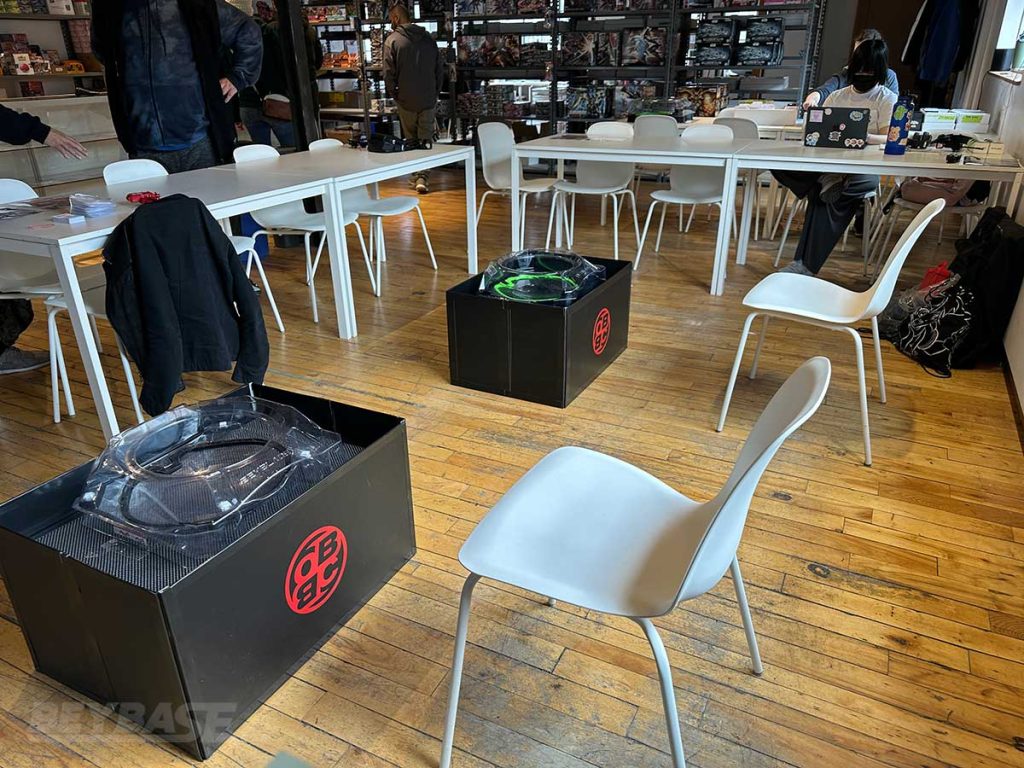
Organizing can be a thankless job. If you choose to organize tournaments, what I have come to believe is that it is important to have an opinion. It’s also important to listen to the people who attend your events.
But rather than trying to please the masses entirely, it is most important to be authentic to what you are passionate about. If you do this, it becomes easier to expend the effort required to deliver an experience to participants that they will not forget. You won’t burn yourself out. And in doing so, you’ll eventually reach the people who identify with your perspective. To me, that’s enough.
There are a wide variety of options available in regions like Ontario for people to enjoy playing Beyblade together. These options allow players to choose events that match what motivates them. Events by independent organizers, WBO events, or local game stores are all available.
Ultimately, you don’t have to be everything, to everyone. And that’s truer now than ever before.
Ambition is important, but unchecked it can put you into situations where you wonder why you’re doing what you are doing. If instead you focus on being true to yourself and your own goals, you’ll find that over time the type of people who you want to connect with will find you.
Because there are so many ways to enjoy Beyblade, it is vital to determine not only how you like to play, but to find the people who feel the same way as you do. This is true whether you’re acting as an organizer or as a player.
If you can find the people who you share the most with in common, it will create a flywheel effect. You will be inspired by them to keep running towards your dream. And in turn, you will inspire them to do the same.
Creating deeper enjoyment
I was a staff member on the WBO for a very long time. I’ve also been a prolific event organizer myself around the world. Through this experience, what I’ve learned is how important the combination of ambition with intention is. To be ambitious in this way means to have a dream.
The dream doesn’t have to be winning a G2 tournament. But whatever it is, a dream cannot be realized without taking action. As a Beyblade player, event organizing is a very effective way to improve not only yourself as a player, but the people around you.
Nobody starts playing this game with perfectly formed goals. Nor do they start with perfectly realized habits. Or methods of interacting with the game and people playing it. But it is through making an effort to connect with others that Beyblade at its core can be most deeply enjoyed.
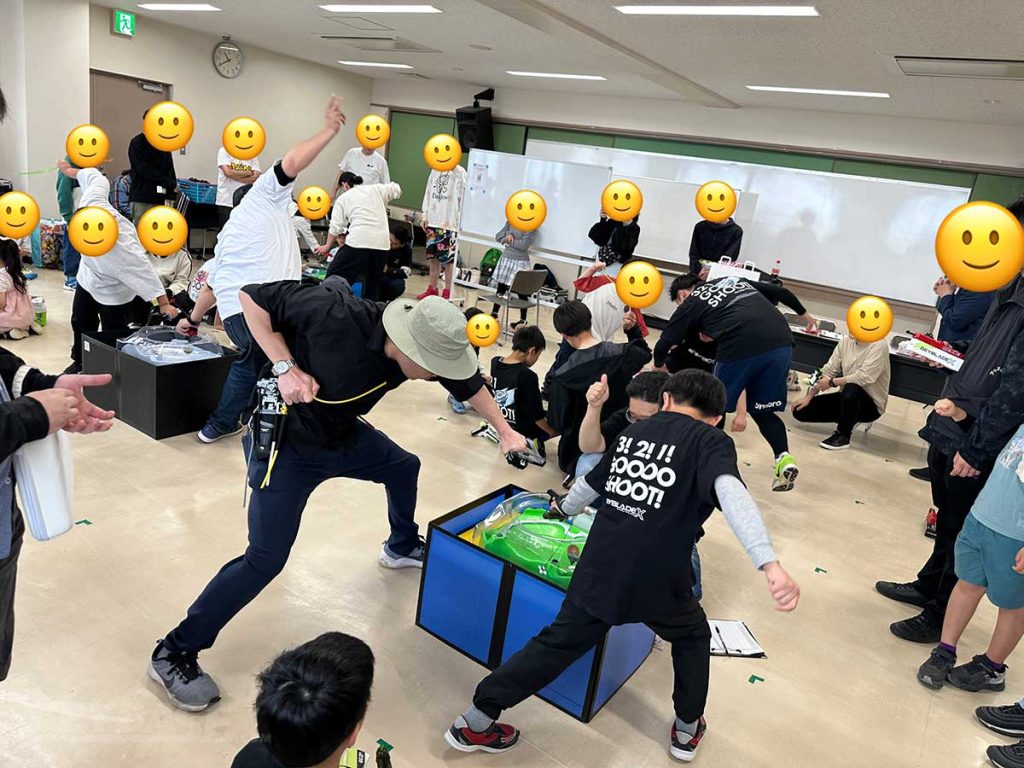
Refining your communication skill
Beyblade is to me a communication game. This includes not only the communication of your will through the tops you use and how you use them against an opponent, but the communication that occurs before a match starts, between battles, and after a match finishes with your opponent and the judge.
The more you practice through not only play, but organization, the better you’ll become. This is true for both online communication, as well as in-person communication.
The more opportunities you have to communicate, the more the gaps in your understanding of yourself, your weaknesses, your strengths, the game, and your intentions versus your actions will become clear. I know this to be true through my experience with the WBO, BeyBase, and in hundreds of real life tournaments.
Consistency improves as responsibility increases
On a practical level, organizing events helps with deepen your respect for:
- tournament structures,
- rules,
- judging,
- players,
- spectators,
- and other organizers.
All of these qualities can help to influence the development of your strength as a player on an individual level.
When viewed over a long period of time, consistency as a player tends to improve faster as responsibility increases. The reason is simple. In accepting responsibility, you naturally come to more deeply understand two things:
- Everyone involved with an event.
- How events work on a fundamental, technical level.
Both can influence the actions you take as a player.
The tricky part at this stage becomes finding the right balance between your pursuits as an organizer and as a player. It’s hard to do both at a high level simultaneously.
Building confidence through the pursuit of reproducibility
Controlling variability and suppressing randomness
Beyblade is a game which inherently carries with it a vast array of variables. These variables can affect the outcome of any battle, match, or tournament.
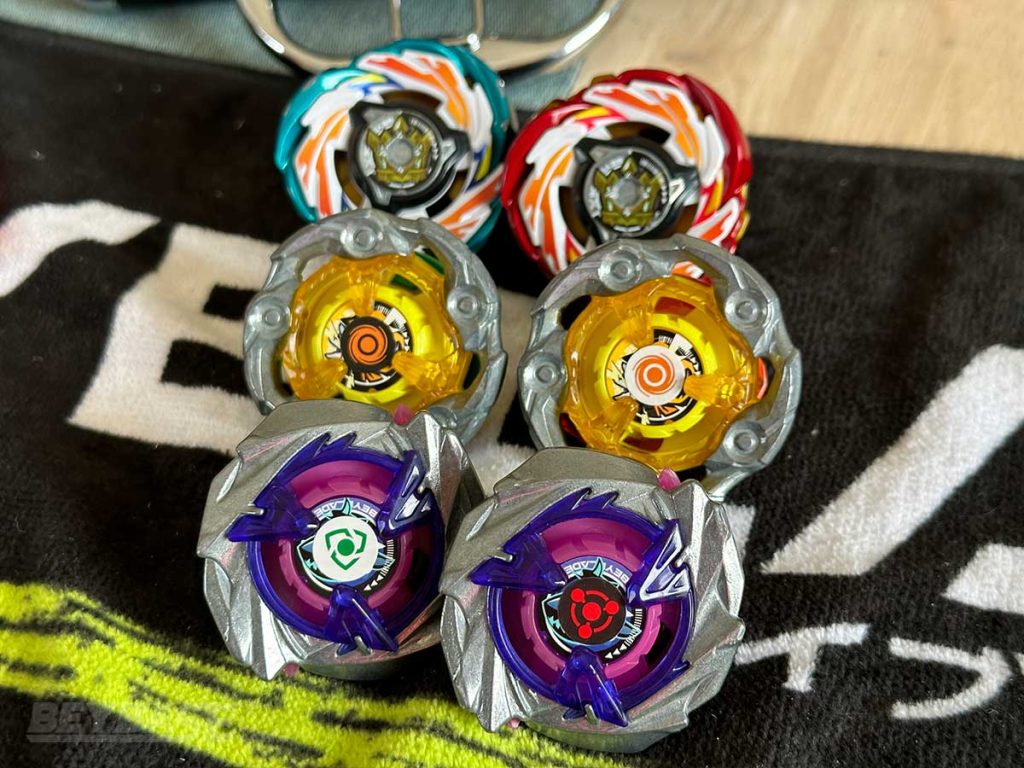
The most obvious is the Beyblades themselves. Every part behaves differently. As such, so does each of the thousands of possible combinations. Beyond this, part manufacturing variance also plays a role. It affects properties such as the weight and balance of each individual part. One piece might have the same name, but when compared to another copy of the ‘same’ part perform vastly differently. Not to mention the impact of part wear over time.
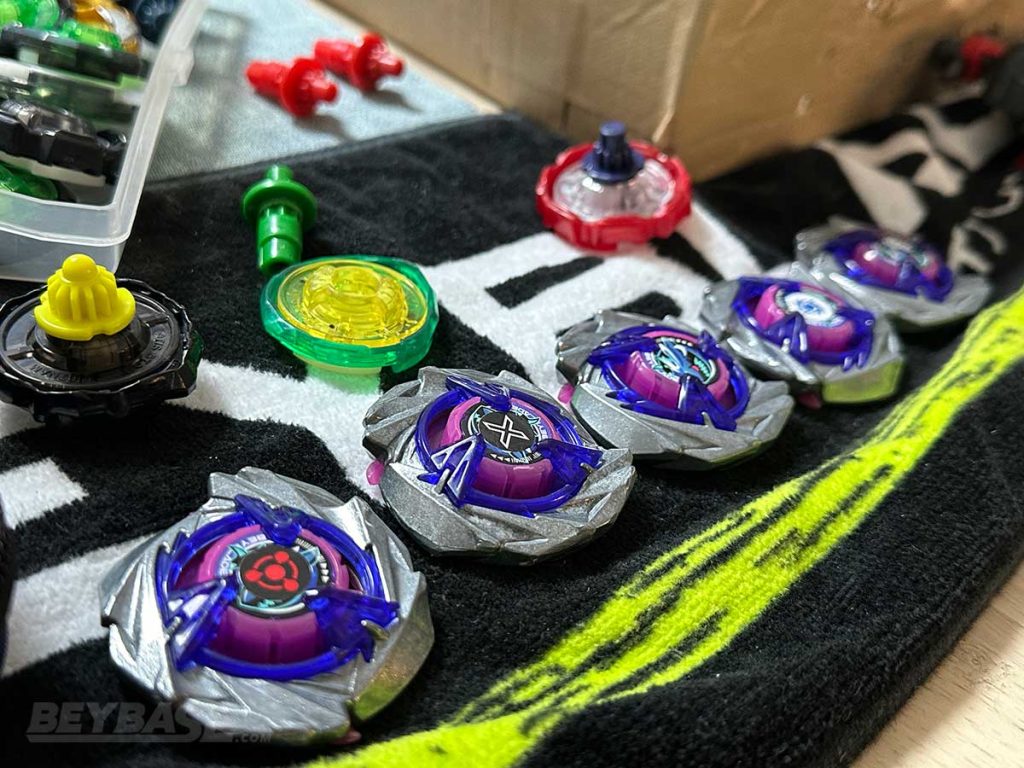
The stadium and playing environment also play a big role. Different stadiums reward different strategies. And even small variations in design or wear on a stadium can affect the results of a battle. Playing on the floor or in a stadium stand affects shooting. Playing with a big audience or no audience can affect nervousness.
Finally, are the players and judges. As human beings, we are subject to being affected–both positively and negatively–by our own emotions, experience, and circumstances. They affect the choices we make at any given moment. And physically, we are restricted by the bodies we inhabit. Players are not robots and cannot set a hyper-specific, calculated shot power or trajectory. Judges cannot view a battle from all angles and at slow speed simultaneously. Your opponent is not under your control.
Knowing this, the name of the game for players who want to win becomes how to enhance reproducibility in the things you can control. With practice, reproducibility can be enhanced in your:
- tops,
- shooting,
- decision-making,
- physical and mental state.
In Beyblade X, Takara Tomy is attempting to walk a very fine line. It is the line between accessibility and depth:
- Accessibility prioritizes outcomes that: reduce the importance of strategy, make entry simpler, and increase randomness. It’s the idea that anyone can win. Or the idea that Beyblade can become a “global culture”.
- Depth prioritizes outcomes that: increase reproducibility, reward deeper knowledge, better gear, wider experience, and consistent training. It’s the idea that with practice you can win more often than lose. The idea that Beyblade will become sports.
This conflict is present in many sports. And both are important in one way or another. Thankfully, there is a certain level of depth to be found in Beyblade X that you can utilize to reduce the effect of luck on the outcome of your battles.
Achieving reproducibility
In the past, I have highlighted a potential connection between Kyudo (Japanese archery) and Beyblade. Kyudo emphasizes seeking not to shoot the target, but to make the target shot. In other words, what is important is not whether you hit the target or not. It’s whether you executed the steps required in order to shoot the arrow beautifully.
In order to shoot the arrow beautifully, practitioners of Kyudo practice mindfulness. They emphasize conscious refinement of their posture and technique. Being able to reproduce these steps on an almost unconscious level after tireless repetition is what makes it possible for the target shot to be shot beautifully. Furthermore, it is through doing this effectively that they can increase the chances of actually hitting the target.
Beyblade X G1 champion Mokky has also said similar things about the connection between Beyblade, karate, and reproducibility.
When it comes to Beyblade, what this can teach us is that in order to achieve reproducibility, we must first practice acting with intention. Consistency compounds over time through deliberate repetition. Winning over time is a result of acting with intention.
Rather than thinking of high or peak performance as the ability to win without fail, it is better to think of it as the ability to manufacture a mental state, framework, routine, and shooting form that you can reproduce in any situation.
This way of thinking came into focus for me gradually, but accelerated after Beyblade X began. There is often a difference between “knowing” something and internalizing it. Knowing something to me means that you can recall and understand it with conscious effort. Internalizing something means you understand and feel it naturally with little to no thought required.
Everything I have done over the past several years has been in service of achieving this state.
For those who seek prestige, this might seem unbearably boring. To achieve this takes hard work. And patience. Even those who do everything right may still fail at times.
Practicing with intention
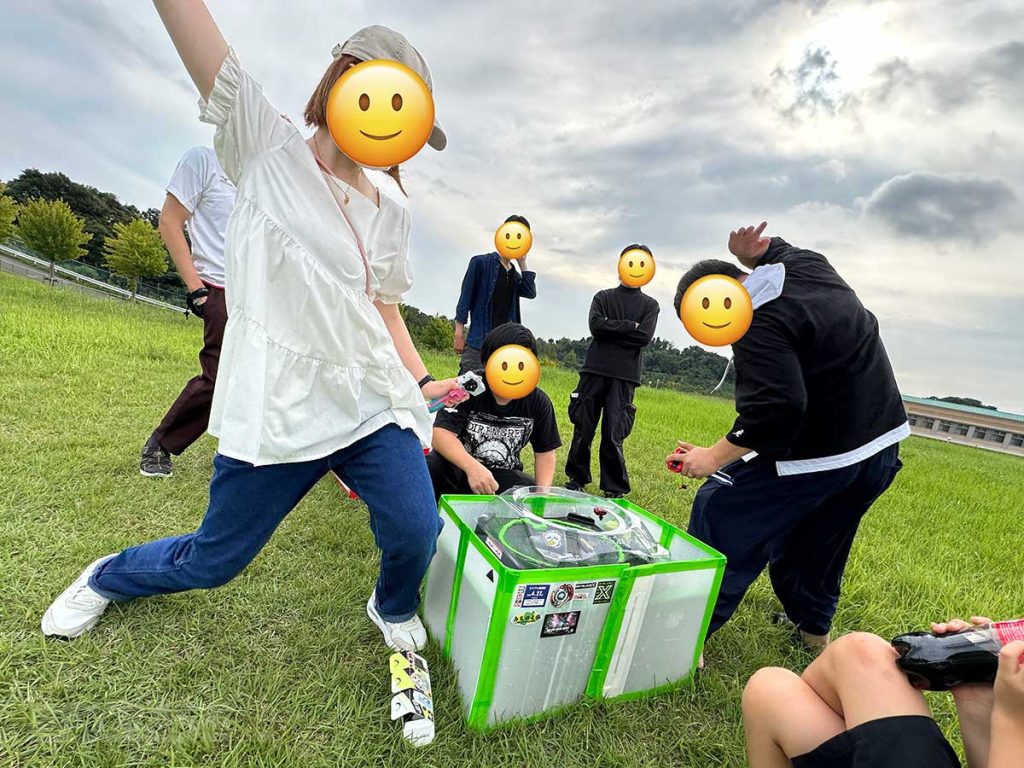
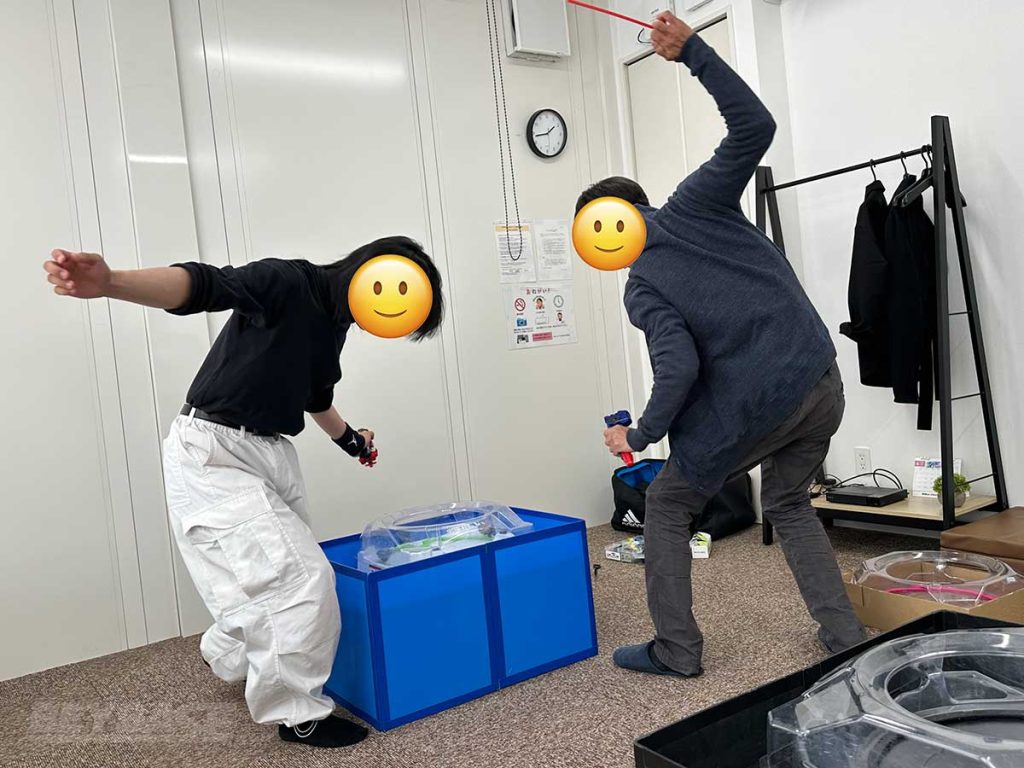
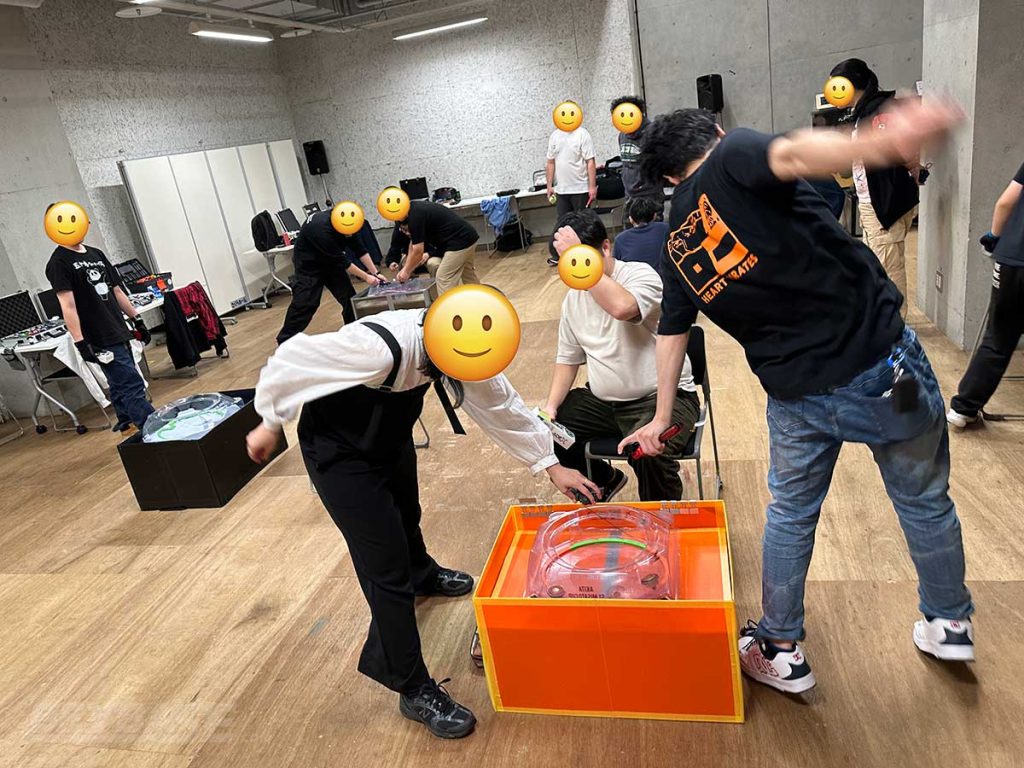
One of the ways this manifested for me from a tactical perspective was before the Beyblade X-Treme Cup G1 Sendai in May 2025. Heading into this tournament, I was no stranger to the moment at hand. It was set to be the first time I had ever competed in a G1 tournament. I prepared as thoroughly as I could.
One way I did this was by hosting multiple practice meetups with fellow community members on May 2nd and May 13th before the G1 that year.
The reason was that I’ve had come to realize that playing in tournaments over and over again can only take you so far.
If your intention is to become a stronger player, it can be poor use of time to spend hours traveling to an event only to be knocked out in the first round. That is, if the volume of times you do this impacts your time to reflect and practice. I started to be of the mind that quality was more important than quantity in this area.
Many players tend to view the free battles played at events outside of tournament matches as a method to improve themselves. This is some truth to this. However, the usefulness plateaus at a certain point.
If you want to improve, it’s important to not only practice, but to practice with intention. Without intention, hours upon hours of random testing can result in little to no true improvement.
I used the aforementioned practice meetups to:
- verify assumptions,
- stress test the customizations I intended to use during the G1,
- and build confidence in my shooting across a wide variety of situations.
I had specific goals in mind. And to be honest, despite saying this, I do think there is still room for me to grow when it comes to taking practice meetups more seriously. In particular, finding a way to measure whatever baseline I’m trying to improve is versus the end result of any session.
Thinking about how to think
In addition to this however, I spent a lot of time thinking about … how I wanted to think on the day of the event. After playing in the Beyblade X-Treme Cup G2 Sendai in 2023, one of my takeaways at the time was how nervous I felt.
I corrected this at the X-Treme Cup G2 Fukuoka a few weeks later, but I was defeated so swiftly that it didn’t matter in the end. Despite the crushingly disappointing result in that event, the biggest takeaway for me was how much my mental state had improved.
Fast forward to the G1 in 2025 and I decided to take things a step further. I spent time researching and thinking about how people in high pressure situations are able to manufacture the mental state they need to stay calm and execute what they need to do to accomplish their goals.
Blader Kei’s mental framework (v1)
The output of this exercise was a bulleted list I labeled “Things I must remember”. I wrote it on a sticky note and put it into my Beyblade case. This way, I would be reminded of it every time I opened my case before the start of a battle. I also reviewed it in between rounds and repeated the points in my mind over and over again any time I had a moment.
“Things I must remember
- I will not chase the win
- I will execute my plan
- I will focus on my opponent
- I will not make a mistake
- I will have fun
- I will follow my routine
- I will launch with intention
- I will check scoreboard after each battle
- I will not get too high or too low
- I will stay hydrated”
On some level, this might seem trivial. The content of the statements is simple. But it had a huge impact on my confidence and comfort level during the event.
The reason is because it provided structure in what could otherwise become overwhelming, scary situations. Half the battle towards reproducibility is with yourself. Your own emotions and tendencies can get the better of you if you don’t consciously work to mold them into the shape you want. It’s the difference between being able to grab hold of the moment and letting the moment grab hold of you.
Blader Kei’s mental framework (v2)
When the time came to prepare for the Beyblade X SpaWorld Cup G2 tournament, I revisited this idea and reworked my mental framework into the following:
Grounding Phrase:
Breathe. Be Present. Commit.
Mental Framework:
- I’m here to make the target shot
- I am present
- I turn energy into structure
- I make calm decisions and commit
- I trust my preparation and intuition
- I launch with full intention
- I play one point at a time
- I confirm the score
- I reset physically between points
- I slow down when rushed
- I stay precise when confident
- I act on repeated evidence
- I stay factual
- I sync understanding with judges
- I stay hydrated
One key change was a move away from any negative phrases (“I will not …”) towards an entirely affirmative stance.
It ended up being a little longer than I would have liked, to be honest. But, the keys ended up being the grounding phrase and the first point of the mental framework. I reviewed the full list a few times during the event, but repeated that phrase and first point before almost every match I played.
Practical strategies to improve consistency, stability, and normalcy in high pressure situations
Mental frameworks are important, but theory and philosophy can only take you so far. They work best in combination with the real actions you take. There are also several practical strategies that helped to increase my chances of success at the SpaWorld Cup G2 tournament. They reduced the chances of luck or carelessness impacting the results of my efforts.
Some are very context specific to this event. And some are more generally applicable. My hope is that you can consider these ideas as a whole and apply whatever makes the most sense for you depending on your individual situation.
The mental framework I outlined earlier assists with creating a sense of stability and normalcy no matter what situation you are facing. I wanted to achieve the same thing for my physical state as well.
Blader Kei’s Practical Strategies
Click below to learn about what I did to improve my mental and physical readiness:
1. Match simulation
It’s easy to understand how making the time and effort to practice with two people is important. Playing together with someone will produce much more valuable insights than playing alone. However, above and beyond simply playing with someone else is the importance of defining how you play.
In the lead up to the SpaWorld Cup, I had the idea to conduct practice using rules that would simulate the requirement for success in that event. As a 256-player event, I knew that I would have to win six 1on1 matches in order to advance to the finals. And most, if not all of those opponents would probably be completely unknown.
With this in mind, I practiced with a friend to see how many consecutive match wins I could achieve. He was allowed to use any combination he wanted to. This simulated the tournament environment. I was able to succeed using this style of practice, which helped to increase my confidence going into the tournament.
2. Match log
I maintain a log of all of the matches I play in tournaments, including the SpaWorld Cup. Initially, I take notes on my phone mid-event. Later on, I transfer the data into a spreadsheet. It’s filterable by match type, side, score, parts used, opponent, tournament bracket type, tournament, and deck position.
This takes effort to maintain, but it enables powerful analysis of my experiences. Reading data doesn’t always tell the full story, but it can help to uncover trends over time and inform how I make some decisions.
Even for the pure sake of helping you to remember what happened in each event, it is invaluable. The practice of maintaining it alone helps to instill a sense of importance to every battle I play.
In addition, I also tend to make a written record of the decks and Beyblades I see used during the events I attend. I cannot do this for every match; sometimes watching the match itself more closely to take note of shooting tendencies is more important. But, the data I am able to record does help in understanding local trends.
3. Minimal case
The case I take out of my bag before each match fits five Beyblades.
In the past, I used to bring a Beyblade case with me to tournaments that could fit around 12 Beyblades in it.
Over time, I recognized that the more Beyblades I kept in my case, the more tempted I was to veer away from my core strategy. Downsizing to a very small case helped improve a few things for me. First, it reduced cognitive load. Second, it reduced the occurrence of random decisions. The type of decisions charged by emotion and availability. Not those made through considered strategy.
Five carefully selected and constructed combinations is more than enough to allow you to respond to any situation and win any tournament.
For the spare backup copies of the combos I intend to use in a tournament, I keep them in a separate case and only take them out if needed.
4. Defining a shot preparation flow
Achieving reproducible shots that behave predictably requires intentional, designed actions. I defined a step-by-step shot preparation flow that I could run through before I take any shot. What this means is that every major movement or action I take before the countdown begins is ascribed a number. In my head I would say each number as I progressed through the flow. If I don’t reach the total number of actions in my flow, I would know I missed something.
For example, it included steps such as:
- checking my Beyblade,
- testing the launcher string,
- determining my intended shot,
- moving each foot into position,
- taking a breath,
- lowering my arms,
- adjusting the angle of my shot,
- confirming the final positioning and tension of my arms and legs,
- looking at my opponent’s positioning, and so forth.
This is all basic stuff when written out in this way. Many players with some competitive experience will recognize that these are things which they do. However, the point was to force myself to think about my shooting form in a mechanical, standardized way. No matter what you’re doing, if you don’t give it conscious attention, it can be easy for unintended consequences to occur. Your emotion or lack of awareness may cause your actions to drift in the wrong direction. What gets measured gets managed, as they say.
All of this being said, it may not be practical to run through this flow during an actual tournament. I didn’t use it during the G2 itself, but it has become a valuable part of my training. The result to aim for is practicing this consciously to the point that it becomes ingrained in your routine intuitively during tournaments.
5. Hand towel
I wiped my hands with a towel between every battle in every match, without fail. This is in order to reduce the possibility of sweat causing your hand to slip off the launcher or launcher handle when launching. This was inspired by Tatsuki, Japan’s Beyblade X National Champion. I saw him do this a long time ago during the X-TREME CUP GP 2024, but for some reason never committed to adopting it.
Ultimately, the trigger for me was a loss in the finals of the Ambassador Event “Michinoku Final 2025 #2” in December 2025. I cannot tell you how frustrating it is to lose in a situation like that because your hand slipped and your Beyblade flew directly into the Over Zone! It’s pure carelessness.
Using this towel between each battle also helped to slow down the pace of the match. It forced me to maintain awareness of the physical state of not only my hands, but my entire body as well as my mind.
6. Outfit selection
It goes without saying, but clothing is also an important element of your ability to succeed. In this event, I wore cargo pants that allowed me to carry and access my hand towel and launcher. They were unrestrictive and allowed me to adjust my stance easily.
And I wore a dress shirt with my short-sleeve Wari-Bey jersey beneath it. At the beginning of all of my matches I took off the shirt I was wearing on top of my Wari-Bey jersey. This was partially practical, and partially strategy.
Practically speaking, it was to unrestrict the movement of my arms. Strategically speaking, if I’m being honest, I’ve felt self-inflicted pressure in the past during tournaments while wearing this jersey. It’s because I have so much respect for the history of the team, my teammates, and everything they have accomplished. But I found that if I wore the dress shirt on top until I played the match it helped me to feel a little bit less self-conscious. This is an area I’d still like to improve on moving forward.
7. Staying hydrated
This is again a very obvious suggestion. But I’m not sure most people approach it in a regimented way. During this tournament, I made it a point to have a drink at least once after every single round.
This helps to ensure your energy level stays high. At the same time, it also injects another point of consistency into the routine of competing in the tournament. Anything you can do to bring the tournament closer to feeling like a continuous loop will help improve your chances of being successful.
8. Carrying brand new copies of common parts
Although I didn’t end up needing this, I did prepare and keep a grouping of brand new copies of common parts in my bag for the SpaWorld Cup. The reason for this is that before each match players are asked to visually inspect the opponent’s Beyblade. It is only at that point which you are permitted to voice any concerns you may have.
If I noticed something that may have been pushing the limits of legality, I could have taken a fresh copy of the same part out from my bag for comparison. This would help to confirm whether there was an issue with the part or not and likely assist with the conversation with the opponent and judge.
The idea to do this came up for me last year during the G1. I heard that there were some players attempting to use illegally modified parts during the event. Now, I intend to do the same for every large-scale event. The opportunities to play in such events are too precious to leave your evaluation of a part at this stage of the match up to memory or to chance.
9. Wristband selection method
After each round during the G2, players are given a new numbered wristband with the next round written on it. When you leave the battle area a staff member allows you to randomly pick your next wristband. Starting from the beginning I decided to always pick the wristband furthest to my left … It might sound silly or superstitious, but I didn’t do this because I felt there was any particular advantage or significance to the number on that side.
This is a very small thing which simply helped to create a sense of normalcy and consistency throughout the tournament. It was one less ‘decision’ I had to make each time I won a match.
No matter how much you prepare, pressure will inevitably build in your mind during an event of this magnitude. Even if it is only on some subconscious level. For this reason, anything you can do to reduce the cognitive load on your mind is a benefit.
10. Hand warmers
Being February, it was cold outside. I knew I would have to line up early in the morning. For this reason, I bought a rechargeable hand warmer. One thing I’ve noticed over time is that the colder your hands are, you start to lose feeling and it becomes harder to shoot properly. Obvious, right?
I was particularly worried about the possibility that I would be enrolled into the morning session. This could have introduced a situation where I would have to play while my hands were still cold. Thankfully, that didn’t happen. But even while I was inside later on I used it a little bit to ensure the temperature of my hands felt just right.
Sponsored: Order the newest Beyblades at malloftoys.com!
Heads up: If you buy something through Mall of Toys, you won’t pay any extra, but I’ll get a small commission. This helps me keep things running. Thanks for your support!
Executing under pressure (SpaWorld Cup Dispatch G2 Report)
All of my experience over 23 years of playing Beyblade and the two-and-a-half years since Beyblade X launched led me to the SpaWorld Cup Dispatch G2 tournament in Osaka on February 7th, 2026.
Below, I detail:
- The tournament format
- Winning combinations
- The matches I played
- How I decided which Beyblades to use.
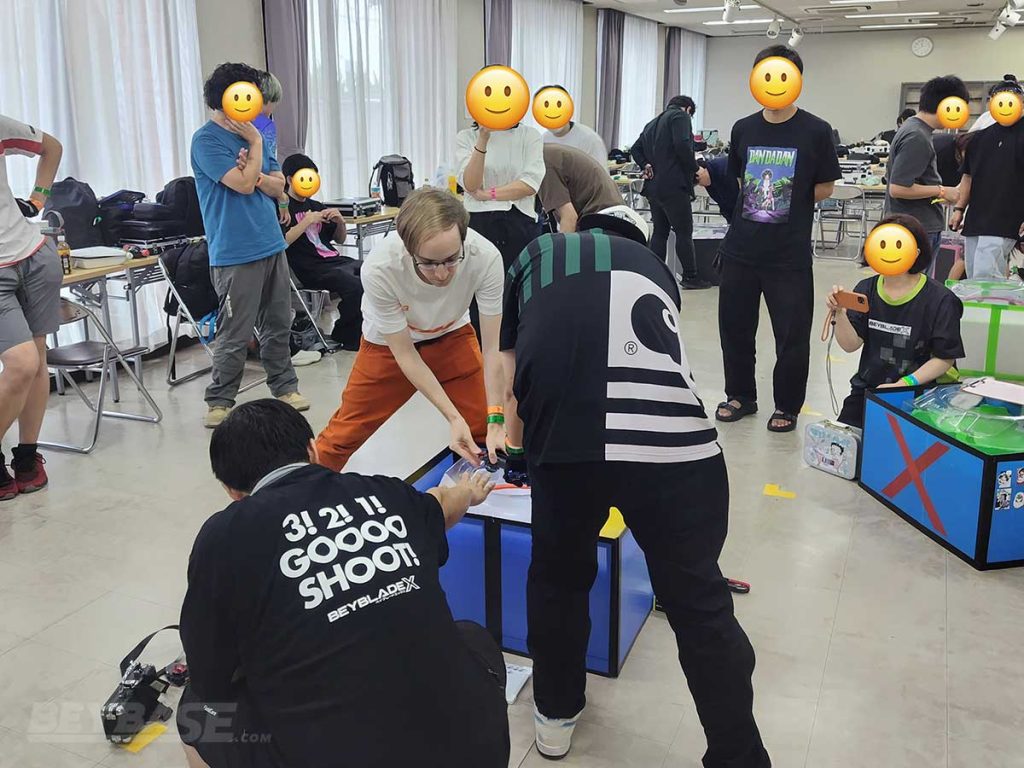
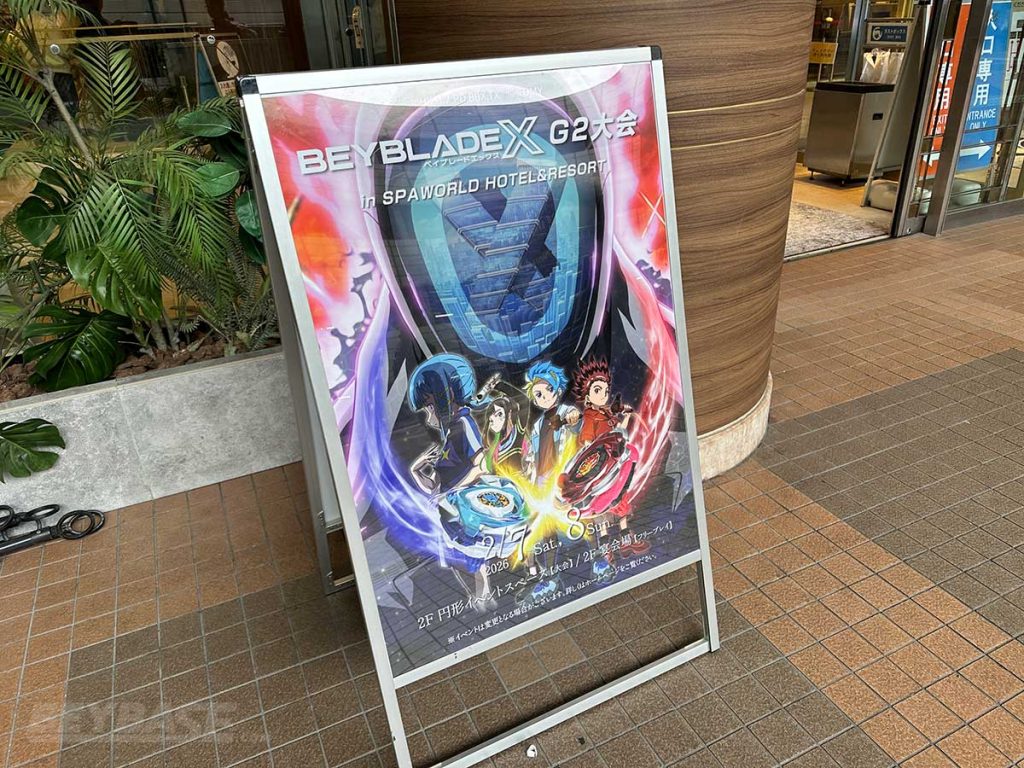
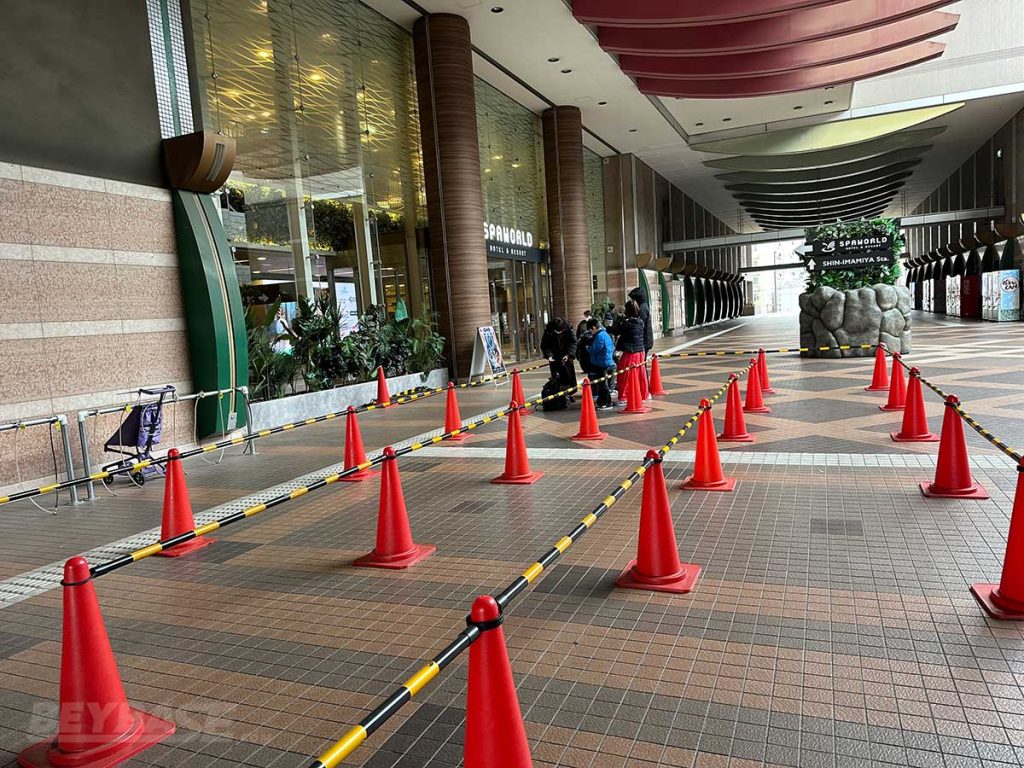
I flew into Osaka on Friday. I woke up early the next morning to line up in front of SpaWorld in order to (hopefully) get a spot in the tournament. This was actually one of the points I was most worried about. Players who stayed the night at the hotel in SpaWorld were given the opportunity to register before everyone else. Theoretically, there was a chance I wouldn’t be able to participate.
But, before going I consulted with some friends who have experience at past events in SpaWorld. I also did some calculations based on the rough total capacity of the hotel and historical local hotel occupancy trends for February. Since they announced the event fairly late, it was likely some rooms were already booked by non-Beyblade players. I determined it was probable that I’d be able to secure a spot. Thankfully, I was right and got a wristband for the afternoon session!
Tournament Details:
- Qualifying Rounds: This tournament was divided into two groups: a morning session and afternoon session.
- Finals: The top two players from each 128 player session would advance to the finals.
- Match Types: All matches in the qualifying rounds were 1on1 (4 points), followed by 3on3 (4 points) for the finals.
- Stadium: All matches were played in the Xtreme Stadium.
Winning Combinations:
- Qualifying Rounds (1on1):
- Finals (3on3):
Qualifying Rounds Report (1on1)
I drew number 55 for the first round. This placed me within the second grouping of matches for the first round once the afternoon session began.
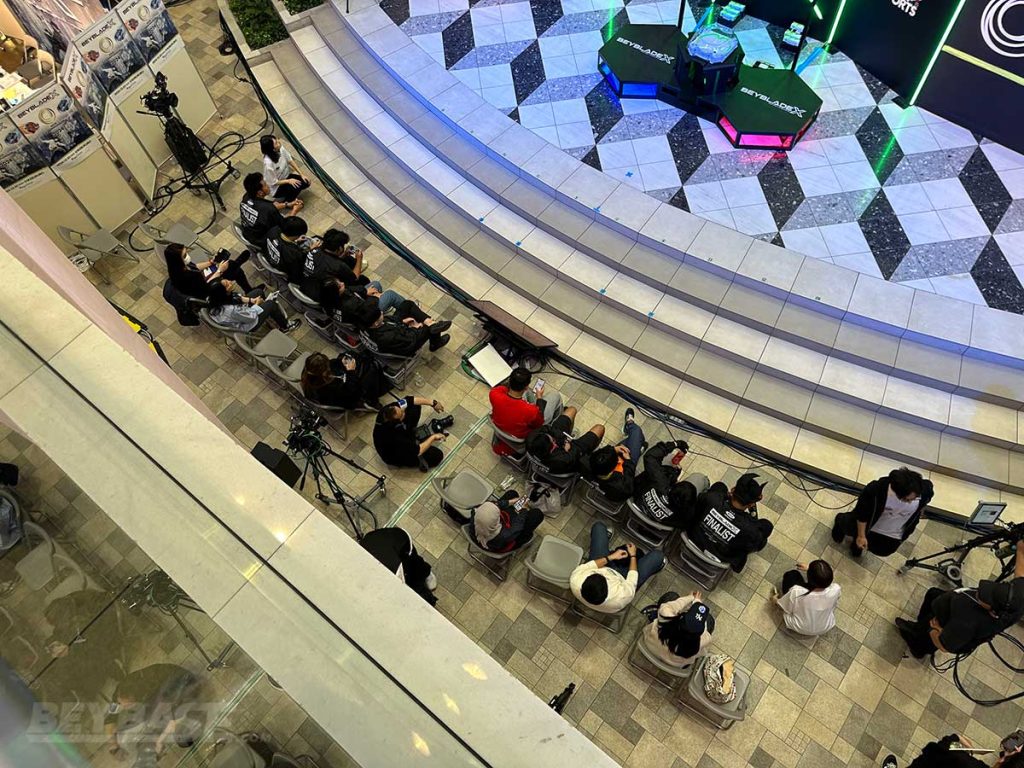
Until I was called, I had been watching the other matches from the second floor above. I treated this time merely as an opportunity to observe trends. I intentionally stayed away from turning it into an avenue for me to start questioning and tweaking my strategy. To do so would introduce an element of chaos into the event which could easily derail my performance.
Instead, I interpreted what I saw through the lens of the strategy I had prepared. From watching the morning session I could determine that Shark Scale, Wizard Rod, and Meteor Dragoon were the most popular Blade choices that were advancing to later rounds. Cobalt Dragoon, Aero Pegasus, and Phoenix Wing were also present. In the end, I knew that the top four of the morning session utilized Shark Scale (two players), Meteor Dragoon Elevate, and a Wizard Rod stamina build.
Knowing this had a grounding effect mentally for me. I already had an idea of what would be used going into the event, which informed the strategy I formulated ahead of time. But seeing it first hand made it feel real. And it allowed me to simulate in my mind what I would have to do against those types of opponents to give me the best chance to win.
And as it would turn out, the opponents I faced in the afternoon session fairly closely matched my observations.
I’ll break down my matches one-by-one.
I used Shark Scale 3-60 Rush for all matches.
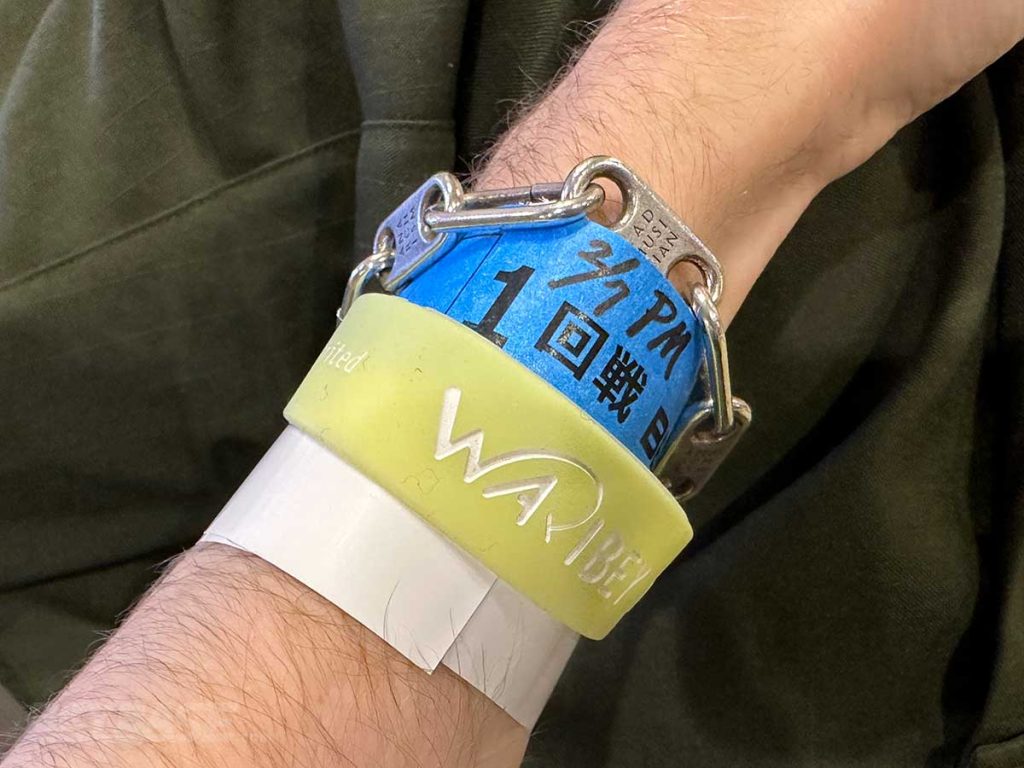
Round 1: Shark Scale 3-60 Rush vs. Wizard Rod 1-60 Jolt
- Battle 1: Spin Finish – Wizard Rod (0-1)
- Battle 2: Xtreme Finish – Shark Scale (3-1)
- Battle 3: Xtreme Finish – Shark Scale (6-1)
- Final Score: 6-1 – Shark Scale Wins
I was a little surprised to see this particular combination appear, but it does appear some other people used it too.
Jolt is a very interesting Bit. I had previously practiced with Wizard Rod on Jolt as part of my exploration of its potential after the release of Meteor Dragoon. It offers desirable semi-aggressive movement and has decent stamina. Also of particular note is the one high speed Xtreme Dash it can typically execute per battle. But its tendency to self-KO and to fall over towards the end of battles lowered its reliability overall. This pushed me away from pursuing it for potential usage in tournaments. Nevertheless, against attack types this is far from a weak combination.
First battle
In the first battle, I must admit there was a smidge of hesitation in my launch. I knew instantly that I would have to earn Over, Burst, or Xtreme Finishes to win this match.
For me, the first match of any tournament can be difficult simply due to the lack of any rhythm. It’s hard to go from 0 to 100 in an instant.
In any case, despite losing by Spin Finish my combination was surprisingly close to tying or winning by Spin Finish itself. And the movement of my combination felt powerful and reliable. It moved as I designed it to. That boosted my confidence. And I felt there was a chance I could win by Spin Finish.
Second and third battles
For the following two battles I executed more powerful, precise launches. They earned me two consecutive Xtreme Finishes.
This was all the momentum I needed to lock in and execute my plan moving forward.
In retrospect, the first battle that I lost in this match was a blessing in disguise. It taught me how vital it would be from that point forward to shoot with full confidence. I really do believe that when you’ve properly prepared your equipment and all other aspects of your mental game, confidence is the final piece of the puzzle that can help to unlock the performance and results you want. The output of a Beyblade is dependent on the input of the player using it.
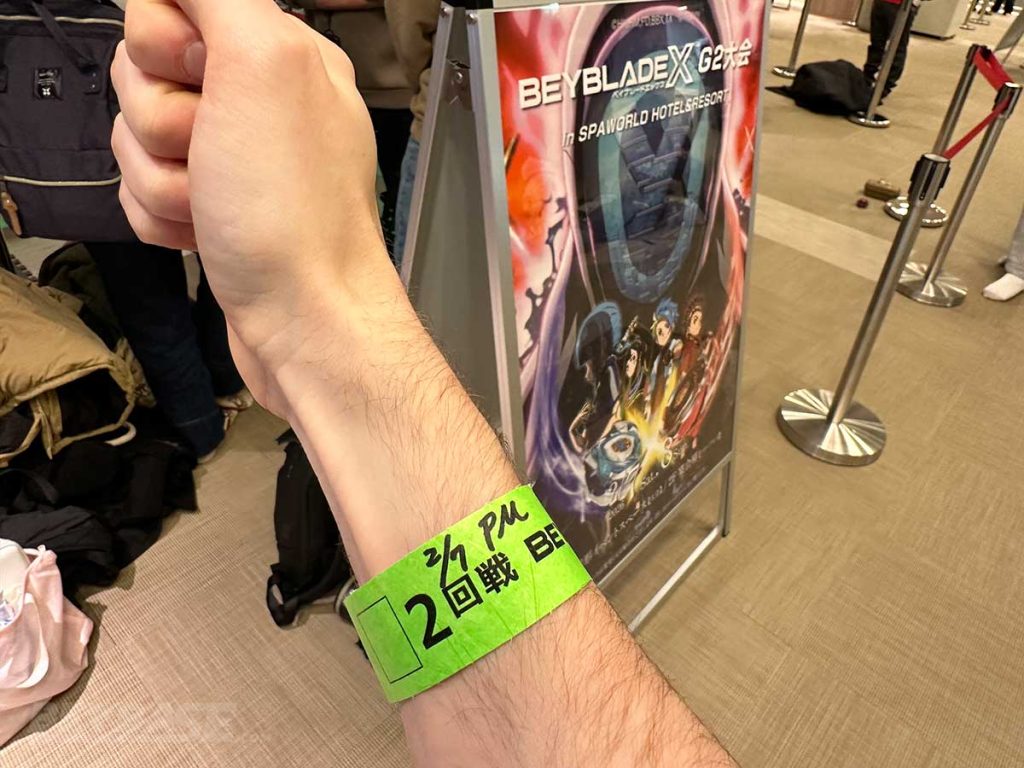
Round 2: Shark Scale 3-60 Rush vs. Phoenix Wing 3-60 Kick
- Battle 1: Spin Finish – Shark Scale (1-0)
- Battle 2: Spin Finish – Shark Scale (2-0)
- Battle 3: Xtreme Finish – Shark Scale (5-0)
- Final Score: 5-0 – Shark Scale Wins
Facing off against a combination using the Kick Bit can be dangerous for combinations using the Rush Bit from a stamina perspective. But if the Rush user has higher shooting power and can place their Beyblade well, the odds can swap towards favouring them. I had full confidence in my shot heading into this match and bet on myself that I could make this a reality. Seeing that my opponent was using Phoenix Wing rather than Shark Scale helped increase my belief that I could win by Spin Finish as well. In my experience, Shark Scale has more stamina than Phoenix Wing.
In the first two battles I was able to inflict massive damage on my opponent’s Beyblade through multiple Xtreme Dashes. This drained their stamina without giving up much of my own.
In the final battle, I stalled in a spot away from my opponent in the opening moments and luckily was the benefactor of Kick’s tendency to self-KO at times. Phoenix Wing caught the Xtreme Line and launched itself out through the Xtreme Zone.
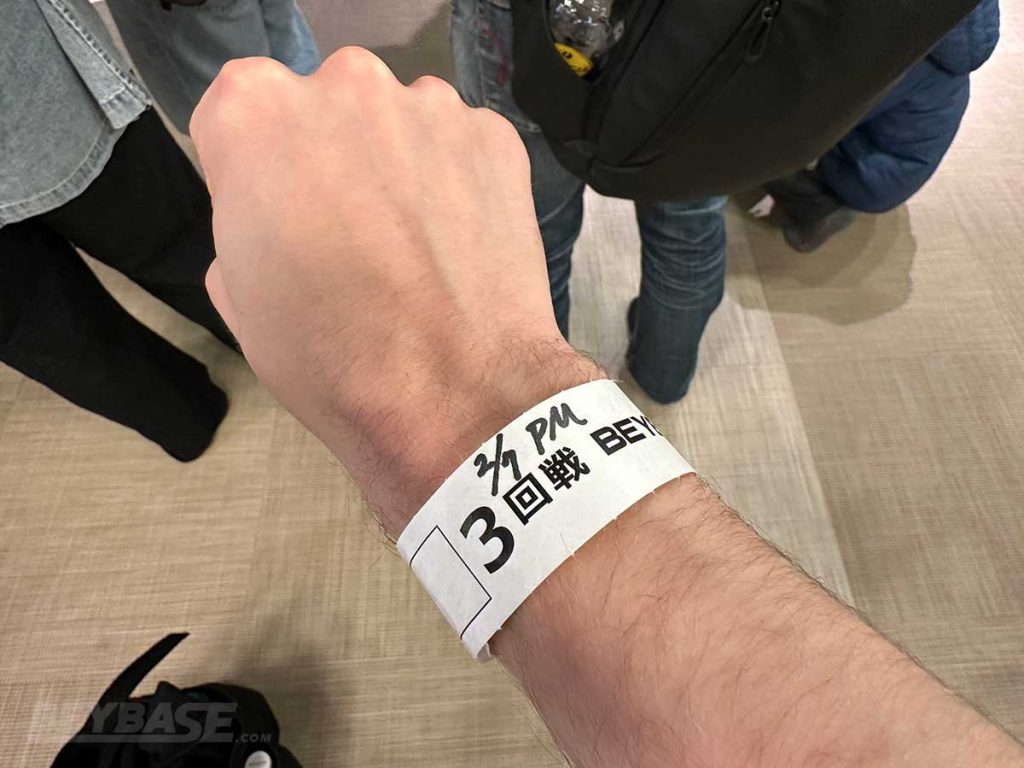
Round 3: Shark Scale 3-60 Rush vs. Shark Scale 1-60 Hexa
- Battle 1: Over Finish – Shark Scale 3-60R (2-0)
- Battle 2: Spin Finish – Shark Scale 3-60R (3-0)
- Battle 3: Xtreme Finish – Shark Scale 3-60R (6-0)
- Final Score: 6-0 – Shark Scale 3-60R Wins
One of the things I was most afraid of coming into this tournament was stamina or defense builds of Shark Scale. Theoretically, I knew that attack type Shark Scale builds should have the upper hand against them. But my experience to date had been rocky, to say the least. In fact, I even lost 5-0 to a Shark Scale on Hexa at a tournament in the past while using Shark Scale 7-60 Rush. I tended to always inflict big hits on them that didn’t knock them out, but caused them to rebound back from the Over or Xtreme Zone.
However, with my confidence growing I was able to impose my will and dominate this match from start to finish. My opponent executed competent launches with good positioning. He adjusted his launch too after the second battle, but the attack power, placement, and stamina of my Beyblade overwhelmed his in the end.
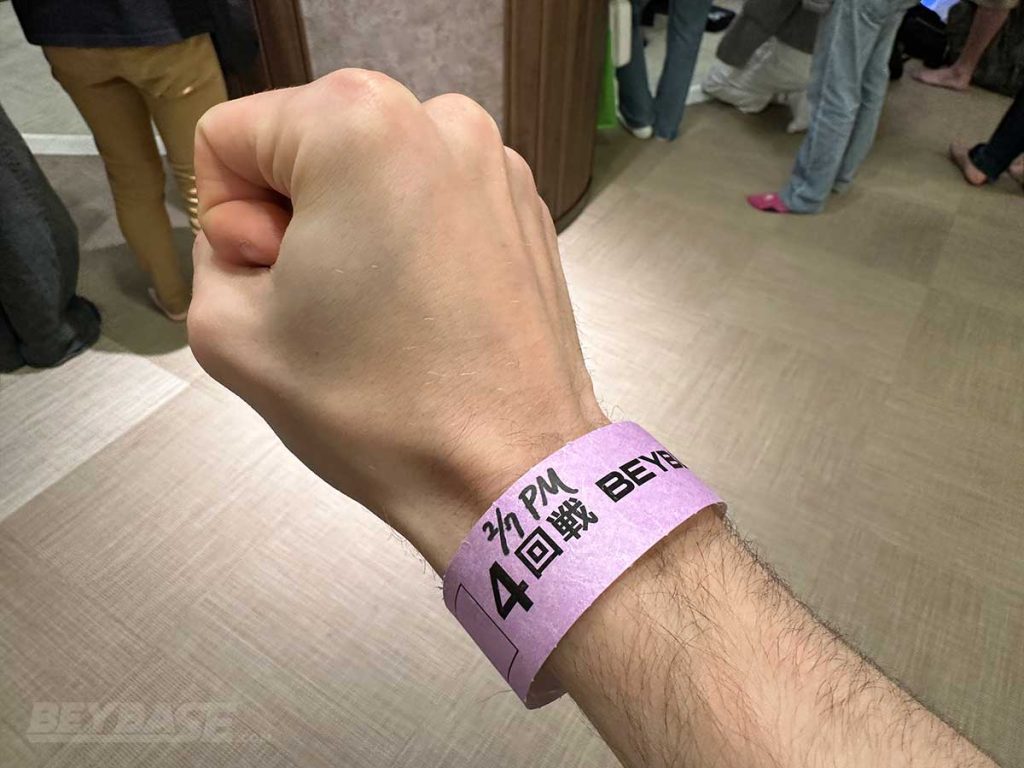
Round 4: Shark Scale 3-60 Rush vs. Valkyrie Blast Zillion 3-60 Zap
- Battle 1: Spin Finish – Shark Scale (1-0)
- Battle 2: Spin Finish – Shark Scale (2-0)
- Battle 3: Xtreme Finish – Shark Scale (5-0)
- Final Score: 5-0 – Shark Scale Wins
This was the biggest surprise of the day in terms of combinations that were used against me. I found out after the tournament that my opponent’s strategy had been different from mine. He had used several different combinations leading up to the fourth round and changed again when matched up against me.
The Zap Bit is a piece that I wrote off pretty quickly after it was first released, as did many others seemingly. I didn’t have much experience playing against it. I did recognize that it might have better stamina than my Beyblade. But I also knew that the Valkyrie Lock Chip tends to reduce the ability for Beyblade’s using it to maintain their posture towards the end of battle. I determined that the idea was probably to try and tank or avoid hits from my Shark Scale.
In any case, the exact performance of this combination was a little bit unclear to me. And especially being that it was the fourth round, I didn’t want to underestimate anybody or any combination that was presented to me. I decided the best thing to do was stay confident and believe that I could disrupt and overwhelm his attempts to absorb or avoid my attacks.
It worked. I won and advanced to the fifth round.
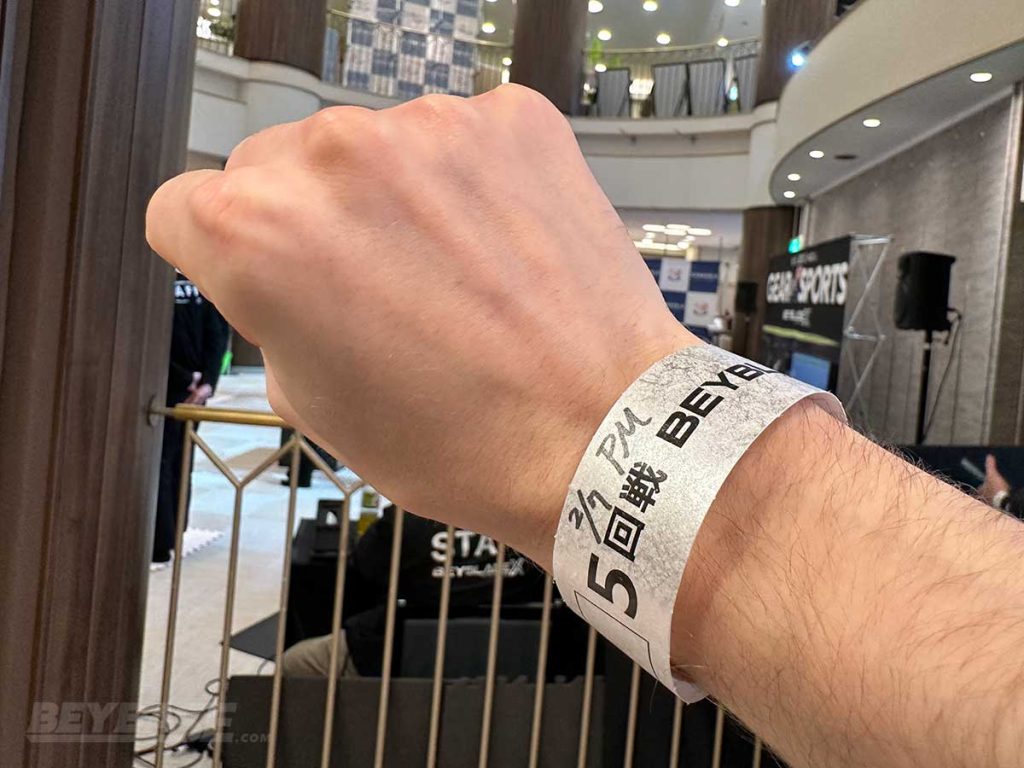
Round 5: Shark Scale 3-60 Rush vs. Shark Scale 1-60 Free Ball
- Battle 1: Xtreme Finish – Shark Scale 3-60R (3-0)
- Battle 2: Xtreme Finish – Shark Scale 3-60R (6-0)
- Final Score: 6-0 – Shark Scale 3-60R Wins
With this match, I had entered uncharted territory. This was the farthest I had ever advanced in an official Beyblade X tournament hosted by Takara Tomy.
The farther you progress, the faster the matches occur. As a result, this is one match which I do not remember super clearly. But what I do remember is a slight sense of intimidation upon seeing my opponent and then what they were using. I had always imagined that it was round five and beyond in large-scale Takara Tomy hosted tournaments that the strongest opponents would appear. To have made it this far, I knew he must be one of them.
I had played a Hexa variant of Shark Scale in the third round, but truthfully, it was Free Ball and Low Orb variants that I dreaded playing even more. With Hexa, I could be sure there was a chance I could chip away at its stamina if I could inflict hits that made it run the Xtreme Line. But it is more difficult to do this against ball-shaped Bits.
I had no choice but to aggressively attack him. Somehow, it worked and I advanced to round six. The top four of the afternoon session.
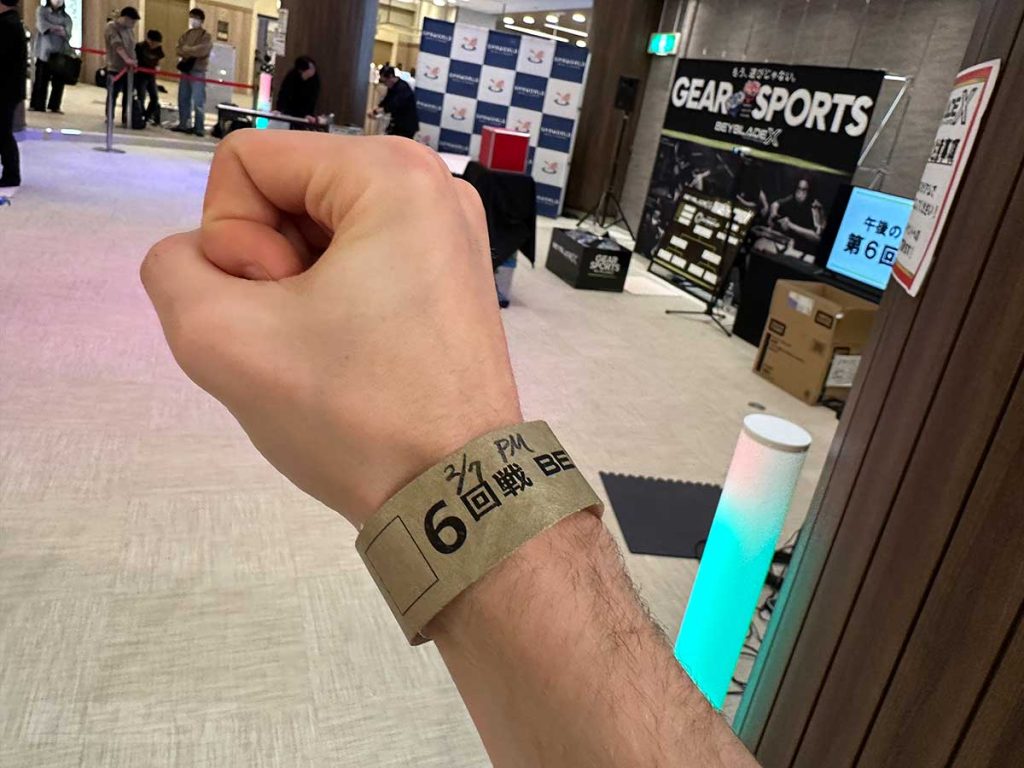
Round 6: Shark Scale 3-60 Rush vs. Wizard Rod 5-60 Level
- Battle 1: Over Finish – Wizard Rod (0-2)
- Battle 2: Xtreme Finish – Shark Scale (3-2)
- Battle 3: Over Finish – Shark Scale (5-2)
- Final Score: 5-2 – Shark Scale Wins
The afternoon session had been whittled down from 128 players to four. The two winners of this round would advance to the finals. The intensity was palpable. The winner of this match would effectively have a 75% chance of walking away with a gold, silver, or bronze String Launcher.
At this point, I was to a degree on autopilot. This is where the difference between people can reduce emotional noise and those who can’t starts to become clear. And it’s where pressure reveals what is truly reproducible.
I had fully internalized my intention and routine. The turnaround from round five to round six was nearly instant, so there was no time to ponder about what to do. You just had to know.
My opponent’s Beyblade selection–Wizard Rod 5-60 Level–placed an emphatic exclamation point to me on how much the tournament environment has changed since before Wizard Rod was banned. I could feel the influence of Shark Scale and Meteor Dragoon on his reasoning for using this. And being round six, I had to instantly respect it. This wasn’t going to be an easy win.
Mobile Wizard Rod combinations haven’t been particularly popular in the local tournaments I play in. But I’ve had some trouble with one player who does use them recently. They can be very good in anti-attack situations.
What I did know was that despite the positive attributes of the Level Bit, its negative attributes can be exposed. The increased teeth count surrounding its tip increases the chances of it running the Xtreme Line and putting itself in dangerous positions. Or even worse, self-KOing. Strong tuning can reduce this, but I had to believe I could inflict enough damage to create an ‘accident’ or position myself fortunately to knock him out. It was do or die.
First battle
In the first battle, I aimed to stall away him early on. My intention was to see if I could take advantage of any wild movement from Level. Something that might cause him to self-KO or deflect off of my Beyblade into the Over or Xtreme Zone.
One of the many strong points of Shark Scale Blade is how good its stamina is. It’s not as good as Wizard Rod, but it’s high enough that a Wizard Rod user would be pushed towards launching with relatively high power to avoid the chance of being outspun. In this case, that same power could potentially lead him to self-KO.
Unfortunately for me, we both aimed for the same position in the stadium and he got there just before I did. We both moved around the stadium for a few seconds and then he scored an Over Finish.
This was the first time in the day I had been down by more than one point. And the first time I had given up a point since the first battle of round one.
In retrospect, this might be one of the moments I am most proud of in this tournament.
Whenever you lose a round there’s always a moment where you feel the sting of being defeated. That’s normal. But what often happens to people–and even me at times–is to allow negative thoughts to creep into your mind because of it. I didn’t let that happen this time. Rather than scolding myself for failing to perform or making a ‘mistake’, I asked myself “What did I learn from that battle? What can I adjust in the next battle, if anything?”.
One of the principles I adopted heading into this tournament was to avoid wavering significantly from the shot I wanted to take. That is, unless I have evidence across multiple battles that it isn’t working. I would trust my preparation, intuition, and believe that confidence trumps frivolous, premature adjustments. Battle to battle, I would focus on only making one minor adjustment at a time if it felt appropriate. This means a slight adjustment to my shot trajectory, angle, or timing. Just one. Overall, the shot would be the same.
The reason this worked for me ties back into the idea of reproducibility and reducing cognitive load. The more you second guess yourself in the heat of the moment, the greater the chance that you will make a mistake. It’s better to trust the hours, days, and months of preparation that led you to that point. Especially if you’ve done so with a purpose in mind.
Second battle
This time, I decided to make an extremely minor trajectory adjustment.
I made it to the spot I wanted before him and ultimately scored an Xtreme Finish, vaulting me into the lead 3-2.
Third battle
In the third battle, I took the spot I wanted again. I ended up being knocked into the Over Zone and for a brief moment thought that was it. But miraculously, I reversed back into the Battle Zone, and knocked him out instead for the win!
They say “You have to be good to be lucky, and lucky to be good” … this was one of those moments.
Despite choosing to use the 3-60 Ratchet over the popular 1-70 Ratchet or 1-60 Ratchet, I had found in the lead up to this tournament that when balanced tuned well and shot powerfully, Shark Scale 3-60 Rush still has a decent chance of returning to the Battle Zone after being knocked out. This trait showed itself at the most fortuitous moment.
My opponent had some of the most precise and strong shooting sense of anybody I saw that day. I was thankful to have had the chance to play against him. It was a match I will never forget. It’s what players dream of; playing a strong opponent in a high pressure situation with everything at stake. And a lot of excited spectators.
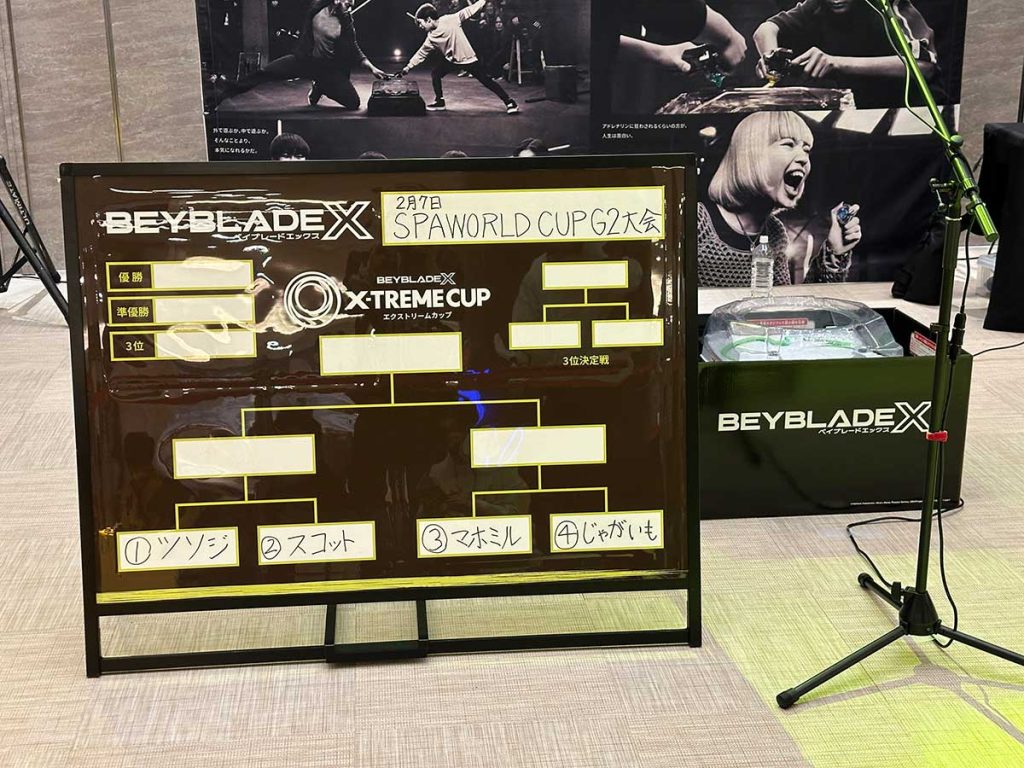
Finals Report (3on3)
After winning my round six match, one of the main staff members called me over to the desk at the side of the battle area.
Tournament bracket creation through random number selection
I had finished my match after the other sixth round match, so the other finalist was there waiting for me. Because he finished his match first, he was given the right to randomly select one of two numbers first. I received the remaining one. This determined the tournament bracket for the finals.
The finalists of the morning and afternoon sessions would each face someone from the opposite session in the semi-finals.
At this time, as a tournament organizer myself, I couldn’t help but to think there is actually a better way to do this. Their method was fair insofar as it was random for everyone. But there are a more competitive and rewarding methods.
Here’s one example. During the qualifying rounds of tournaments, there are certain players who not just win, but dominate. The better way to seed players for the finals would be to do so based on the points scored or points difference of the top players during their qualifying round matches. Doing so applies an even deeper meaning and incentive to every battle of every match.
I don’t know exactly how they manage large events like this. But if they had used tournament bracket software like Challonge, that could record the point values for each match played by each player throughout the qualifying rounds to do this. In any case, I digress!
Rules explanation and Beycheck
After we selected our numbers, the staff member explained the rules for the finals to us. He presented both of us an open empty box with three separate compartments. One contained a 3on3 Deck Case. We were instructed to insert our Beyblades into it as well as any launchers and accessories we intended to use into the other compartments. They would then conduct the Beycheck privately. If everything was OK, the judge would present our gear to us at the stadium when we started our matches.
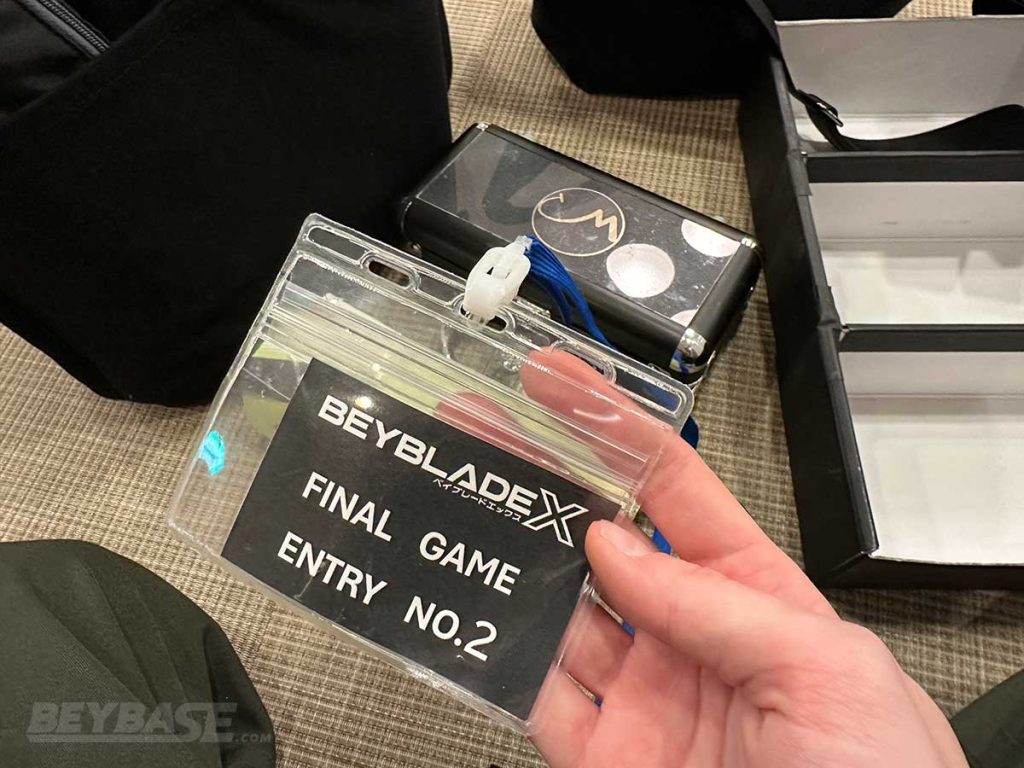
We were permitted to leave the battle area and asked to return within four minutes with our selected gear. It was a quick turn around, which highlighted how vital it was to have your strategy ready ahead of time. There was virtually no time to make adjustments on the fly based on any impressions you might have in the moment.
Before we left to prepare our gear, I asked the staff member to clarify what would happen if any of the Beyblades were rejected during the Beycheck. I was told that if there is a problem with any of your gear, you are permitted to present a new copy of it. However, if the secondary copy is also rejected you will be forced to use Dran Sword 3-60F for the entire match.
I prepared brand new (or very close to it) copies of every combination in my deck as well as my launcher, so I wasn’t concerned about being relegated to Dran Sword 3-60F. However, the performance and quality of the parts used in the primary copies I first presented were in some ways superior to the back-up ones.
Luckily, I passed the Beycheck without any issues and was able to use the primary copies of my combinations as planned.
The standards for what will pass and won’t pass the Beycheck in high level events is still unclear to me in some aspects. I wish that Takara Tomy would publish more precise guidelines, but my experience at the X-TREME CUP G1 2025 Sendai helped to give me a rough idea of how they would judge the parts presented to them.
The Beycheck was completed about 20 minutes after we presented our decks. They made us then wait another 30 minutes before starting the semi-finals.
I used this time to introduce myself to the other finalist from the afternoon session, Jyagaimo. We had a nice conversation about how we started playing Beyblade, how our day had been to that point, what we had seen, and so on. We weren’t slated to play each other in the semi-finals, which helped to avoid any potential tension! We agreed to do our best to meet in the final match.
Semi Finals: Blader Kei vs. Tsusoji
Although I didn’t know it at the time, my opponent Tsusoji was the champion of the first-ever Beyblade X Dispatch G2 at SpaWorld. This time was the fifth edition. He is a member of a group in Kansai called B.C.TEPPEN.
I lost the coin toss to choose which side to play on and ended up being forced to play on my non-preferred side for the first time all day.
After the coin toss, the match began. The judge presented the first two Beyblades in our decks. We weren’t given a chance to re-order our deck before the match started.
I didn’t realize that the order we set when submitting the Beyblades for the Beycheck was going to be locked for the first match of the finals (in the next round we were permitted to do so). We didn’t know who our opponent would be until the final tournament began. This meant we couldn’t make any precise judgements after seeing who we were playing against.
It’s very possible this information was conveyed to us ahead of time and that I just missed it, but I am not sure. Regardless, being thrusted into the start of the match with the order as it was did surprise me.
It’s possible I may have changed the order if I had been given the chance. Nevertheless, the order I placed the Beyblades in the Deck Case before submitting it for the Beycheck was what I considered to be one of the strongest default configurations for my deck. So, I was still able to feel a sense of calm and normalcy in spite of this surprising detail.
Battle 1: Shark Scale 3-60 Rush vs. Aero Pegasus 7-60 Rush
Result: Xtreme Finish – Shark Scale (3-0)
I am intimately familiar with Aero Pegasus 7-60 Rush and I knew that this particular matchup could go either way. Shark Scale might have a slight edge in my experience, but I knew it would likely come down to our shot selection and power.
The number one thing I didn’t want to do was give my opponent more than one point. With this thought in mind, I launched using a semi-defensive vertical posture. My aim was to limit my horizontal movement and speed around the stadium, preserving my stamina. And I wanted to receive any attacks on the face of my Blade.
I ended up spinning on an angle on the right side of the stadium within the central inner circle, performing evasive maneuvers to avoid any direct hits. Aero Pegasus circled the perimeter of the stadium at high speed multiple times. Eventually, it sunk back to the centre of the stadium after finishing an Xtreme Dash. I was still hovering around this area at the time. As Aero Pegasus moved back into the centre my Shark Scale inflicted a direct hit which sent it into the Xtreme Zone.
Because it was the first battle of the match, my intention wasn’t to play aggressively in order to take a big lead, but to reduce the chances of allowing my opponent to take a big lead. Even if it meant losing by Spin Finish, it was an outcome I could accept. Given the propensity of the 7-60 Ratchet to maintain its posture well, this was certainly a possibility depending on his shot.
Battle 2: Wizard Rod 1-60 Low Orb vs. Meteor Dragoon 9-60 Elevate
Result: Spin Finish – Meteor Dragoon (3-1)
Although it was not my intention, the Xtreme Finish I scored in the first round had a massive impact on how I decided to play the rest of the match. One of the important aspects of improving your chances of success is Beyblade is understanding how to take advantage of opportunities and adapt on the fly. This was one of those times.
From what I had been able to see during the morning session, Tsusoji won all of his matches using Meteor Dragoon 9-60 Elevate. Meteor Dragoon was still fairly new at the time of this tournament. Especially in the Xtreme Stadium I didn’t have a lot of experience playing against it. Tsusoji had enough confidence in it to use it in the preliminary rounds and advance all the way to the finals. Knowing this instilled a huge sense of caution in me.
Having seen Aero Pegasus as his first Beyblade, I knew Meteor Dragoon would be coming sooner or later. Unfortunately for me, it was in this second spot.
That put it up against my Wizard Rod 1-60LO. This combination has a very wide matchup spread. To date, this particular combination has had a very high win rate for me. It rarely gives up more than one point and has almost never been Xtreme Finished. In the face of the unknown, this reliability has made it a great selection for the second slot. It helped me connect the first Beyblade to the third Beyblade, ensuring the match continues.
However, left-spin Elevate combinations are one of the worst possible matchups for it. Usage of Elevate had declined for some time, making this weakness less glaring. But with the release of Meteor Dragoon it has started to rise again (and perhaps even further after this event when the new turquoise Elevate Bit with its thicker, more burst-resistant shaft was released in BX-48 Random Booster Vol. 9).
Because I was winning by the largest possible margin, I was afforded the luxury of playing defensively.
I didn’t want to give my opponent more than one point. I had the same feeling in the first battle, but it was heightened even more so now that I was winning 3-0. If he scores a Burst, Over, or Xtreme Finish I lose a lot of control over the match.
There are times when players (myself included) get ahead of themselves when they’re close to winning during a match. Victory can feel so close and it causes you to make an irrational, risky move that compromises your control over the situation. There are no guarantees in Beyblade one way or the other, so the philosophy I try to abide by is that if I am in a position of control, I will act in a way to minimize the chances of giving my opponent the chance to significantly swing the momentum in their favour.
With this philosophy in mind, I launched my Beyblade from the back left corner towards the right side of the stadium. This was away from where Meteor Dragoon would naturally go most of the time due to being a left-spin. I circled around the outer perimeter of the stadium on an angle and took some light hits from Meteor Dragoon as I went around. Eventually, we both settled down into the middle of the stadium and begun spin equalization.
Because it was 3-0, and because it was very unlikely that I could win against his Beyblade, I predicted that he would not shoot aggressively to try and score a higher point value win condition. To do so would put him at risk of losing the entire match if some sort of accident happened and he was bursted or got knocked out. From his perspective, I knew the optimal move would be to take the Spin Finish and move on. And that’s what happened.
Battle 3: Emperor Blast Heavy 9-60 Low Rush vs. Wizard Rod 3-60 Ball
Result: Spin Finish – Wizard Rod (3-2)
When the judge handed me my Beyblade before the start of this battle, I noticed that the orientation of the parts had been changed during the Beycheck. This would change how it behaved in play. I adjusted the parts to their proper orientation before we began.
This wasn’t surprising. But it highlighted to me the importance for players to check the configuration of their Beyblade before every battle. Especially when they’ve been checked in an undisclosed location that you couldn’t observe.
I had no idea what his third Beyblade would be. It was the first time in a while I had played against Wizard Rod 3-60 Ball.
With the score now 3-1, I was still in control of the match.
My Beyblade, Emperor Blast Heavy 9-60 Low Rush, has the potential to burst or knock out Wizard Rod. I had done it several times in other tournaments leading up to this one.
However, again, I still wasn’t willing to compromise my control over the match. The one weakness of my Beyblade is the possibility of self-KOing that Low Rush possesses, and I absolutely didn’t want to do that in this battle. It would either end the match or swing the momentum in his favour, putting pressure and regret into my mind.
I decided to play conservatively once again. With a low- to mid-power level shot, I banked my Beyblade towards the back side of the stadium. I stalled around the right side in the beginning and performed several controlled patrols of the central area of the stadium with minimal contact to the Xtreme Line. Tsusoji launched towards the left side of the stadium, aiming to stall in the back left corner.
Despite the relative weakness of my shot, I was able to force Wizard rod to run the Xtreme Line, nearly self-KOing itself.
Later on, Emperor Blast Heavy executed a few slow speed Xtreme Dashes. One of them produced a hit which knocked Wizard Rod into the upper area of the Xtreme Zone, but it immediately bounced back into the Battle Zone.
I ended up losing by Spin Finish, which was an acceptable result in my mind. If anything, I was impressed with how close I came to winning it despite the conservative shot strategy. Sometimes, power isn’t everything.
Battle 4: Shark Scale 3-60 Rush vs. Meteor Dragoon 9-60 Elevate
Result: Burst Finish – Shark Scale (5-2)
We had now played through all three of the Beyblades in our decks. The score was 3-2. We needed to decide on the order of play for the Beyblades in our deck for the rest of the match through the fourth battle to a potential fifth and decisive battle.
I knew now that my Wizard Rod would be a risky choice; although it could potentially beat his Aero Pegasus, I had no reason to believe with confidence that it could beat his Wizard Rod 3-60 Ball. And it would almost certainly lose to his Meteor Dragoon.
He had lost with Aero Pegasus and won with Meteor Dragoon and Wizard Rod to that point. My Emperor Blast Heavy also has, in my experience, a stamina advantage over Aero Pegasus. It might be able to win, but it wasn’t for sure. Thinking along these lines, I surmised that he might deprioritize his Aero Pegasus to the sixth spot that would go unused.
That said, given that it was 3-2 there wasn’t a ton of utility for a Beyblade which would likely score just one point (Wizard Rod) if it won. So, it was possible that his fifth Beyblade could be Aero Pegasus.
Meteor Dragoon to me was the most likely choice for his fourth Beyblade. Having used it throughout the qualifying rounds and won with it against me the first time around, he would probably lean on it in order to help him extend the match. It was do or die for him.
He had witnessed my defensive posturing in the first battle. And my conservative play for the second and third battles. And he knew that I still had one point to give. So, I bet that he would act under the assumption that my fourth Beyblade would be Wizard Rod. This would allow Meteor Dragoon to even up the score at 3-3, forcing a fifth battle where anything could happen.
Predicting this, I decided to go with Shark Scale. It was the absolute MVP of the day for me and I had a high degree of confidence that I could defeat anything in his deck with it.
Also, from the beginning of this match, I had been trying to stay conscious of his shooting tendencies. By this point, I understood that in general he was aiming towards the left side of the stadium between the half way point and back left corner.
I understood that I still had a point to spare, but the combination of the following gave me what I needed to go on the offensive:
- My confidence with Shark Scale.
- The relative defensive weakness of his Meteor Dragoon and Wizard Rod.
- The unlikelihood of Rush self-KOing.
- My understanding of how he was likely to shoot.
In all of the battles of this match to this point, I had launched in roughly similar ways. I had to respect that he would have probably noticed this.
I knew my best chance at victory would be to inflict a Bit Burst Finish on his Beyblade. I did have a twinge of uncertainty that I might not be able to do it though because he was using the burst-resistant 9-60 Ratchet. But my determination and confidence outweighed that possibility.
I launched my Beyblade at full power, relatively flat, dropping it in a position that would swing back towards the back left corner and aggressively initiate contact with his Meteor Dragoon. He launched exactly to that spot as I predicted. Impressively, his Meteor Dragoon took several huge hits as we both circled the stadium. But after the third or fourth big hit, my Shark Scale finally broke through and dislodged the Bit from his Ratchet, scoring a Burst Finish. I was advancing to the finals of a G2 for the first time!
Throughout early 2025, I actually had struggled at times playing against Cobalt Dragoon on Elevate. But my win rate against it had improved a lot over the second half of the year. It felt great to be able to put my experience and knowledge into practice in such a big moment for me.
Finals: Blader Kei vs. Jyagaimo
I had the opportunity to watch Jyagaimo’s semi-final match after winning mine. He was using a deck almost identical to mine:
- Valkyrie Flare Heavy 7-60 Rush
- Wizard Rod 1-60 Low Orb
- Shark Scale 1-70 Low Rush
I debated about whether to change the order of my Beyblades or not, but ultimately decided against it. Consistency, comfort, and continuity felt more important to me at this stage.
Battle 1: Shark Scale 3-60 Rush vs. Valkyrie Flare Heavy 7-60 Rush
Result: Over Finish – Shark Scale (2-0)
I would be lying if I said I wanted to play his Valkyrie Flare Heavy 7-60 Rush with my Shark Scale. Flare is fairly good defensively and Valkyrie would make it more difficult to knock out. 7-60 and Rush might also help it to score a Spin Finish depending on the quality of his build and shot power, and so forth.
In any case, I shot with full confidence and power. Unlike the semi-finals, I knew what Jyagaimo’s deck composition was. Combined with the confidence I had built up throughout the tournament, I decided the most effective strategy would be to try and overwhelm him in the first round and take the lead.
I aimed for the back side of the stadium with a slight bank. I wanted to take a safe, but strong position in the stadium and aim to either wear him down to take the Spin Finish or knock him out. Valkyrie does have a tendency to cause the Beyblade using it to lose its posture prematurely. I was hoping to expose this through aggressive shot power leading to strong attacks.
My Shark Scale to this point had demonstrated phenomenal ability to inflict damage on opponents without suffering Burst or Over Finish-inducing recoil. It rode the Xtreme Line smoothly and didn’t fly uncontrollably around the stadium. If my positioning was good, it was able to stand its ground well.
Thankfully, I was able to score an Over Finish and took a 2-0 lead.
Battle 2: Wizard Rod 1-60 Low Orb vs. Wizard Rod 1-60 Low Orb
Result: Burst Finish – Wizard Rod 1-60LO (Blader Kei, 4-0)
I was sure that this battle would end in a Spin Finish. He launched directly to the left corner and swept down to the inner circle. I had launched to the back left area of that inner circle.
I hit his Wizard Rod back towards the back left corner, causing him to ride the Xtreme Line around to the right side. My Wizard Rod was hovering in the centre area and one side of the Blade was in his line of fire as he came flying around towards the apex of the Xtreme Line. Rather than sweeping straight towards the Xtreme Zone, it came off the Xtreme Line at the last second. It moved slightly diagonally and hit my Wizard Rod into the Over Zone on the left side.
My Wizard Rod landed in the deep back of the Over Zone behind the actual pocket, but miraculously returned to the Battle Zone after a few seconds! It still had a decent amount of RPM and it appeared that I might still have a chance to win by Spin Finish.
But both of our Beyblades had started to lean over at this point. We circled the interior circle of the stadium. My Wizard Rod eventually positioned itself behind his … and as it was moving towards the back right side the Blade of my Wizard Rod hit his Ratchet and … scored as Burst Finish! Unbelievably, this battle ended with a Burst Finish, earning me the title of SpaWorld Cup Dispatch G2 champion!
Beyblade selection and the importance of performance optimization
Building the right habits from a mental and physical perspective is important when it comes to increasing your chances of success in any Beyblade tournament. That said, it is still a game played using customizable spinning tops as the interface through which the winners and losers are determined. Understanding what is closest to being objectively ‘strong’, how to create it, and what suits you most closely is important.
Beyblade performance optimization through “balance tuning”
If you’ve spent any time immersing yourself in the world of competitive Beyblade, you will have probably learned about the concept of “balance tuning”.
Balance tuning in Beyblade is basically the process of fine-tuning how your Beyblade performs by making adjustments to its assembly or to trying different copies of the ‘same’ part. Even if two players use the exact same combo, slight differences—like how tightly parts are put together or even tiny manufacturing variations affecting burst resistance, weight, and weight distribution—can affect how it spins, moves, and hits. Players experiment with these details to make their Beyblade more stable, aggressive, or resistant to being knocked out.
The easiest way to think of it is like optimizing your setup beyond just picking ‘good’ parts. It’s not about changing the combo entirely, but about squeezing out extra performance from what you already have. For example, you might adjust alignment to reduce wobble, or find a “sweet spot” where your Beyblade spins more smoothly and rides the Xtreme Line in a way which reduces stamina loss. Over time, as you test and battle more, you start to notice these subtle differences.
To give a few specific examples, while crafting my combinations for this tournament I paid attention to:
- The thickness of the Bit shaft using a digital caliper.
- How smoothly they spun when inserted into the Ratchet.
These properties can affect burst resistance and the smoothness with which a Beyblade can ride the Xtreme Line.
Every part has some inherent physical properties that enables it to be assessed objectively to degree; it’s why, for instance, you can say the Shark Scale Blade has strong attack power or Wizard Rod Blade has good stamina. But the higher you climb the ladder in competitive play, the more the impact of the aforementioned small differences becomes apparent. They can become the difference between winning and losing. The difference between consistency and randomness.
How I decided which customizations to use
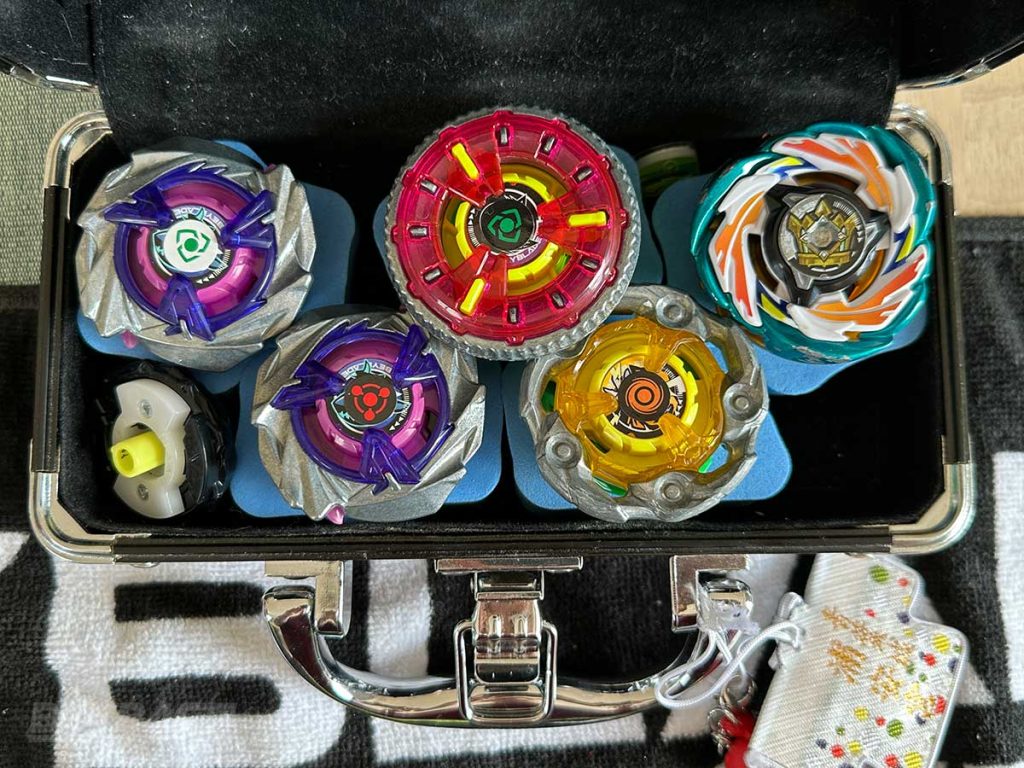
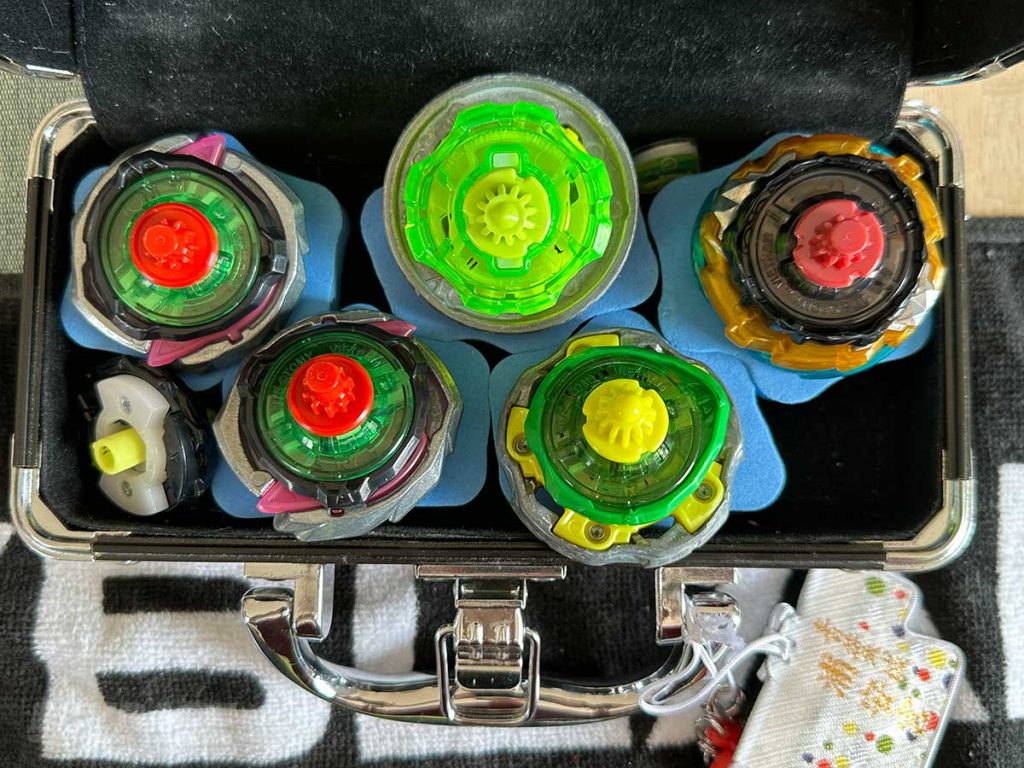
Shark Scale 3-60 Rush
My preparation for this event could in many ways be said to have started two and a half years ago when Beyblade X started. But in my mind it is most directly connected to the release of Shark Scale in August of 2025.
At that time, the day after its release I participated in the S1 Event “Super Fierce Battle! Miyagi Iron Fist Cup”. It was a fan-organized local championship for players in the Miyagi prefecture. The organizer, Pawmot hosted eight 64-player qualifying events every month leading up to it. The winners of each of those events earned the right to play in the championship tournament. I won the qualifier in June 2025.
That day, virtually everybody included Shark Scale in their deck. It was very obvious how powerful it was, but being so new it was difficult to predict how everyone else would use it. And being so new, it was difficult to feel unwavering confidence with it. Overall, Shark Scale 1-70LR performed well for me on that day and I ended up earning a third place finish.
However, I had also identified that stamina style Shark Scale builds could also be successful. I tried them out in some events, but suffered some tough losses. In retrospect, the biggest problem was focusing on Under Needle and Wedge at the time; both are good, but burst prone.
From there, I shifted to using 7-60 Rush with it. Aero Pegasus 7-60 Rush had served me very well up to that point. Switching over to Shark Scale 7-60 Rush seemed like it might be a good play. But after trying it in several events, the results were mixed. It felt like it lacked some speed.
I could feel how powerful Shark Scale was, but was struggling to find what build felt the best matched my playstyle.
I went back to Low Rush around October 2025, partially after being influenced by many players in Tokyo. 9-60 Low Rush worked fairly well in a few events, but I still felt a mismatch with my playstyle. I loved how it behaved defensively when heavily banked and the fast, clean Xtreme Dashes it produced. But I didn’t like its tendency to self-KO at times.
Around this time through until January of 2026, I also tried Shark Scale with Low Orb on several occasions. Results were good, but in many cases the line between winning and losing was too fine. It didn’t feel overwhelmingly strong.
I concluded that it probably makes the most sense to lean into Shark Scale attack style customizations; nothing else compares to it in this category in this era of Beyblade X.
Before the tournament, I read an interview with Omanju King by Bey Sen. I was inspired by his thought process and decision to use Aero Pegasus 3-60 Rush during the World Championship. I had also tried 3-60 Low Rush previously, but for some reason never really considered it for Rush. I felt that this might offer the perfect balance I had been looking for.
My instinct was right. Shark Scale 3-60 Rush felt perfect to me. It had the right balance of stamina, defense, attack, stability, speed, and reliability. And that’s what I ended up choosing to use during the SpaWorld Cup Dispatch G2 tournament during the qualifying rounds as well as in my deck for the finals.
During the period between when Shark Scale was released up until the G2, I had also been attempting to determine what the optimal deck configuration for me was. Most important was figuring out how to effectively use Shark Scale.
Up until Shark Scale was released, I had a lot of success with a 2-1-1 deck configuration utilizing Aero Pegasus, Wizard Rod, and Silver Wolf. This means one combination aimed to score 2 points whereas the other two aimed to score 1.
I eventually recognized that given how prolific attack types were in general during this period, a 2-1-2 strategy would probably be the most effective generally speaking.
This meant my deck would become:
- Shark Scale in an attack type configuration
- Wizard Rod in a stamina/defense configuration
- A third attacker that also had defensive flair to it.
How to build Shark Scale 3-60 Rush
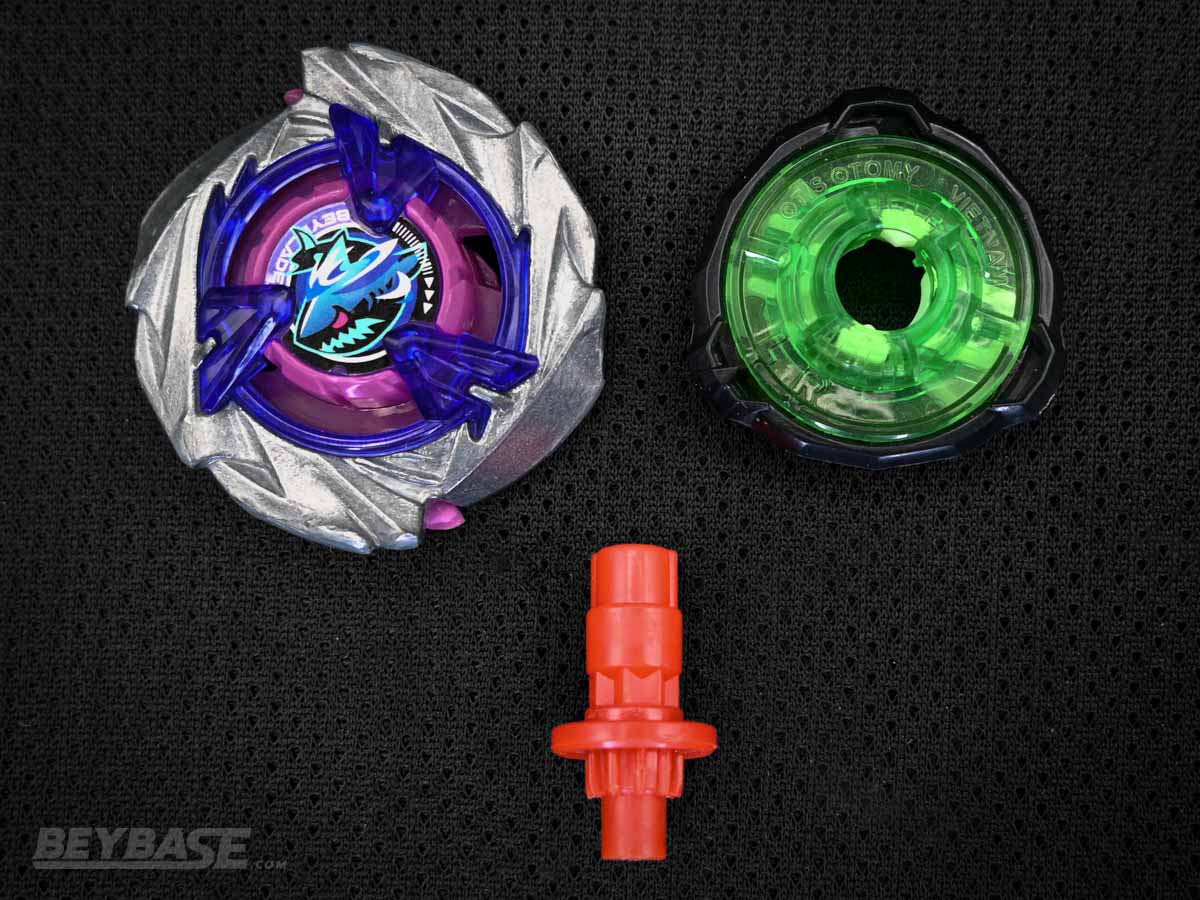
- Shark Scale Blade (1 of the following)
-
3-60 Ratchet (1 of the following)
- BX-01 Dran Sword 3-60F
- BX-33 Weiss Tiger 3-60U
- BX-00 Xeno Xcalibur 3-60GF
- UX-15 Shark Scale Deck Set – Hells Brave J3-60GF
- Sword Dran 3-60F (F9580)
- Keel Shark 3-60LF (G0194)
- Savage Bear 3-60S (G0286)
- Lance Knight 3-60LF (G1671)
- Yell Kong 3-60GB (G1754)
-
Rush Bit (1 of the following)
- BX-20 Dran Dagger Deck Set – Dran Dagger 4-60R
- BX-35 Random Booster Vol. 4 – 04: Wizard Rod 1-60R
- BX-46 Battle Entry Set Infinity – Cobalt Drake 9-60R
- UX-10 Customize Set U
- Wand Wizard 1-60R (G1538)
Emperor Blast Heavy 9-60 Low Rush
This direction came together quickly for me after the Emperor Might Deck Set was released. The Emperor Lock Chip and Heavy Assist Blade instantly propped Blast up from “competitive” to “top tier” for me personally.
The combination of weight and attack power gave it a solid foundation from which to bully and defend against the mostly lighter opponents that existed in the metagame at that time. I quickly landed on using Low Rush with it and went 10-1 in the first tournament I used it in.
From there, I could feel I was on to a winning formula for the environment at the time. I started to tweak what Ratchets and Bits I was using on each of my attack type combinations across multiple events.
I debated heavily about which Blade to give Rush and which one to give Low Rush between Shark Scale and Emperor Blast Heavy.
Additionally, up until the week before the G2 I had been using 7-60 Ratchet on this combination. Being a CX top, I wanted to use 7-60 to give it some more stability to squeak out some Spin Finishes in matchups against attack types. The extra weight was also appreciated. It felt great with Rush in particular. However, I decided to switch to 9-60 in order to improve its overall defensive ability. The 9-60 Ratchet bursts less and enables a wider range of launch angles to be used. The compatibility of 9-60 also felt good with the Low Rush Bit to me.
How to build Emperor Blast Heavy 9-60 Low Rush
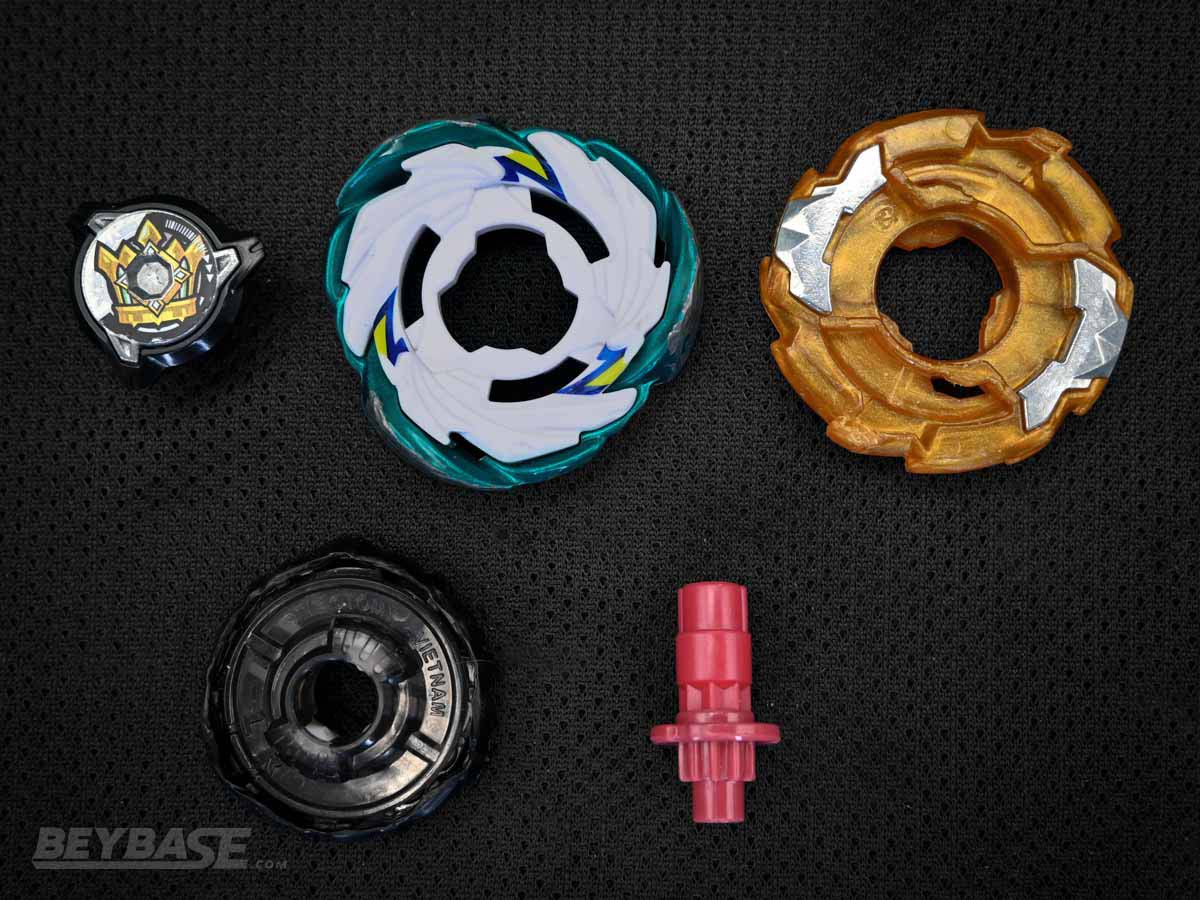
-
Emperor Lock Chip & Heavy Assist Blade
- CX-11 Emperor Might Deck Set – Emperor Might H Op
- Blast Main Blade (1 of the following)
-
9-60 Ratchet (1 of the following)
- BX-23 Phoenix Wing 9-60GF
- BX-46 Battle Entry Set Infinity – CobaltDrake 9-60R
- UX-11 Impact Drake 9-60LR
- Soar Phoenix Deluxe String Launcher Set – Soar Phoenix 9-60GF (F9324)
- Roar Tyranno 9-60GF (G0284)
- Stun Medusa 9-60GB (G2738)
-
Low Rush Bit (1 of the following)
- UX-11 Impact Drake 9-60LR
- UX-18 Random Booster Vol. 8 – 06: WeissTiger 4-80LR
- Drop Attack Battle Set – Impact Drake 9-60LR (G0842)
Wizard Rod 1-60 Low Orb
The only combination which remained constant was Wizard Rod 1-60 Low Orb. Wizard Rod faced a difficult challenge with the release of Shark Scale, but LO (and also the popular H) help it to have a fighting chance. I liked the LO variant due to it offering greater flexibility in movement and ability to win by Spin Finish in more situations. Although, I know Hexa is particularly popular overseas and there is a chance I’m underestimating it to a degree!
The deck I used had very few “dead draws”, so to speak. Every combination had the ability to win against a very wide range of opponents. Each one is versatile and all three carry some inherent quality that can make them difficult to knock out or burst if launched correctly. My feeling was that if I gave up an Over, Burst, or Xtreme Finish to my opponent, more often than not the greater share of responsibility for that loss would lie on me, not on bad luck.
How to build Wizard Rod 1-60 Low Orb
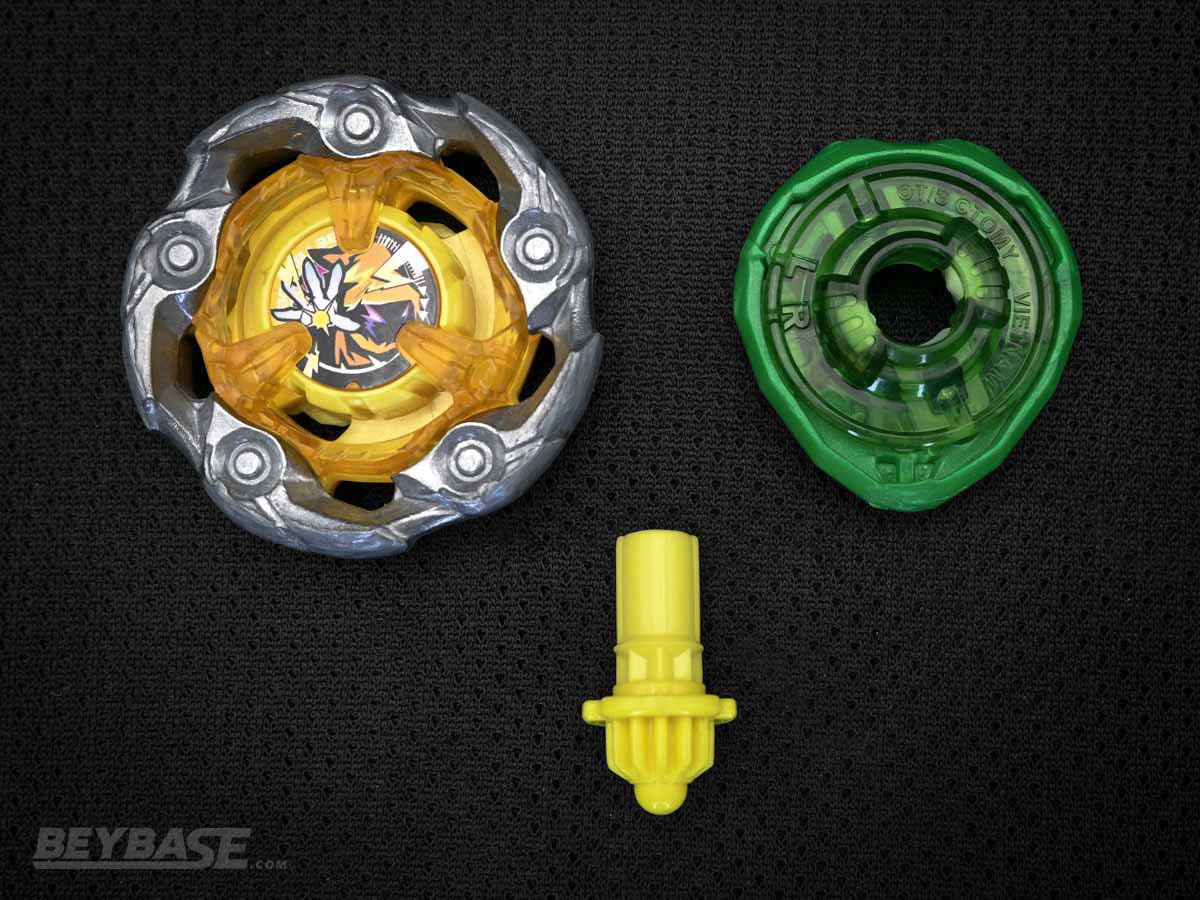
-
Wizard Rod Blade (1 of the following)
- UX-03 Wizard Rod 5-70DB
- BX-35 Random Booster Vol. 4 – 04: Wizard Rod 1-60R
- Wand Wizard 5-70DB (G1537)
- Wand Wizard 1-60R (G1538)
-
1-60 Ratchet (1 of the following)
- UX-01 Dran Buster 1-60A
- UX-13 Golem Rock 1-60UN
- Keel Shark 1-60Q (G1534)
- Buster Dran 1-60A (G1536)
- Wand Wizard 1-60R (G1538)
- Rock Golem 1-60UN (G1646)
- Low Orb Bit (1 of the following)
Clock Mirage 4-55 Under Needle
I had also prepared Clock Mirage 4-55UN, but didn’t end up using it. I intended to use this in one specific situation for 1on1 matches:
- If I was very confident my opponent would use Wizard Rod
- And if they seemed strong with it both in terms of stamina performance and defensive posturing.
I was interested in 7-55 Ratchet for this combination as well, but wasn’t convinced enough to invest the money required to obtain a large quantity of them in order to build a good one for the G2. This was one of the areas where I took the calculated risk to not fully investigate something with potential due to financial and time constraints.
Reflecting on my journey to becoming a G2 champion
Consistency- vs. milestone-based success
Having accomplished my goal of winning a G2 tournament, I want to take a moment to again reflect on what “success” means to me.
In the past, I defined success as “consistency”. As in, the ability to win more often than not. And to win a lot.
Rather than a choice made after careful consideration, in retrospect it feels to me that it was closer to being a consequence of my environment. I was just happy to be able to play with people at all in the first place. In addition to environmental factors, my competitive desire, will to play, and love for the game led me to adopt “consistency” as a core tenet of my philosophy for a long time.
Even now, there are times when I feel tempted to fall back into prioritizing “consistency”.
When I lived in Canada, throughout the Metal Fight Beyblade and Beyblade Burst generations it was normal to have the chance to play in one, maybe two tournaments per month. Tournaments were an event. It felt like you shouldn’t “waste” the opportunity. So I almost always was focused on winning.
Now, I’ve heard there are tournaments happening literally everyday the week. In Japan it is also relatively easy to play in a few tournaments per week depending on where you live.
Feeling pressure to always be “on”
And if you spend time on social media or interacting with the community online, it’s hard to miss the constant announcements of tournament participation and success from players. Even I do this. Or, posts about how much product people are buying. How beautifully they’ve tuned their Beyblade.
Without noticing it, at times I’ve felt an unconscious pressure to play more, to do more. Or question whether what I’m doing is “enough” or not to ultimately help me achieve my goal. Doubt or a sort of a “fear of missing out” feeling can easily creep in.
All of these things can be linked to the idea that you have to be always “on”. Or else you’ll fall behind. There is some degree of truth to this; you do need a certain level of dedication to the game. But at a certain point it can become unhealthy and counterproductive.
Protecting passion
Recently, I read an interview with the parents of Minato, the winner of the Regular Class X-TREME CUP GP 2025. He is Japan’s National Champion who represented them at the Beyblade X World Championships 2025.
In it, it was revealed there have been times when Minato wanted to quit Beyblade. It wasn’t because of any particular loss, but because there were external factors that made him feel burdened emotionally. His passion for the game was being overwritten by focusing too heavily on winning and losing.
The point is that even more important than success or outcomes is passion. Passion is what players and those associated with them must protect.
Over time, the meaning in the pursuit of consistency-based success has eroded for me.
I don’t see this as a bad thing. In fact, that I was able to grow beyond this is a sign of my growth. Aiming for consistency on some level is a valid goal for any player. But everything is context and player dependent.
The important thing is to stay conscious of your own feelings and make intentional decisions that match the goals you’ve set for yourself. You have to play at your own pace.
I’ve been playing Beyblade for over 20 years. To do anything consistently for that long is difficult. It is only natural for feelings and desires to change over time.
For a few years before the launch of Beyblade X I had already started to question what my motivation for competing in Beyblade tournaments was.
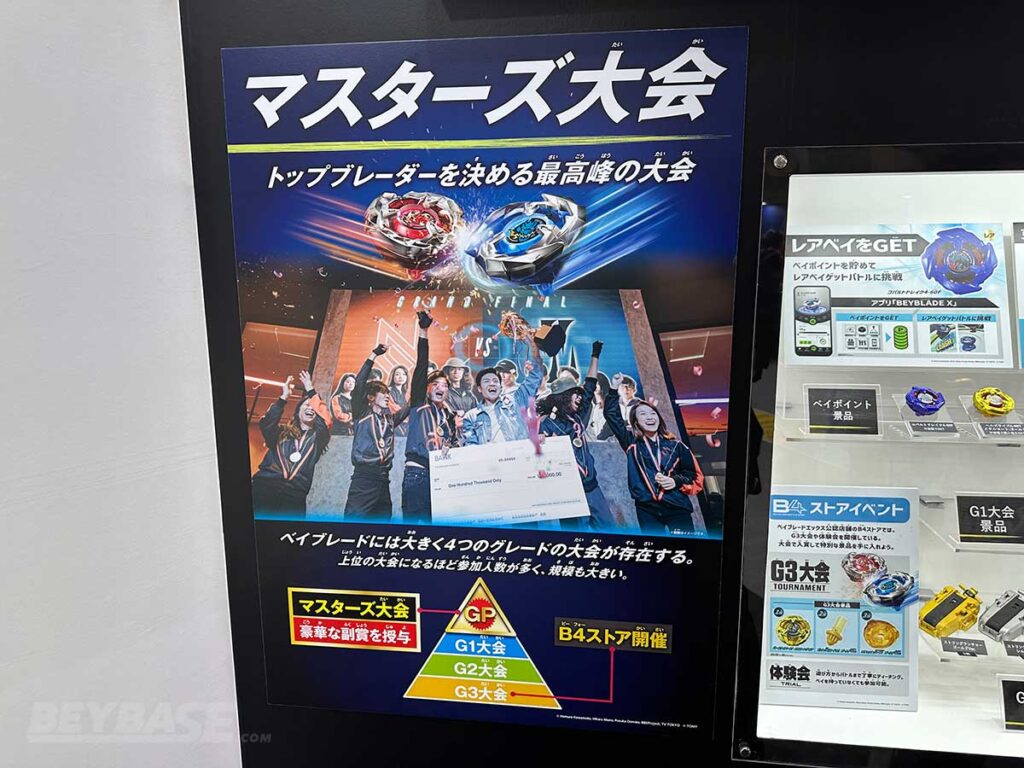
Modelling goals based on the B4 tournament structure
But from the start of Beyblade X, the tournament structure employed by the Beyblade Battle Base (B4) is what has inspired me to strive to reach the top.
The B4 tournament structure is as follows:
- World Championship
- GP
- G1
- G2
- G3
- Ambassador
- S1
- Fan-Hosted
The G1, G2, and G3 categories can also be broken down slightly further. For example, by including the different possible types such as X-TREME CUP G1 or G2 tournaments, or the difference between Dispatch and B4 Store tournaments at the G2 and G3 levels.
For those who don’t know, a “Dispatch” tournament (or “Business Trip” … it’s difficult to translate from Japanese) is a type of G2 or G3 tournament that businesses across Japan can purchase. It enables them to sponsor Takara Tomy/B4 to host the event at their venue with actual staff from Takara Tomy.
Any events hosted by Takara Tomy themselves tend to offer a more standardized environment than what you can find at any other tournaments across the country.
Speaking generally, the higher you go on this list the more prestigious and/or competitive the event becomes. The quality of the players and tops they use increases too.
I’m someone who finds the pursuit of high performance meaningful. To me, the higher you climb this ladder:
- The more apparent the difference in skill and knowledge between players becomes.
- The more likely it becomes that both players are not only trying their best, but doing so using whatever strategies they feel give them the best chance to win above all else.
- The more likely it becomes that both players are using whatever tops they deem to be the strongest in their collection. Nobody is going to be experimenting with a launch technique or using a top which they haven’t tuned to the best of their ability in the sixth round of a G2, for instance. In this sense, battles feel more like a “real” test of your core beliefs and confidence in that moment.
It’s the pursuit of these types of moments that motivates me. There is something profoundly moving in these moments that only the people who have struggled to make it that far can understand.
Chasing and earning these moments pushes you to go beyond your limits. And when you can eventually succeed in that environment, it rewrites your baseline. Your accomplishment becomes not the end point, but the new base from which you begin anew. A journey towards achieving something even greater.
My journey to becoming a Beyblade X G2 champion
My journey to becoming a Beyblade X G2 champion began from the fan-hosted level. My first tournament wins within the B4 tournament structure to date are as follows:
Blader Kei’s First Beyblade X Tournament Wins by Grade
- Fan-Hosted Tournament: Late 2023
- S1 Tournament: Late 2024
- B4 Store G3 Tournament: Early 2025
- Ambassador Event: Late 2025
- Dispatch G2 Tournament: Early 2026

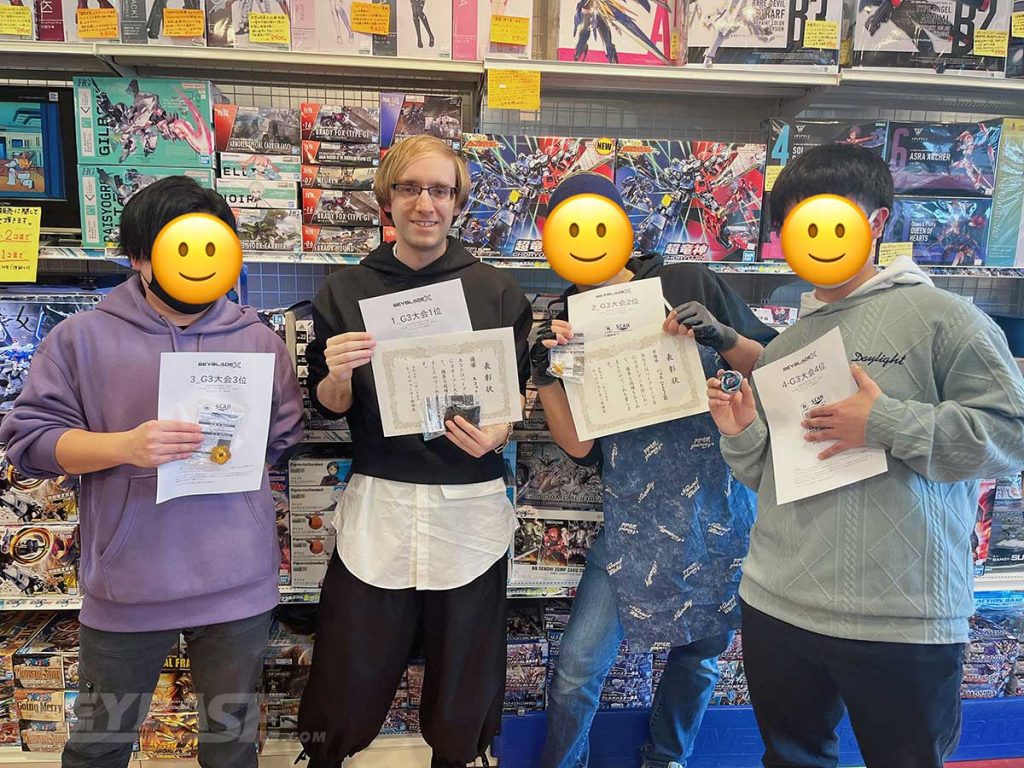
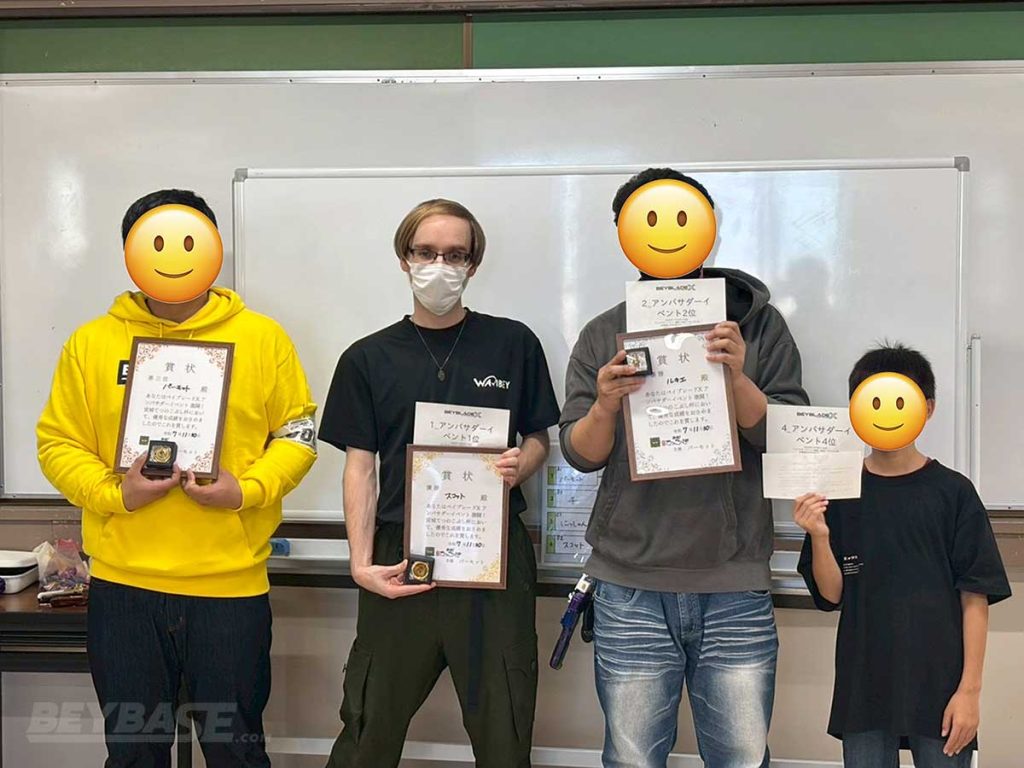
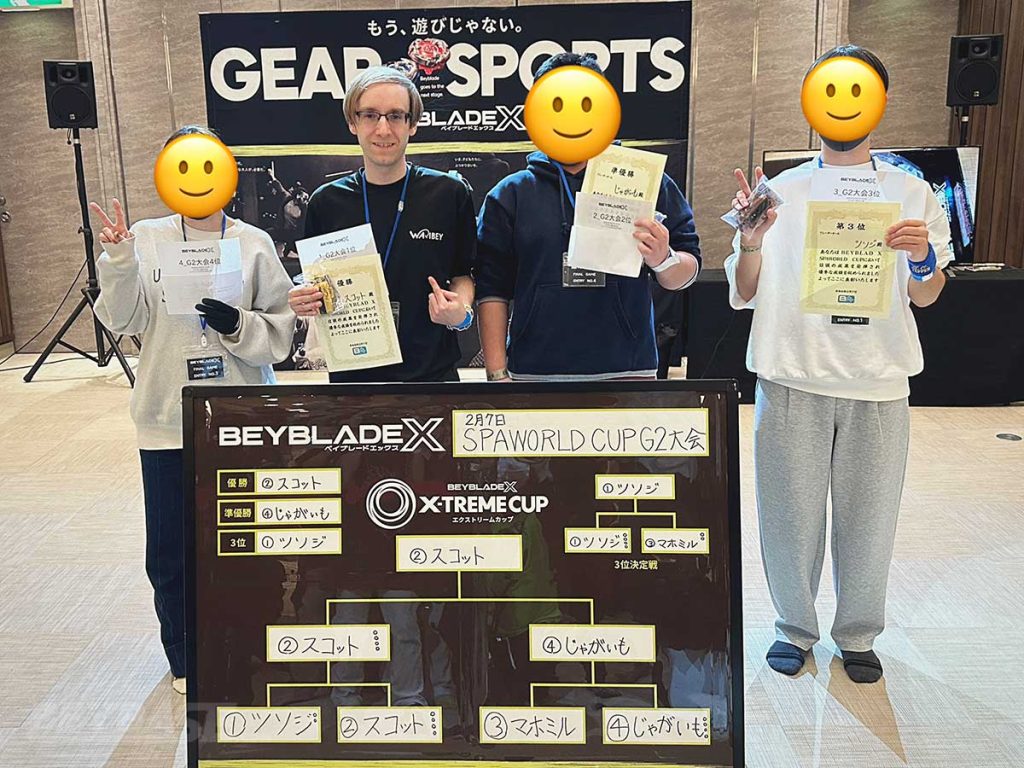
Everyone’s path is different, but from the beginning the logical progression for me has been to try and climb the B4 tournament ladder one step at a time.
Before setting a goal, I’ve realized that it’s important to decide your direction, so to speak. In doing so, you can understand the path you’ll be walking. If you set a clear direction, the checkpoints you have to pass to get there will also become clear. They also act as natural resting points.
It’s easy to set an end point, but much harder to face the reality of the obstacles you will face on the path to reach it.
The question becomes: how badly do you want it? The people who fulfill their dreams are the people who can endure the pain of failure over and over again.
In my case, since winning my first G3 tournament, my goal became to win a G2 tournament.
G2 tournaments are effectively non-existent where I live. But I took matters into my own hands and traveled several hours to compete in Tokyo on a monthly basis for an extended period in 2025.
Spoiler: I failed, a lot.
Blader Kei’s G2 Tournament History
Here’s an overview of all of the G2 tournaments I’ve played in to date (Xtreme Stadium, qualifying tournament matches 1on1 to 4 points):
| Date | G2 Type | Tournament Name | Result | Record |
|---|---|---|---|---|
| 2/7/2026 | Dispatch | SPAWORLD CUP | 1st Place | 8-0 |
| 9/28/2025 | B4 Store | Minamotoya | 1st Round | 0-1 |
| 8/16/2025 | B4 Store | Bunbuku Toys | 2nd Round | 1-1 |
| 7/19/2025 | B4 Store | Bunbuku Toys | 1st Round | 0-1 |
| 6/21/2025 | B4 Store | Bunbuku Toys | 2nd Round | 1-1 |
| 6/15/2025 | B4 Store | Minamotoya | 2nd Round | 1-1 |
| 5/18/2025 | B4 Store | Minamotoya | Top 8 (5th Round) | 3-1 |
| 10/21/2023 | X-TREME CUP | X-TREME CUP G2 2023 Fukuoka | 2nd Round | 0-1 |
| 9/24/2023 | X-TREME CUP | X-TREME CUP G2 2023 Sendai | Top 32 (4th Round) | 2-1 |
There were times during this stretch that I felt seriously discouraged. I’ve talked about how I felt after the X-TREME CUP G2 2023 Fukuoka in another article before. But in 2025, when winning a G2 became my primary goal, the weight of each loss accumulated over a long span of time.
After my first round loss at Minamotoya on September 28th, I posted this on X:
Lately, I’ve been feeling like I’m heading straight towards a wall I can’t climb while playing 1on1 matches. It’s been nothing but tough results. But thanks to today’s experience, I feel like I’m starting to understand myself and my current environment better. I’ll keep pushing forward from here!
This was the last G2 tournament using the Xtreme Stadium that I played in before winning the SpaWorld Cup.
I was playing in Tokyo, which is home to some of the strongest players in the world. Traveling there is always a humbling experience. There were times after losing to G2 and G1 champions that I wondered if I could ever be good enough to compete on equal footing with them.
However, in retrospect I know these experiences and the lessons I learned are what directly influenced my ability to ultimately succeed in the SpaWorld Cup Dispatch G2.
Creating positive reinforcement through milestone-based success
The most important thing is that rather than dwelling on each loss, I tried to always maintain a positive mindset. Win or lose, I would take notes as much as possible during the events. I would always watch until the end to see how the top players conducted themselves and ask myself what adjustments I could make for next time.
In thinking this way, the definition of “success” changes. It becomes less about winning consistently and more about working towards milestones. Thinking about success as milestone-based does a few very positive things.
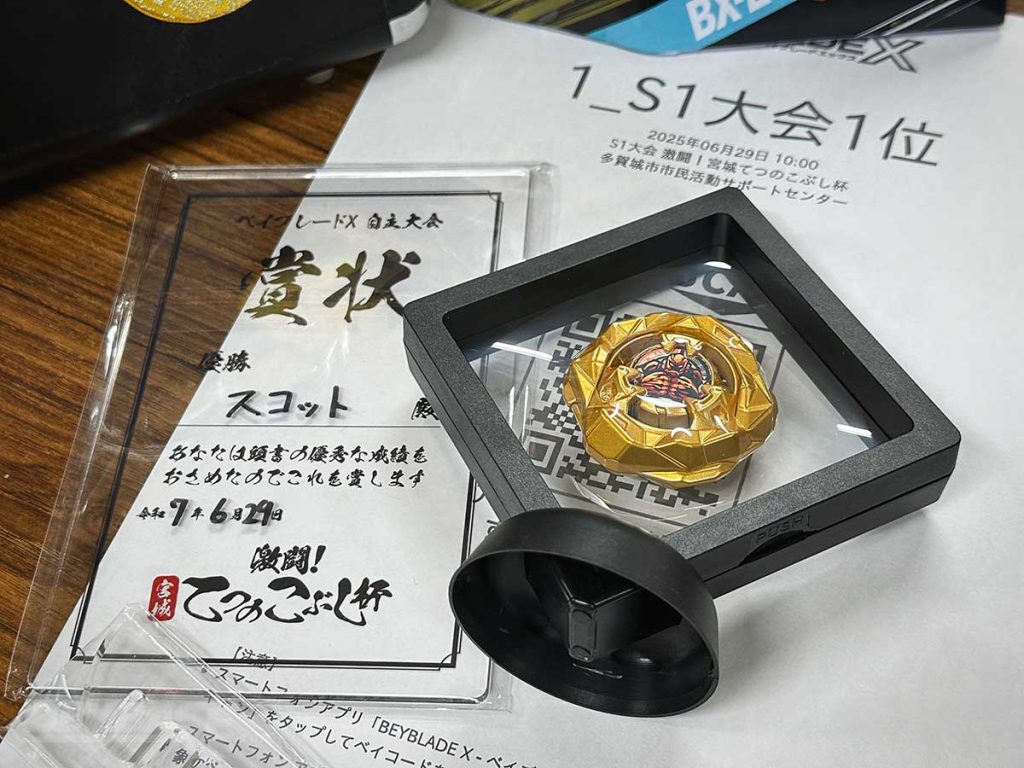
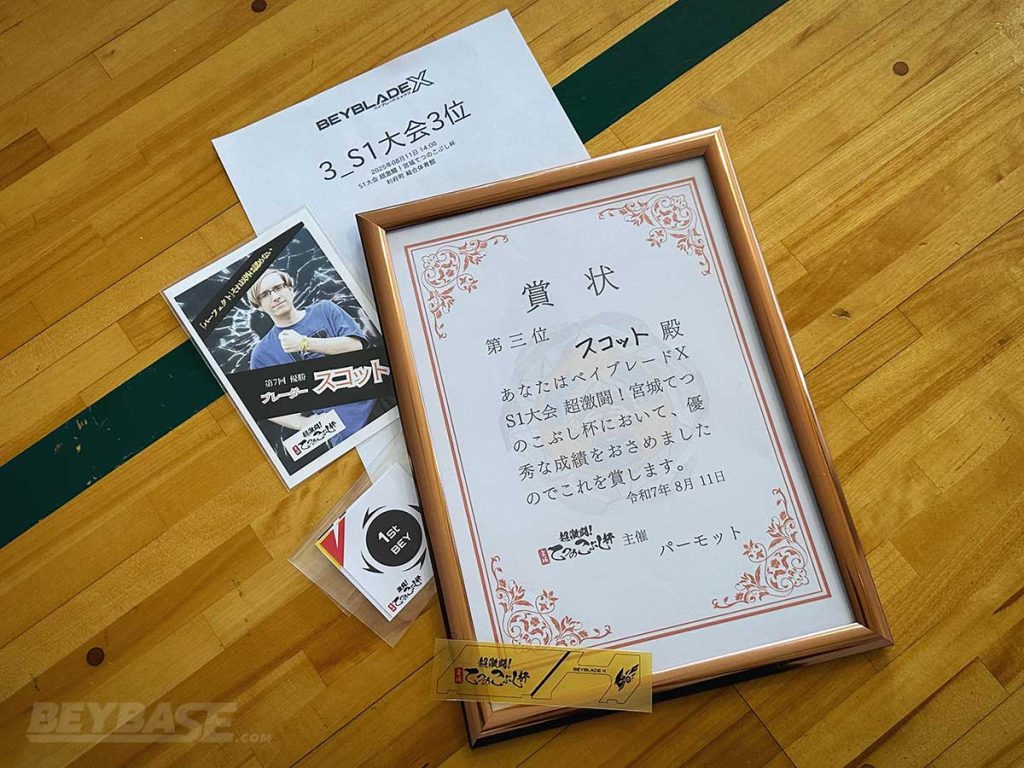
First, it makes the complete journey less daunting; rather than confronting a mountain of unknown height and terrain, you can focus on reaching the first checkpoint ahead of you. You might trip and fall along the way, but if you get back up you can tighten your shoe laces and take another step forward.
Second, it creates a sense of progression. Rather than feeling like you’re running on a treadmill at top speed forever, achieving milestones provides a steady sense of satisfaction from the beginning to the end. You can sprint, catch your breath, regroup, and then embark on the next leg.
It becomes less about reaching the summit and more about the journey. As they say, the journey matters more than the destination.
Thirdly, it instills a sense of confidence in you. Achieving each defined milestone reinforces the validity of your effort to that point. This reinforcement boosts your confidence and motivates you to keep going.
I’ve applied this thinking to the B4 tournament structure and to this point, it has served me well.
Milestone-based success requires structure
In saying this, I also recognize that milestone-based success that is based on growth through tournaments requires structure. Given the inconsistent handling of organized play for Beyblade worldwide to date, to have access to organized play structure is certainly a privilege.
If you are fortunate enough to live in a region administered by the Beyblade Battle Base (B4), you have it. If you’re not, things become tougher. Fortunately, initiatives such as the WBO’s upcoming “Masters League” do exist. The potential it unlocks offers a ray of hope to many competitive players and underserved or underdeveloped communities around the world in this respect.
But even at a local level, it is possible to build the structure required to make milestone-based success possible. As long as you have a community of players around you. That’s the first step. The question then becomes one of desire, time, and logistics. You have to ask yourself what you want and whether you’re willing to commit to making it happen.
Knowing others vs. knowing yourself (Small tournaments vs. large tournaments)
To win Beyblade tournaments, there are some skills which are fundamentally required. But over time, I’ve come to see that there is a difference between some of the skills which small versus large tournaments tend to reward.
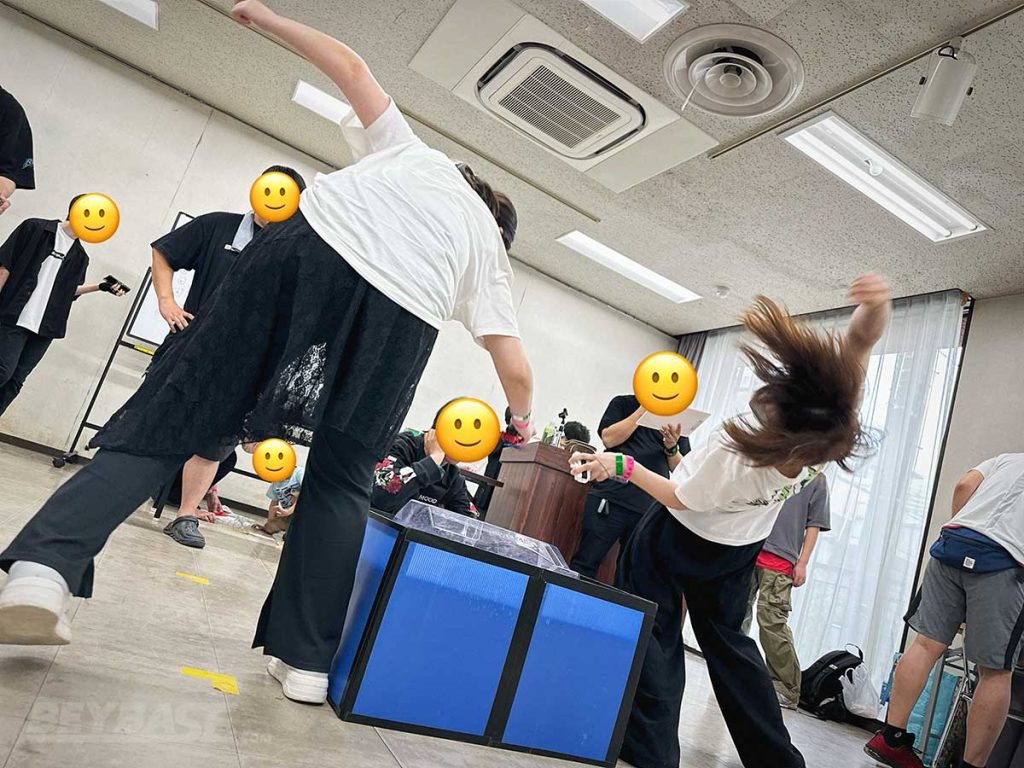
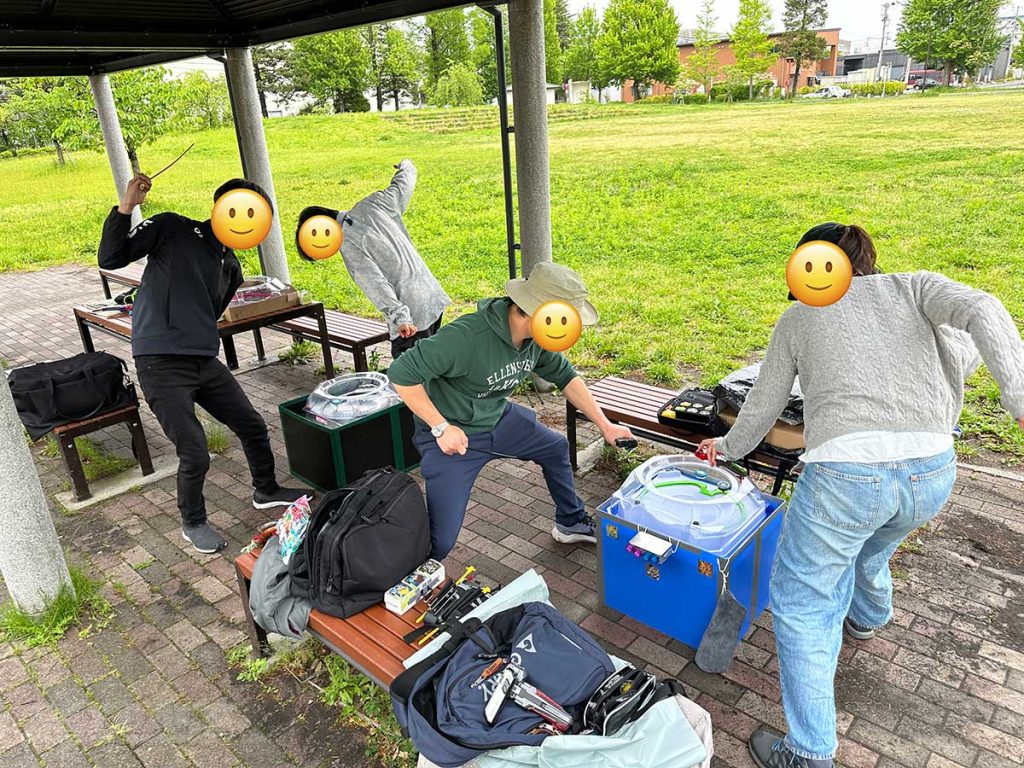
Small tournaments
Small events often revolve around informational advantage. You know many of the players. You can watch other battles between matches. You can see the tournament bracket. You understand the tendencies, preferred combos, launch habits, and emotional patterns of some of your opponents. This happens a lot in local community events where the same players compete against each other repeatedly over time.
In that environment, confidence comes from familiarity. You can create opportunities where you feel “I know what they’re probably going to do.” Success can be built on preparation depth and targeted counterplay.
Small tournaments tend to reward:
- Deep matchup knowledge
- Opponent-specific counter-picks or deck ordering
- Pattern recognition across known players
- Adjustments based on information
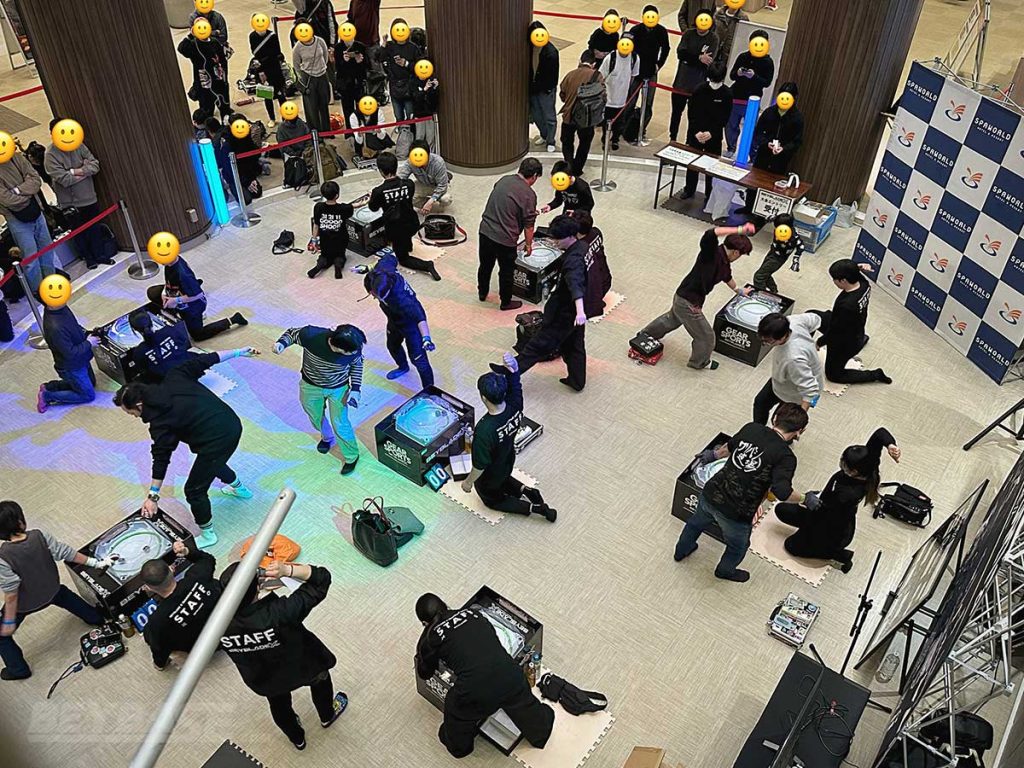
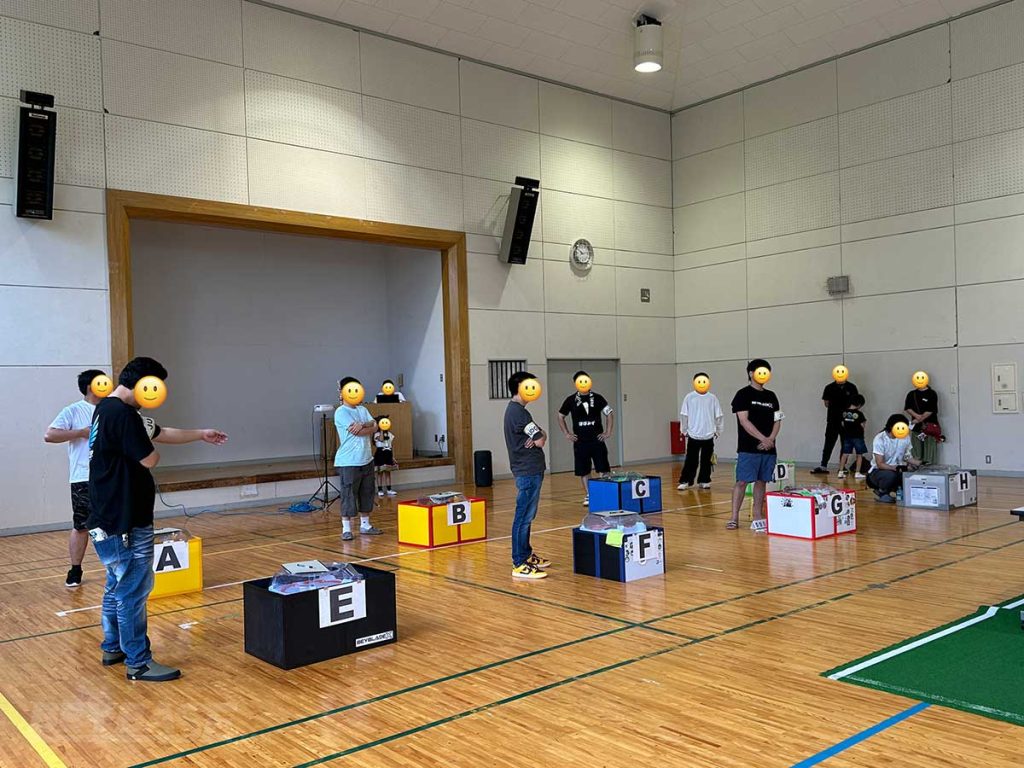
Large tournaments
Large events, especially at the G2 or higher level, are structurally different. The information environment becomes incomplete. You face unfamiliar players with unfamiliar tendencies. Variance increases.
In this setting, knowledge is still a prerequisite, but it’s no longer enough. Confidence has to shift inward. You must think “No matter what they do, I trust what I do.” Large tournaments test your ability to stabilize under uncertainty.
Large tournaments tend to reward:
- Rapid adaptation under incomplete information
- Emotional durability across many rounds of increasing speed and intensity
- Breadth over over-specialization
- Stable routines and mental/physical reset frameworks
- A reproducible base strategy that holds up against unknowns
My experience in G1 and G2 tournaments to date made the difference between small and large clear to me. At the SpaWorld Cup I couldn’t rely on familiarity. I couldn’t predict every Beyblade choice.
I did my best to carefully observe what was happening during the event. Despite this, when the afternoon session started, time for observation steadily vanished. I had no information about any of my opponents during the qualifying rounds. I could sometimes tell who I was playing while standing in line to enter the tournament area, but that’s it. There isn’t a lot you can garner from appearance alone. Especially the deeper you advance into the tournament.
What carried me wasn’t superior matchup or opponent knowledge. It was the work I had done to build versatile high performance tops as well as make my shots, decision-making, and mental state reproducible.
In my past experiences at large tournaments, I sometimes focused too much on pushing to exploit a favourable matchup even in the face of the unknown. I was playing the information and knowledge game.
My background is also filled with tournaments–even big ones–where it wasn’t uncommon to know who was participating in a tournament beforehand. And it was normal to play using formats such as Swiss. Formats like Swiss are less punishing than the Single Elimination format official events often use in Japan. It enables on-the-fly strategic adjustments after a loss. This is impossible in Single Elimination.
Large (especially official) events also introduce a different kind of social pressure: bigger audiences, greater perceived legitimacy, and the internal narrative weight of “this one matters”. That pressure subtly changes risk tolerance, pacing, and self-awareness.
In that sense, large tournaments don’t just test how well you understand others. They test how well you understand yourself.
What I mean to convey here is that although both small and large tournaments have some overlap in terms of the skill required to be successful, there are some aspects that demand a different set of skills. Whether you want to challenge yourself to develop them or not depends entirely on the kind of Beyblade player you want to become.
Adaptability vs. reproducibility
At first glance, adaptability and reproducibility can sound similar. But they operate in different directions.
Adaptability is outward-facing. It asks: “Given what is happening now, how should I respond?”
For example, it’s your ability to respond effectively when:
- You face an unfamiliar opponent or customization.
- The stadium behaves differently than expected.
- A particular matchup doesn’t play out like you expected.
- Your initial plan fails or you make a mistake.
- The bracket structure or tournament rules change unexpectedly.
- Momentum shifts mid-match.
Reproducibility is inward-facing. It asks: “Can I become my best self on demand?”
For example, it’s your ability to recreate:
- The same launch technique.
- The same timing and angles.
- The same pre-launch routine.
- The same emotional regulation.
- The same decision-making clarity.
- The same confidence baseline.
Adaptability changes your approach.
Reproducibility preserves your standard.
Adaptability rests on reproducibility. Without internal stability, adjustment becomes a reaction. With it, change remains deliberate.
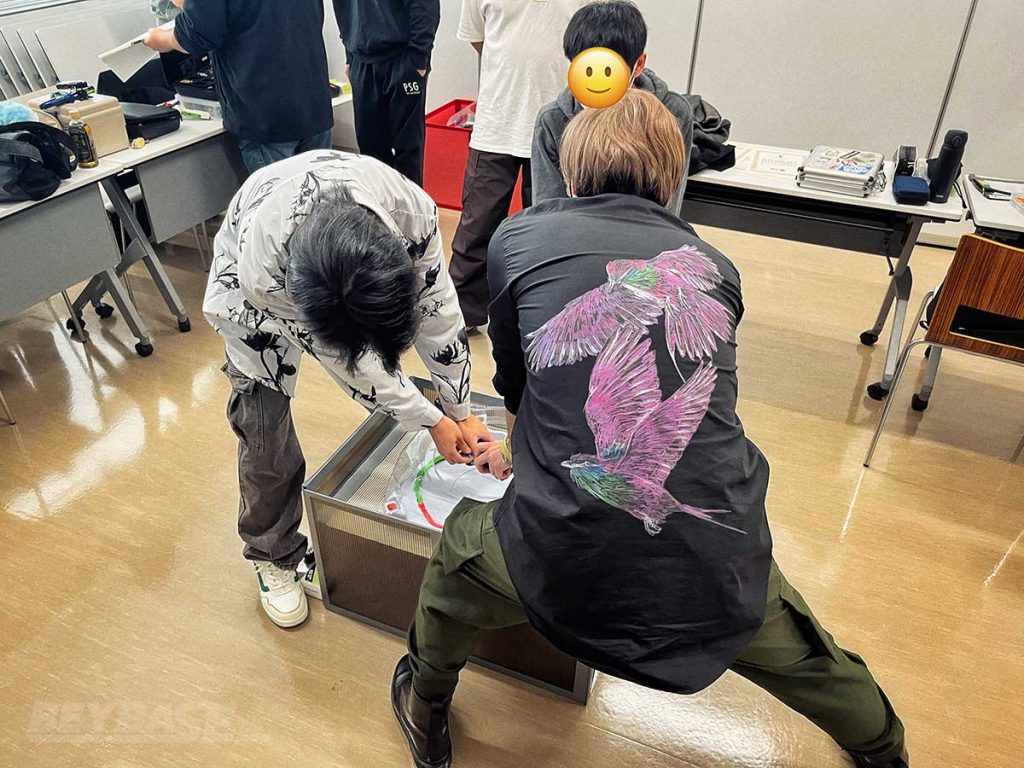
Sponsored: Order the newest Beyblades at malloftoys.com!
Heads up: If you buy something through Mall of Toys, you won’t pay any extra, but I’ll get a small commission. This helps me keep things running. Thanks for your support!
Dreams evolve, but commitment compounds.
When I first started playing Beyblade in Canada through the unofficial tournament scene on the World Beyblade Organization, my “dream” as a player looked very different from what it does now. At the time, it meant two things.
- Reaching the top of a ranking leaderboard
- Maintaining a strong position on it.
This required unrelenting consistency.
Today, that dream has shifted toward competing, and winning, in official B4 events in Japan. From the bottom to the top. I now measure my success based on milestones.
The form has changed, but the underlying commitment didn’t. That same decision to keep showing up, to keep practicing, to keep learning from losses, to keep searching for strong players, and to keep connecting with others is what made it possible for those earlier goals to eventually connect to this one.
This is important because many players abandon long-term pursuits when their original motivation fades. But the reality is that your dream as a child doesn’t need to be the same as your dream as an adult for your effort to still matter.
Consistent training–whether it’s refining your launch, ability to stabilize your mental state, building matchup knowledge, or intuition about how certain parts generally interact–compounds over time even as your direction changes. The path is rarely linear, but commitment creates a through line between past and present versions of yourself that makes achievements like a G2 win possible years later.
I am who I am now precisely because of what I learned about myself through my dedication to Beyblade over the past two decades.
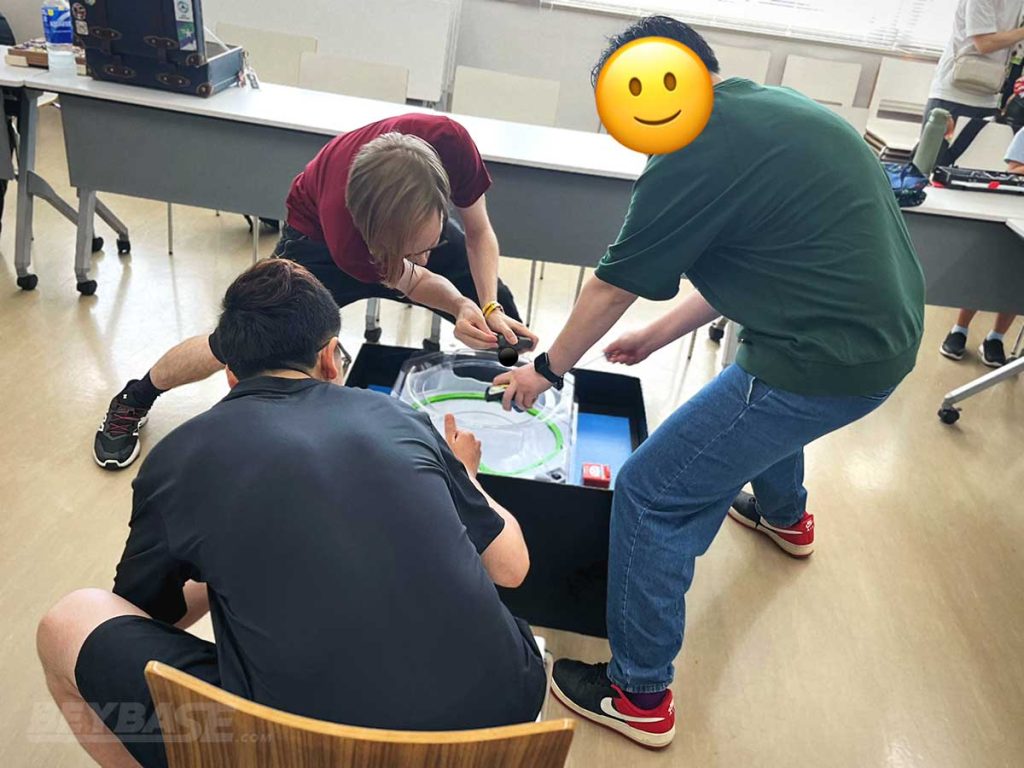
Commitment has a cost
As is often said, to gain something, you must lose something.
Dreams with clear definition make it easier to understand two things. First, what is contributing to it. Second, what isn’t. Clear definition reduces and refines the space around you.
I’ll give a concrete example. Long time readers of my articles may have noticed that my pace of publication has slowed dramatically over the years.
One of the reasons for this is due to a shift in focus towards milestone-based success. Rather than placing weight on individual moments, my mindset has shifted to view my growth over a longer time span. As such, I internally place more weight on retrospection that is born from a wide range of experiences. It’s exactly what spawned this very article. I wouldn’t have been able to accumulate as many experiences if I had been spending time on publishing more. That was the simple reality.
When it comes to tournaments themselves, my priorities have absolutely shifted from the beginning of Beyblade X until now. I do my best in each match that I play, but I am simultaneously aware of the context. If it’s a fan-hosted, S1, Ambassador, or even G3 tournament, I won’t hesitate to try something new to deepen my knowledge and experience. I don’t feel a need to win at all costs; I prioritize actions that will promote my growth over the long term.
The cost of commitment ultimately changes over time. Along with my experience, my priorities shift, affecting the weight and direction of that commitment. Commitment does indeed create the through line between past and present versions of yourself, but the important thing for me was recognizing that the form of my commitment doesn’t need to be static.
Enjoyment and competitiveness are not opposites.
There’s a common belief that taking something seriously means you must stop having fun with it; that competitiveness and enjoyment exist on opposite ends of a spectrum. But in practice, the opposite is often true.
Some people view my approach to Beyblade as a purely serious one. But some of my most enjoyable experiences with Beyblade have come precisely because I chose to engage with it deeply: studying matchups, practicing for reproducibility in my launch, or working to maintain a consistent mental routine under pressure. Treating the game with respect and pushing to understand its depths didn’t diminish the joy. It enriched it.
Likewise, enjoyment doesn’t make you less competitive. It can actually stabilize your performance. When you enjoy the process–the act of training, the community around you, the incremental progress toward a goal–you become less outcome-dependent in tournament settings. That reduces the emotional volatility that often leads to rushed decisions or mid-match technical errors.
In this way, playing “for fun” and playing “to win” aren’t mutually exclusive. They can reinforce each other when grounded in a mindset that values both mastery and meaning.
The key is whether or not you can zoom out and view yourself along a longer time scale or not. When you focus on what you can control and view things over a longer time scale, the weight of the things that are out of your control in a given moment decreases dramatically.
If the heat of a moment is all you can focus on, that will become your world. If you can accept and recognize that it is in fact just a moment in time … that heat will become part of your passion. And that’s what propels you forward.
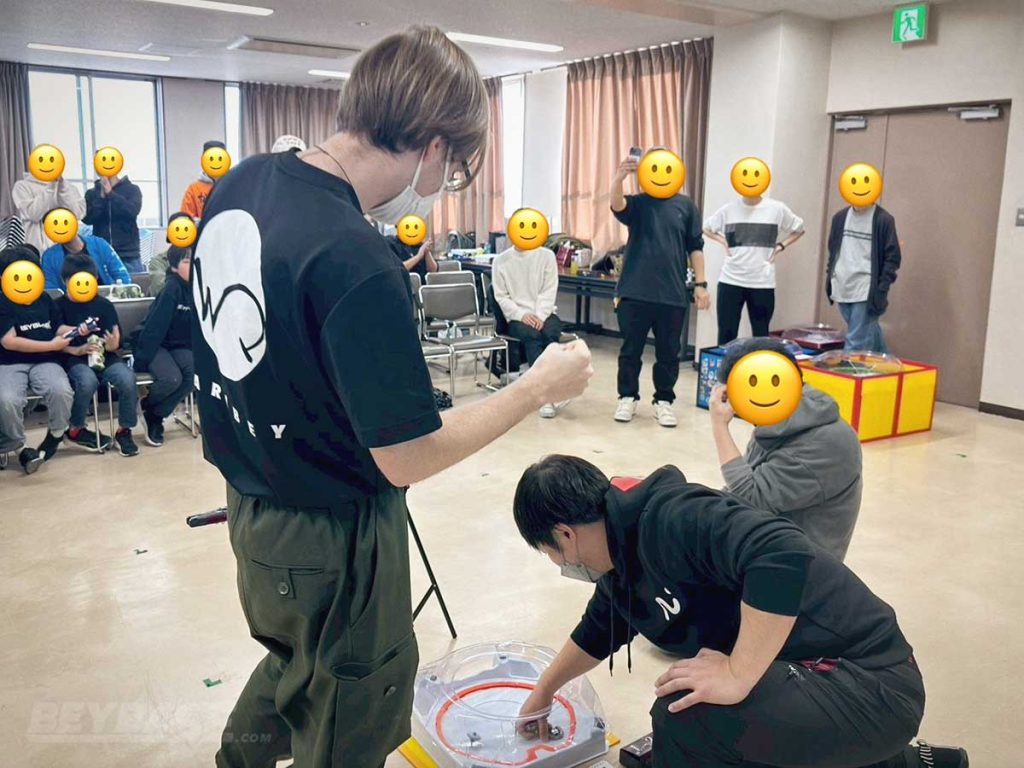
Nothing is possible without the people I’ve met
Thinking back on the 23 years I’ve played, I’m overflowing with gratitude. The reason I was able to reach this point is thanks to all the experience I’ve built up and the people I’ve met along the way.
It’s precisely because the road to making my dream come true was so tough that my accomplishment feels so deeply satisfying.
When I look at the equipment I used, techniques I employed, and the actions I took to win the SpaWorld Cup, I see the people that inspired me to adopt or led me to discover them. I can trace almost everything back, at least in part, to certain experiences and people.
After winning the tournament, I received many words of congratulations. From staff and spectators at the venue, my opponents during the tournament, as well as from players and friends across Japan and around the world.
There are too many people to name, and I appreciate all of you. Here, I want to highlight a couple who are most closely related to my G2 win:
Bang, B4 Judge
After the tournament Bang, the head judge for this event as well as many other recent high profile tournaments (such as the 2025 World Championships) congratulated me.
He remembered me from the X-TREME CUP G2 2023 Sendai. He was one of the event MCs for that tournament. We had an interaction at that event as well as one or two other times since then at other tournaments.
I told him that I had been giving it my all since the launch of Beyblade X and that tournament in order to reach this point.
Being in this position for the first time ever–the finals of a big, official tournament hosted by the company that created Beyblade–I realized that I wasn’t just grateful for the opportunity to play against strong opponents. I was also grateful to have had the privilege of having my matches judged by an official representative from Takara Tomy that has been bestowed with such an important responsibility.
3rd Place Player Tsusoji’s Father
The father of Tsusoji, the player who I defeated in the semi-finals and ultimately finished in third place, posted this comment on X. It was in response to my announcement that I had won the tournament:
“This is the person who faced off against my son in the semifinals. The pinpoint control he showed on the First Bey was truly impressive. Even with such exceptional skill, he never forgets to respect his opponent, calling my son’s Meteor terrifying—a true gentlemanly example of a blader.
I hope that children can learn a lot from people like him.”
I replied:
“I’ve been aiming to win the G2 tournament for a long time, but receiving such wonderful words of praise like this has me on the verge of tears. I thought, “Huh, hearing something like this makes me happier than winning.” As a Beyblade player, I’m always desperately chasing my goals, but I think I couldn’t achieve anything without the people around me.
From my extensive experience, the most important thing I’ve learned is to show respect to my opponents. If you approach a match with respect for your opponent, you can learn something no matter who you’re up against. By learning from each other and spurring each other on, I think we can each gradually make our way toward the places we want to go.
I was thrilled to be able to compete against such a strong player.
Thank you very much.”
And finally, Tsusoji’s father replied to this with:
“Through this match against Scott (Blader Kei), I was reminded of something more important than victory or defeat. It’s what I used to tell my son during Regular class matches: “Approach matches with respect for your competition.” As expected, Scott is not only a technically skilled blader but a great one with a strong heart as well. Even though it was just a single match, it was a fulfilling time full of so much to learn.
Thank you very much.”
Reflecting on this feedback, I feel a deep sense of gratitude.
As a player, it is easy to understand the concept that you are responsible for chasing your own dreams and putting in the work to improve yourself.
What can be a little bit harder to grasp, especially after you have achieved a certain level of success, is the effect you have on others. Whether it is your intention or not, the reality is that people are influenced and inspired by those around them. Including you. That influence heightens the more success you achieve. Beyblade is a game which requires connecting with others; you cannot truly play and improve in a silo.
Recognizing this is understanding that each and every player simultaneously carries two things. First is a responsibility to pursue what motivates them as an individual. Second is to maintain awareness of what they are projecting to the people and community around them.
In the end, the more positive interactions and experiences you craft with the people around you, the stronger and more enjoyable the community around you will become. That, in turn, will also benefit you as an individual.
When players step towards the stadium for any battle at any level, each player does so with wildly varying levels of experience, circumstances, and aims which impact how they choose to play and how they can play.
In this sense, it is the same as any interaction you have with someone else in any situation. Whether it be another game, at work, or even just hanging out with friends, no matter what you’re doing, doing something together with someone requires mutual understanding and respect. The question is whether both sides are capable of creating a space in which each party can express what is true to them while also accepting and responding to what they hear from their partner.
Can you listen? Can you work together under fair conditions to achieve something or determine a result? If you can do that, you can learn from any interaction and take a step forward towards your goal.
For over 15 years, I have done everything I can to help bring people together to enjoy playing Beyblade. Before my dreams of tournament success, was a dream of being able to simply enjoy playing with other people. Because I knew that if I did that, I could simultaneously enrich the experience and strength of both myself and others.
To receive such a compliment from Tsusoji’s father was, to me, an embodiment of everything I’ve been striving to do at the highest possible level. I felt understood, respected, and touched to have been able to create such a meaningful match that both sides could grow from.
Tatsuki, Beyblade X Japan National Champion
I have a long history with Tatsuki, even going so far as to interview him after he became Japan’s Beyblade X National Champion.
After learning of my victory he said:
“Congrats Scott! You’re just getting started.😛”
It was a simple, yet very powerful comment for me. I have so much respect for him. I had last met him in person at a G2 in the latter half of 2025. At that time I was in the middle of my pursuit of winning a G2 and it would have been easy to give up and feel that it just wasn’t going to happen. But his encouragement back then is one of the things which motivated me to keep going. And seeing him still fighting to succeed in that environment in spite of all that he has accomplished was moving.
The transformation of desire into satisfaction and recalibrating motivation
It still doesn’t feel real.
I’ve played Beyblade for a long time. As a player, I don’t think I’ve ever wanted something so badly as I did wanting to win a G2 tournament.
The SpaWorld Cup is the biggest tournament I’ve ever won. And it’s effectively the only official tournament I have ever won; everything else has been unofficial or officially sanctioned.
The intense desire I felt to fulfill my dream has been replaced with a deep sense of satisfaction.
I can feel a fundamental change occurring within myself.
It’s changing how I think about competing, how I can help others, what I want to pursue, and what matters to me.
The result I achieved is merely a confirmation of my effort to this point.
I’ve arrived at another checkpoint. For now, I’m going to enjoy the view from here.
When I’m ready, I’ll embark on my journey towards what’s next.
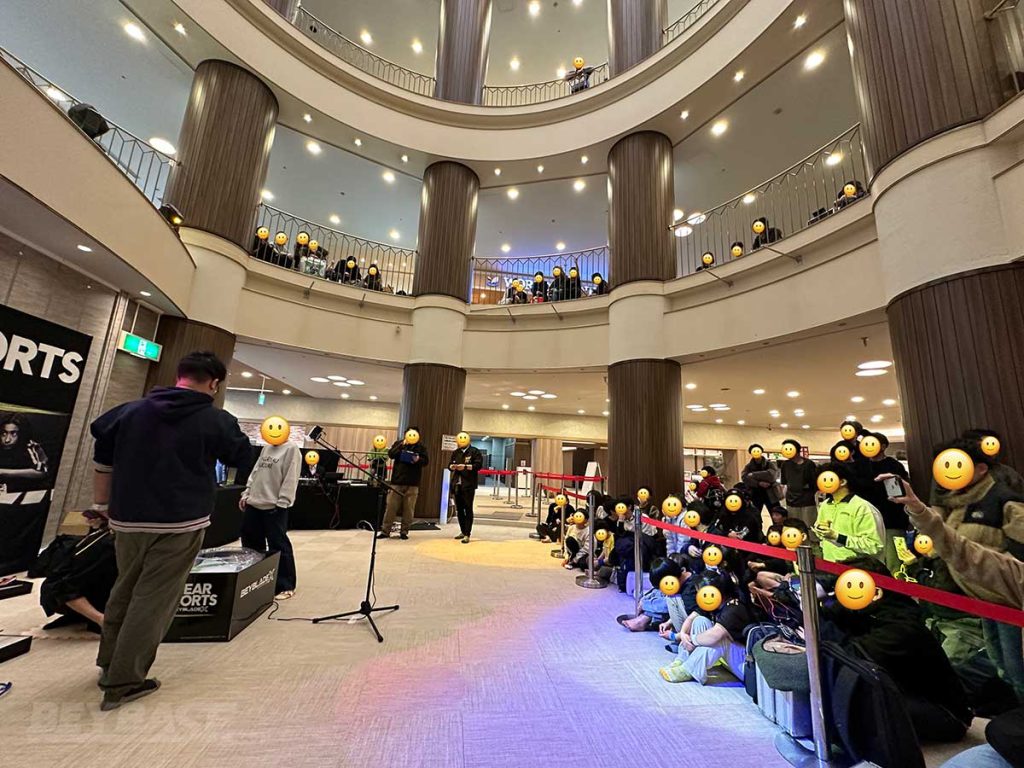
Improvement is not dramatic
Winning the G2 mattered.
But what mattered more was realizing that the version of myself who could win it didn’t appear overnight. It came from years of learning, adapting, refining, and repeating the same process over and over again.
Improvement is not dramatic. It compounds. And when it compounds long enough, what looks like a breakthrough is simply accumulated work revealing itself.
Any player can improve mechanically. But reaching the highest levels requires building a system that produces consistent performance under pressure.
That’s the part that excites me most.
That system — knowledge, adaptability, reproducibility, and intuition — is what ultimately made my victory possible.
And the best part is this: systems are something anyone can build. They are available to anyone willing to show up long enough.
A battle you won’t regret
After the tournament, I thought about the phrase “Aim for a battle you won’t regret”. Master, a highly skilled Beyblade player and friend of mine often posts this on social media before and after friends participate in high level matches such as the finals of a G1.
The more I think about it, the more I realize that this is what reproducibility really protects.
Not trophies. Not reputation.
But the quiet confidence that when the moment came, you brought your best self to the stadium.
It’s about integrity of performance, not outcome.
My G2 win isn’t proof of status.
It is proof that I’m moving in the right direction. Toward battles I won’t regret.
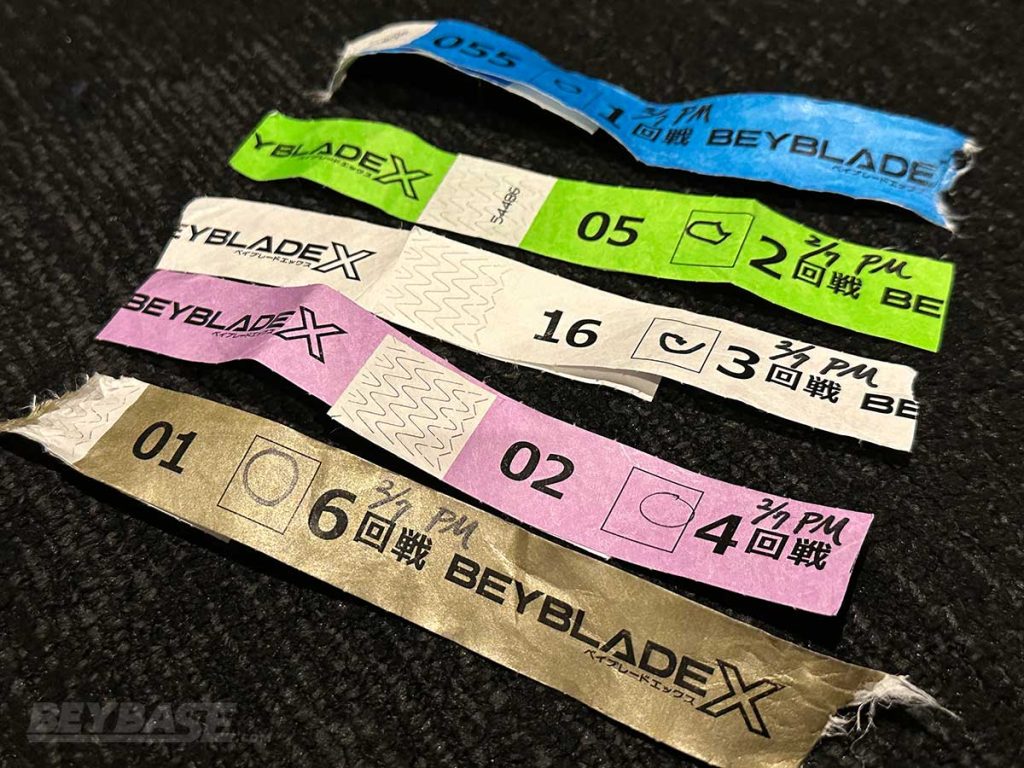
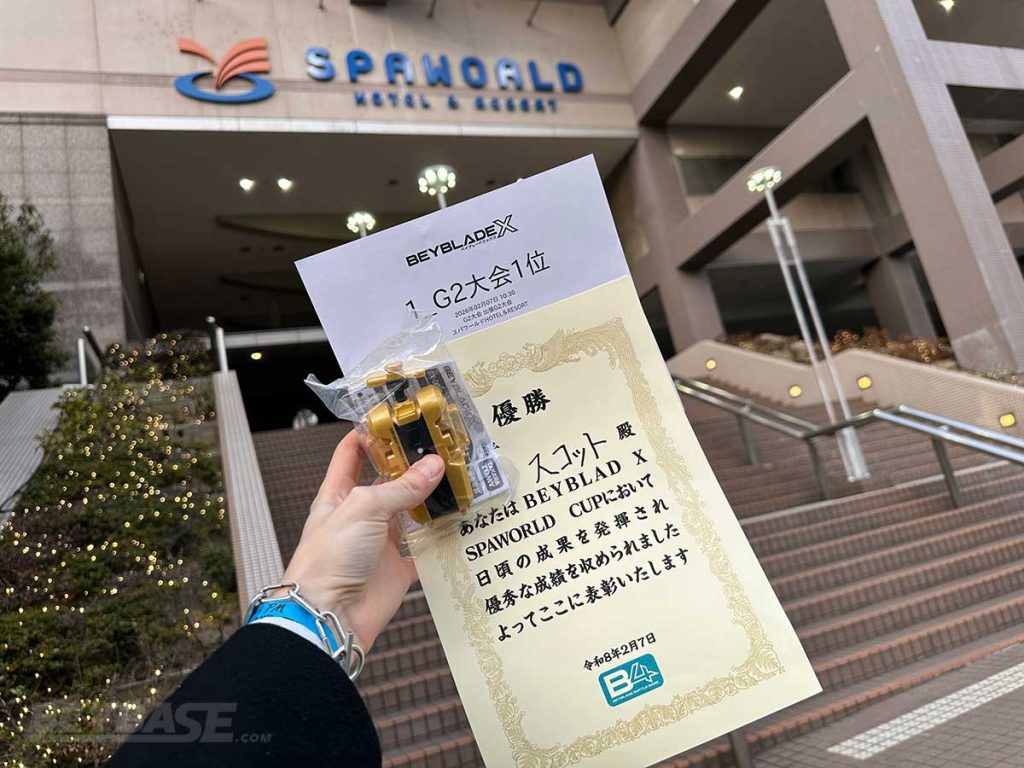
Or become a BeyBase HQ member to get early article access and behind-the-scenes updates. Thank you!
Thanks to
I’d like to end by thanking the people and places dear to my heart that have helped me on my journey to becoming a Beyblade X G2 champion and who helped with this article. I can’t name everyone but …
- Thank you to all members of the World Beyblade Organization. The WBO exists in a unique space that no other community in the world occupies. It is not an exaggeration to say that I may not be playing Beyblade right now if the WBO had not been created and had I not crossed paths with so many of you.
- Thank you to the members of the Ontario Beyblade Battle Community, Iwate Beyblade Community, as well as all of the players I’ve met and competed with across Tokyo, Miyagi, all of Japan, Canada, and the United States.
- Thank you to all of the members of Wari-Bey for your ever-present inspiration and support.
- Thank you to Dan for being a great friend, competitor, and collaborator all these years!
- Thank you to Bey Brad for creating the WBO, being one of the first people over 20 years ago who inspired me to pursue Beyblade both as a competitor and organizer, and for your friendship all these years!
- Thank you to Fabel for the winning combo parts photos.
And finally, thank you to everyone who has read this far!

Related Posts
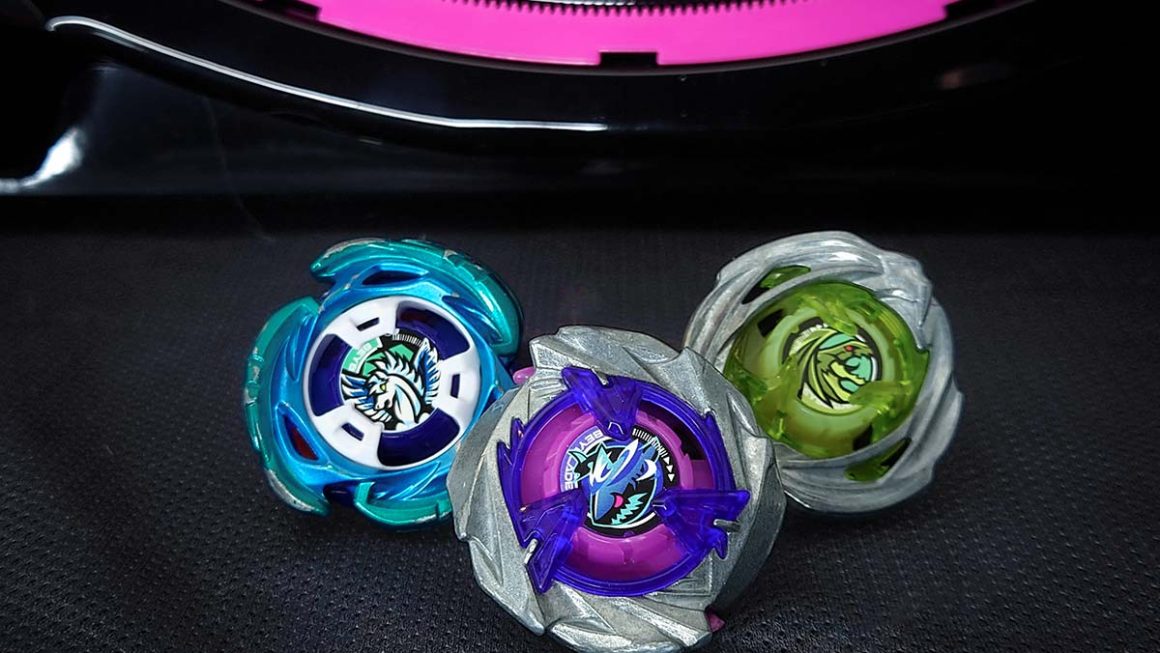
Discover the Best Beyblade X Infinity Stadium Combos & the Strategies You Need to Win (Competitive Player’s Guide)
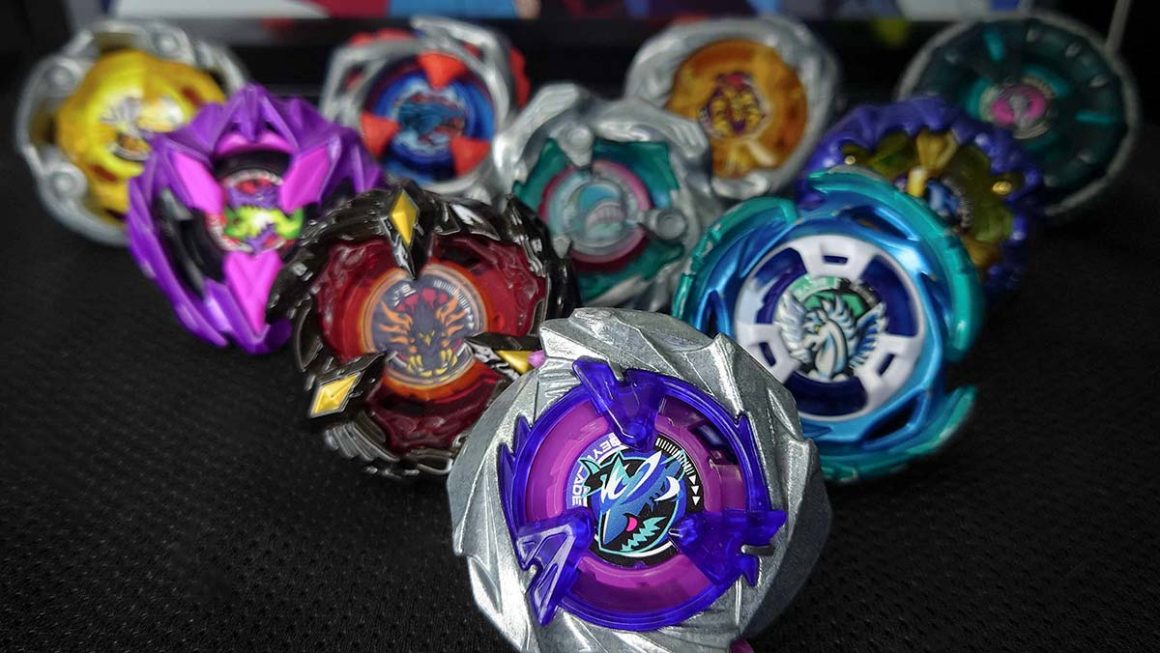
Beyblade X Buyer’s Guide: Expert Players Review the Best Products & Combos You Need to Win